Jia Ruskaja · Ritratti

Il libro ‘Jia Ruskaja. La dea danzante’ di Gianluca Bocchino (NeoClassica Editore) | src Liquid·Arte
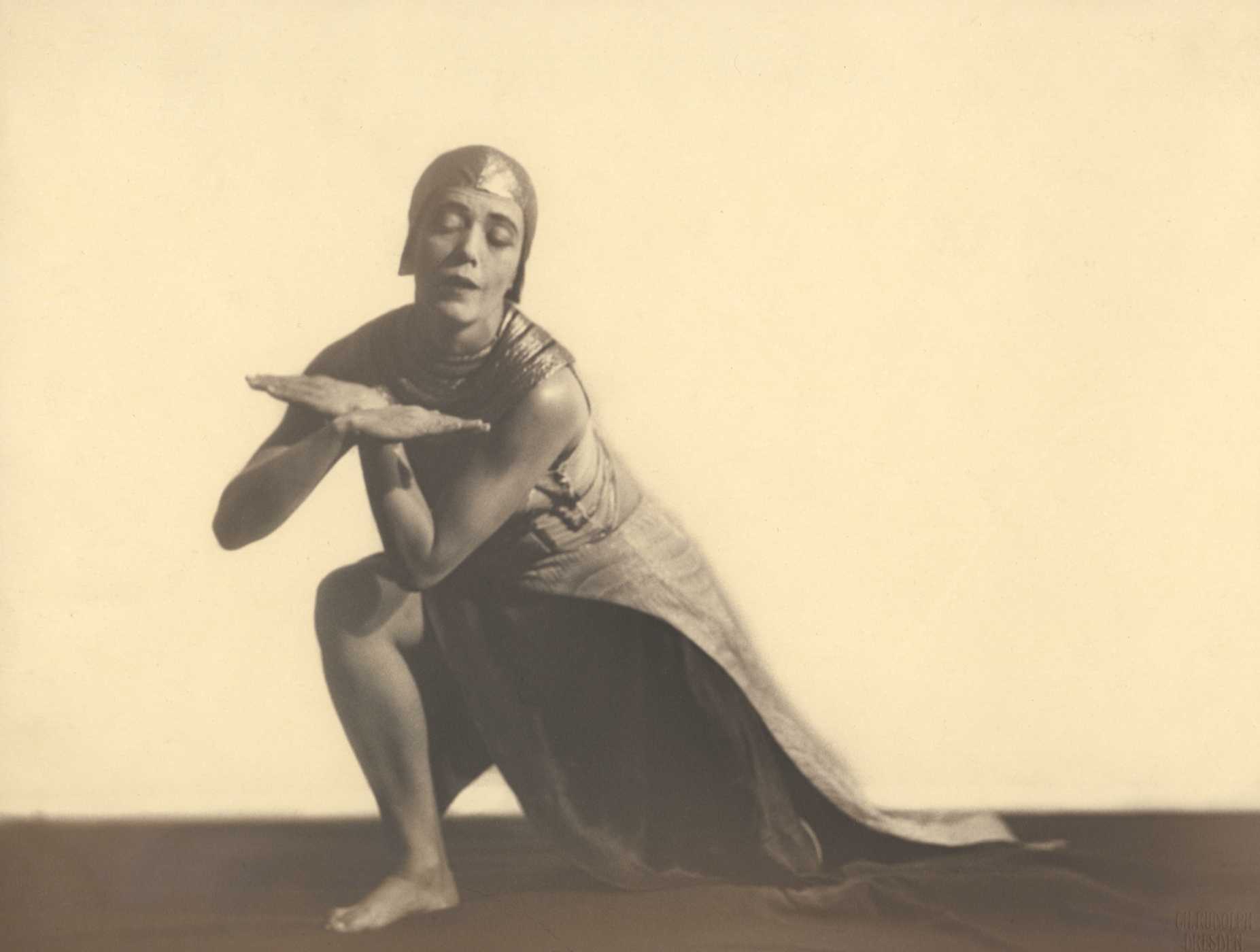
Jia Ruskaja (Evgenija Borisenko) fotografata da Ghitta Cerell nel 1938 | FAND-website
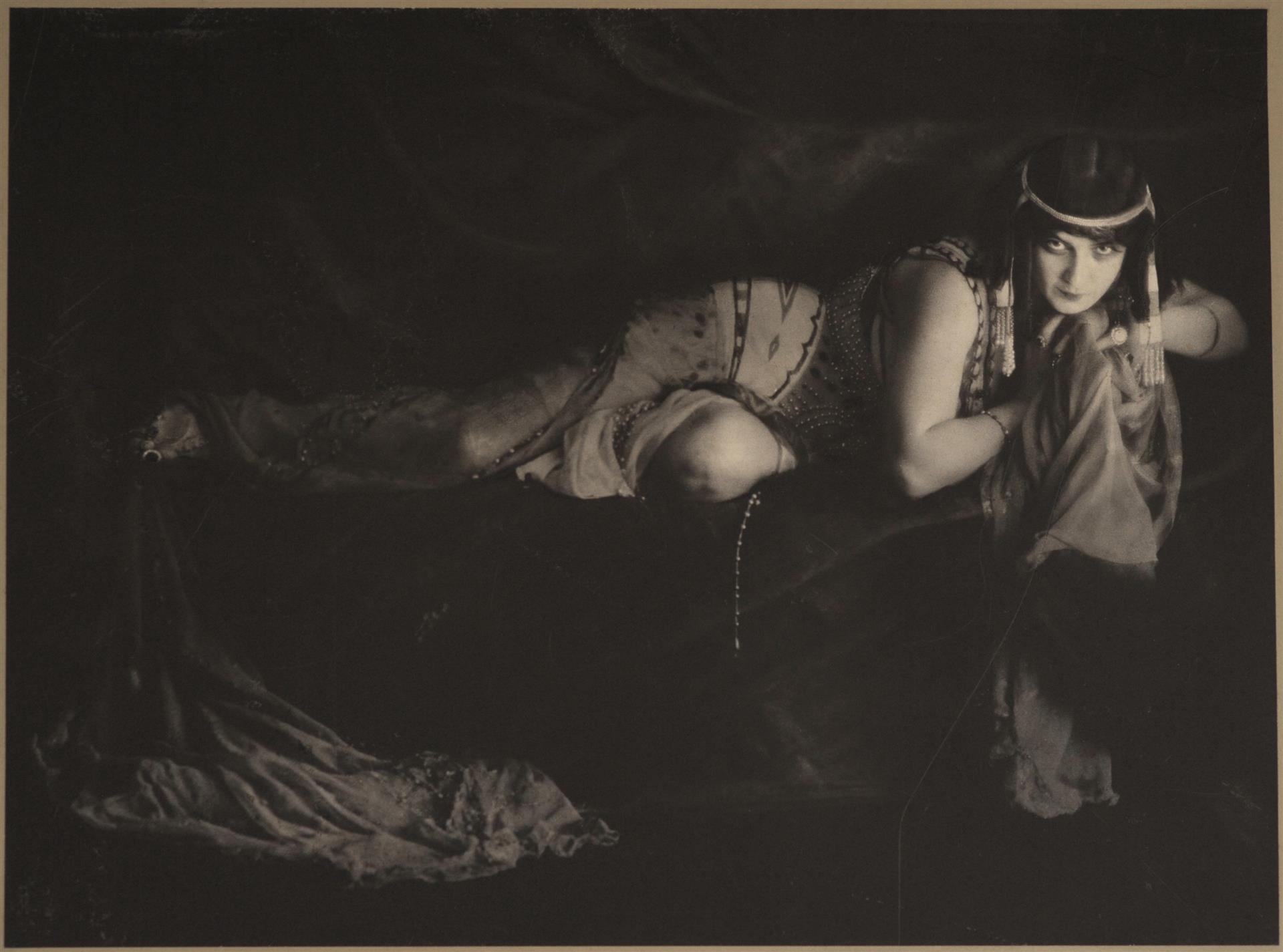
Jia Ruskaja (Eugenia Borisenko) fondatrice della Fondazione dell’Accademia Nazionale di Danza | FANDonFb
»Jia Ruskaja. La dea danzante« di Gianluca Bocchino NeoClassica & FAND
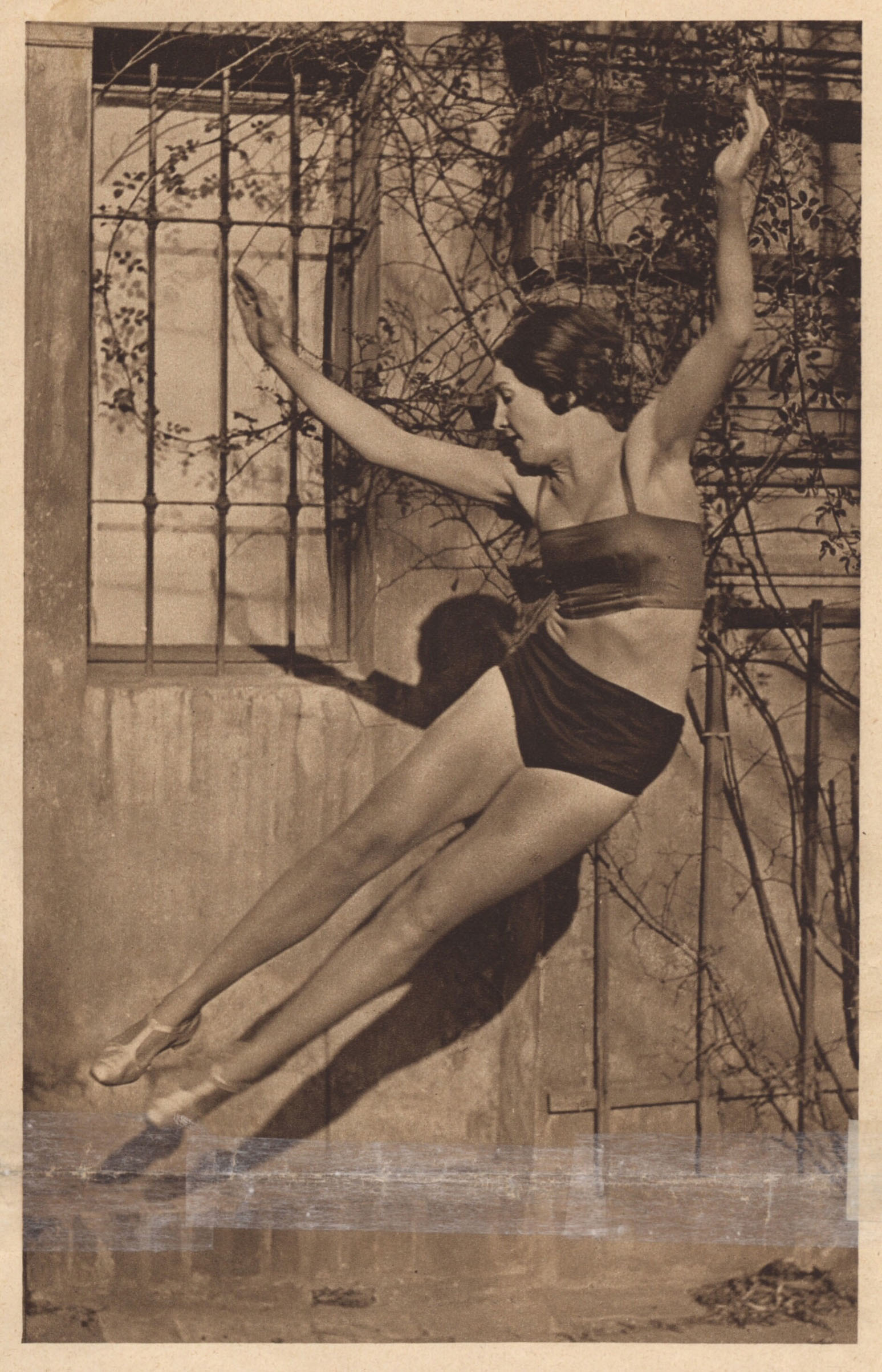
Jia Ruskaja, nelle immagini contenute nel libro La danza come modo di essere, 1927 | src Danza Effebi
Jia Ruskaja (Evgenija Borisenko) fotografata da Ghitta Cerell nel 1938 | FAND-website

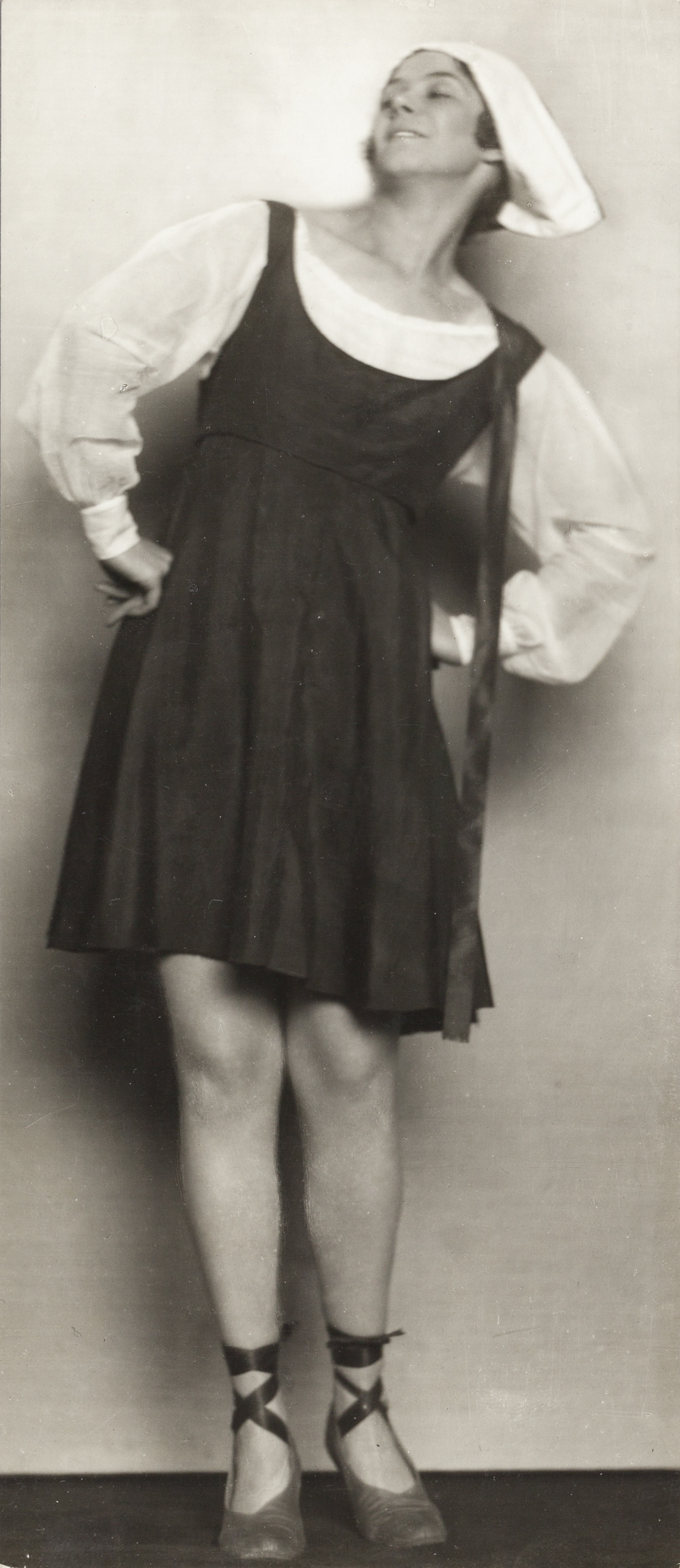
Johansson by Fleischmann

Trude Fleischmann (1895–1990) ~ Die Tänzerin Ronny Johansson, Wien, 1924. Vintage silver print on semi-matte paper.
src Ostlicht Foto Auktion Spring 2023

Photographer’s stamp with address at “Wien I. Ebendorferstraße 3”, her copyright stamp and her re-order stamp with handwritten negative no. “281” in ink, and handwritten title in pencil on the reverse [‘Die Tänzerin Ronny Johansson’]. Ronny Irene Johansson was born 1891 in Latvia, to Swedish and Scottish parents. Her father, a businessman in the shipping industry, sent Ronny to Russian and Swedish boarding schools. It was in Sweden that she established a professional dancing career, debuting in Weisbaden in 1916. After touring and performing throughout Europe, she moved to the USA in 1925 to pursue Modern dance. [quoted from source]
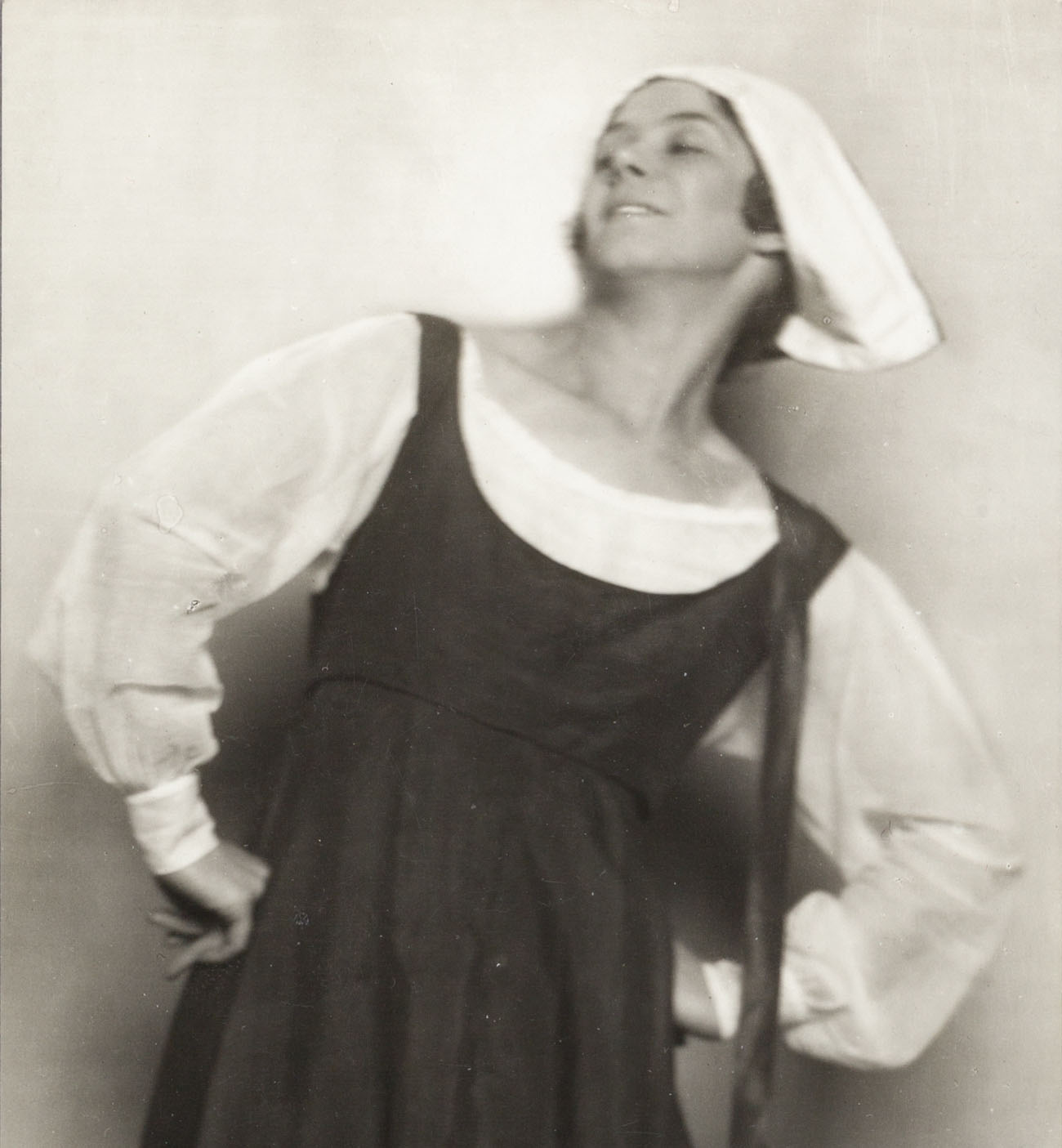
Trude Fleischmann (1895–1990) ~ The dancer Ronny Johansson, Vienna, 1924. Vintage silver print on semi-matte paper.
src Ostlicht Photo Auction Spring 2023

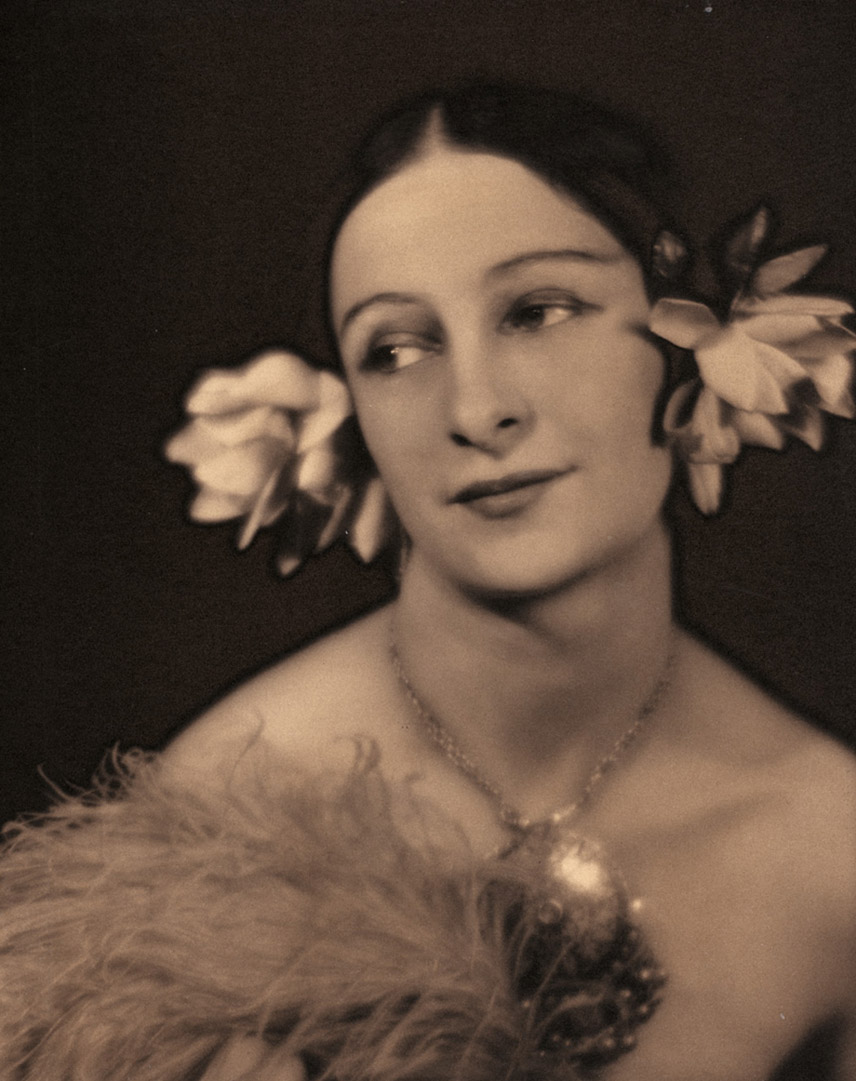
Portrait of dancer by Offner

Mortimer Offner (attr. to) (1900-1965) :: Stella Berch (sic), dancer, 1923. Vintage gelatin silver print applied on original cardboard. | src Drouot & Finarte Italia
Mortimer Offner (American, 1900 – 1965) :: Stella Bloch, ca. 1923. Platinum print. | src Nelson Atkins Museum

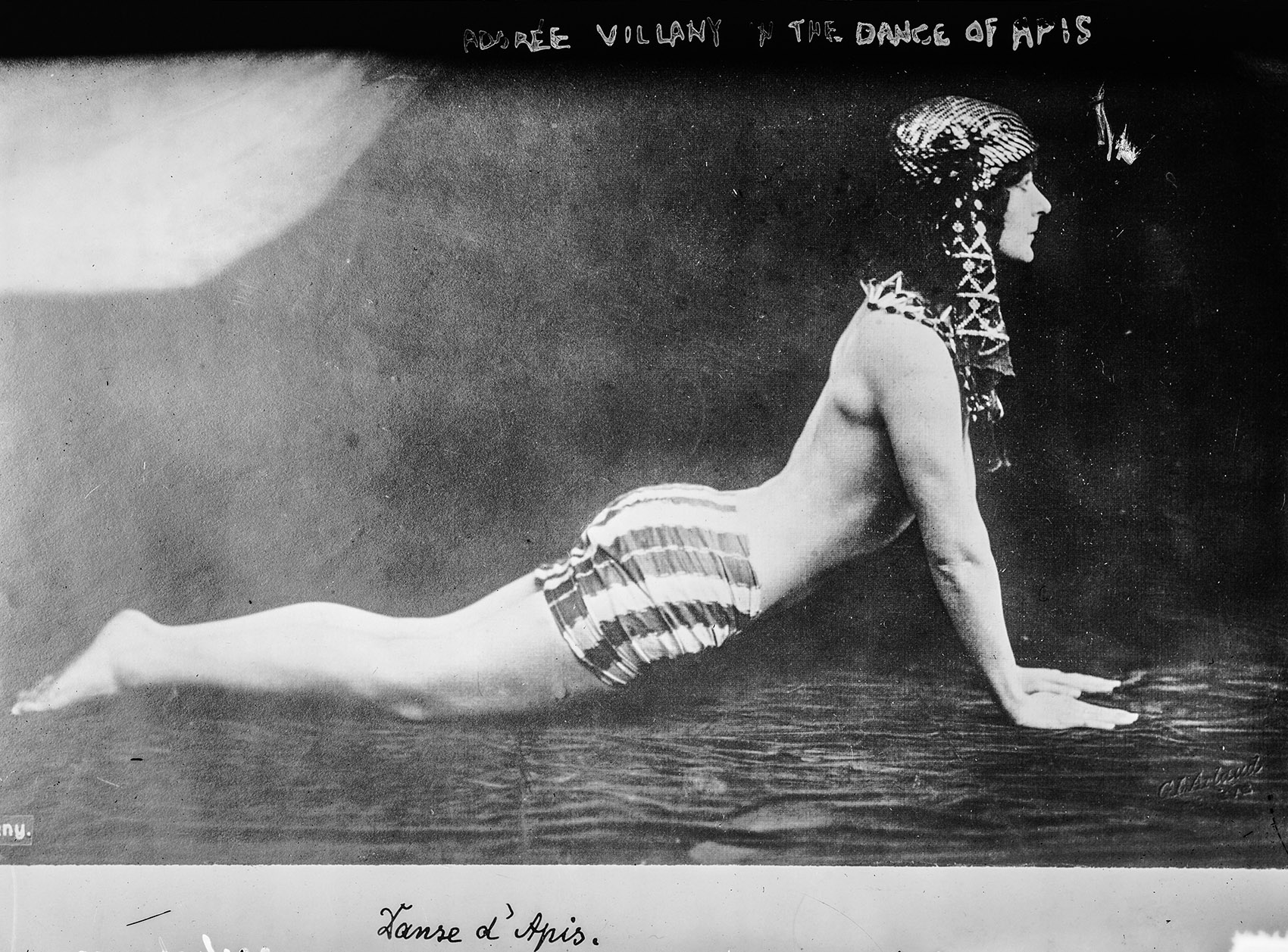
Villany · Danse d’Apis · 1910s

Text on image : Adoree Villany / The Dance of Apis / Villany / Danse d’Apis / 2619
Uncredited photographer on source. Blindstamp on right lower corner of the image reads: G.L. Arlaud.
Adoree Villany in the Dance of Apis, between ca. 1910-1915. Glass negative. Bain News Service | src Library of Congress

Puck der Waldgeist

PUCK der Waldgeist nennt diese junge fantasiebegabte Tänzerin diesen grotesken Tanz, ein paar Kastanien- blätter sind die Dekoration Foto: Illpho-Dillan 2. Das Kleine Magazin 1940 Band 16 Heft 34
PUCK the forest spirit is what this young, imaginative dancer calls this grotesque dance, a few chestnut leaves are the decoration Photo: Illpho-Dillan 2. Published in Das Kleine Magazin, 1940

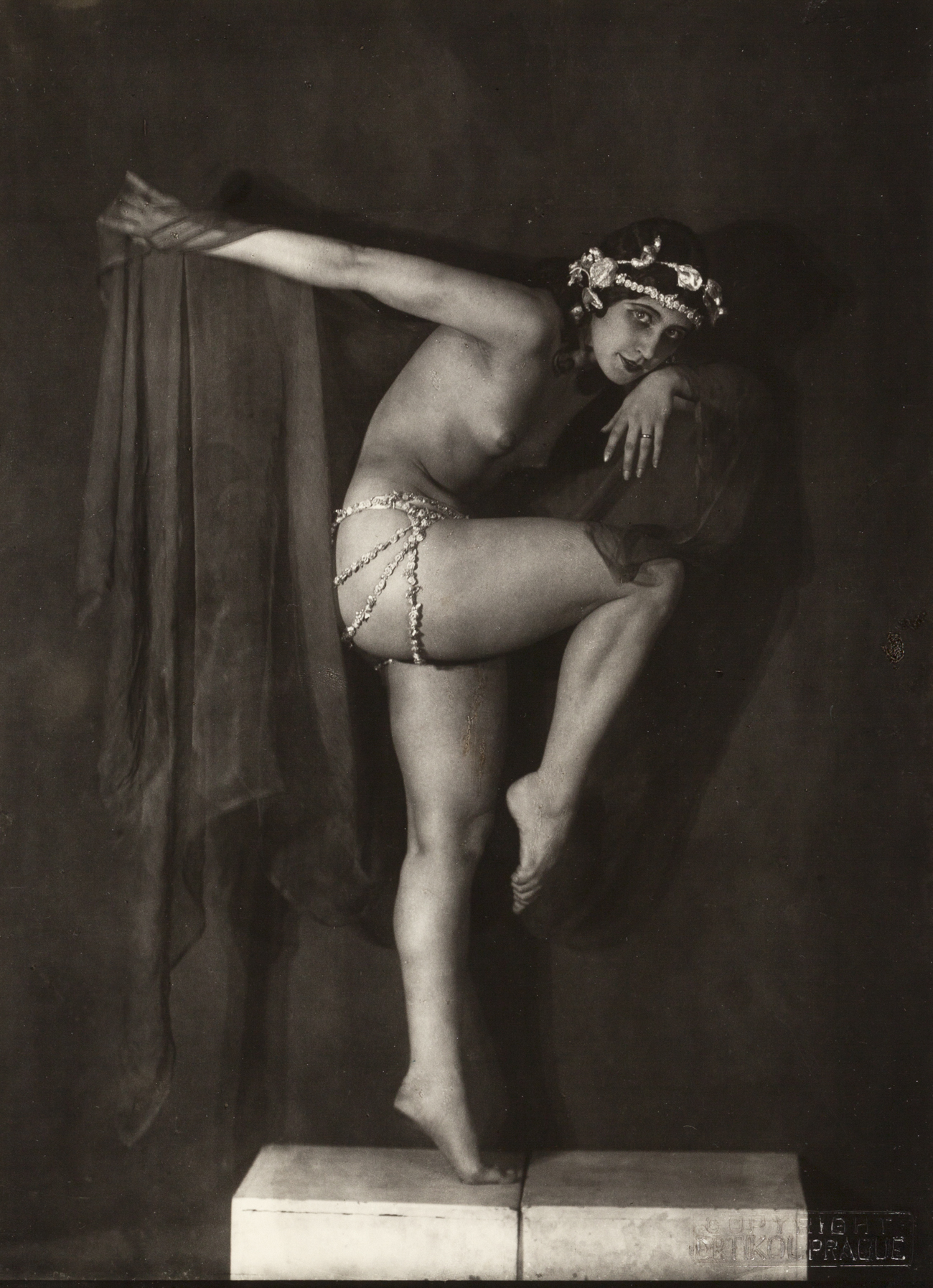
Dance study by Drtikol

Frantisek Drtikol (1883–1961) ~ Nude dance study, Prague, ca. 1919. Vintage silver print | src Ostlicht Photo Auction 2023
František Drtikol (1883–1961) ~ Nude dance study, Prague, ca. 1919 (detail) | src Ostlicht Photo Auction 2023

Milča Mayerová, ca. 1926

Dancer Milča Mayerová, ca. 1926. From : Pestrý Týden (Colorful Week) / Prague, Wednesday, December 29, 1926
Dancer Milča Mayerová, ca. 1926. From : Colorful Week / Prague, Wednesday, December 29, 1926
Tanečnice Milča Mayerová ca. 1926 ~ Pestrý Týden / V Praze ve středu dne 29. prosince 1926 | src Moravská zemská knihovna v Brně
Dancer Milča Mayerová, ca. 1926. From : Pestrý Týden (Colorful Week) / Prague, Wednesday, December 29, 1926
Tanečnice Milča Mayerová ca. 1926 ~ Pestrý Týden / V Praze ve středu dne 29. prosince 1926 | src Moravská zemská knihovna v Brně

Schenk dancer and draperies

Charles Schenk (American, active New York 1898-1905) ~ Schenk-Draperies, New York, United States; 1902; Collotype. | Getty Museum
Charles Schenk :: Dance studies, plate 12, circa 1910. Gelatin silver print from collotype negative. | src Freeman’s auction

Charles Schenk was active in New York from 1898 to 1905. He produced a series of motion studies of women dancing with drapery as well as a collection of multi-plate prints detailing women’s hands at work. His works are in the collections of the Getty Museum, MoMA and the Rijksmuseum.

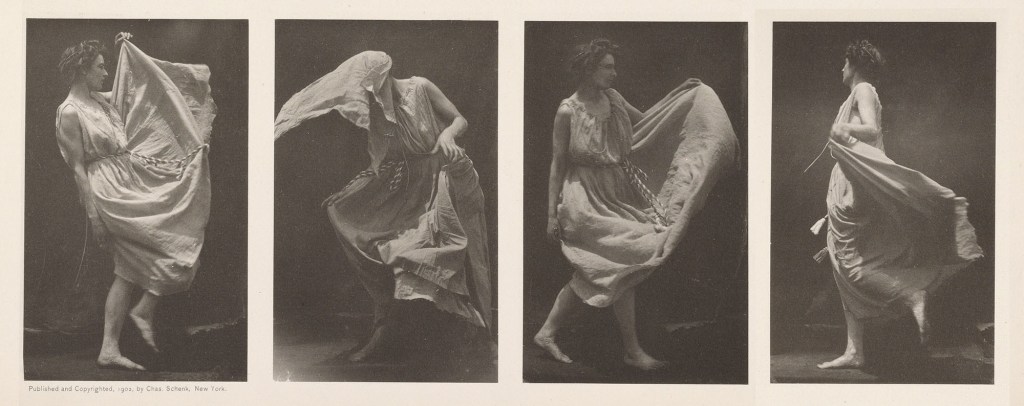
Charles Schenk (American, active New York 1898-1905) ~ Schenk-Draperies, New York, United States; 1902; Collotype. Eight images of a woman dancing in a simple dress with a rope belt. Full plate. | Getty Museum
Charles Schenk (American, active New York 1898-1905) ~ Schenk-Draperies, New York, United States; 1902; Collotype.
Charles Schenk (American, active New York 1898-1905) ~ Schenk-Draperies, New York, United States; 1902; Collotype. | Getty Museum

Rubinstein par Wegener

Otto Wegener ~ Ida Rubinstein en Cléopâtre. Paris, 1909 | Drouot & Daguerre
Grande épreuve agentique d’exposition avec nombreuses retouches à la gouache par l’artiste au niveau du visage, des yeux et des cheveux, signature au crayon sur le carton de montage.

Paris, 1909. Serge Diaghilev engage Ida Rubinstein dans les Ballets russes pour le rôle-titre de Cléopâtre, à l’opéra
Garnier. Cette interprétation est remarquée, ainsi que le nez de la diva.
Les costumes sont signés Léon Bakst et le final inspire le Souvenir de la saison d’Opéra Russe 1909 du peintre Kees van Dongen. Nijinski danse sa première saison des Ballets russes, dans le rôle d’un esclave peu vêtu, éblouissant le public parisien.

From : Otto Portraits : Daguerre & Drouot

Paris, 1909. Serge Diaghilev engages Ida Rubinstein in the Ballets Russes for the title role of Cleopatra, at the opera
Garnier. This interpretation is noticed, as well as the nose of the diva.
The costumes are by Léon Bakst and the finale inspires the Souvenir de la saison d’Opéra Russe 1909 by the painter Kees van Dongen. Nijinsky danced his first season of the Ballets Russes, in the role of a scantily dressed slave, dazzling the Parisian audiences.

Otto Wegener ~ Ida Rubinstein dans une robe de Léon Bakst. Paris, 1909. | Drouot & Daguerre
Grande épreuve d’exposition à la gomme bichromatée, signée au crayon dans l’angle supérieur droit de l’épreuve.

Portrait dynamique : Ida Rubinstein dans un costume pour Cléopâtre, ballet en un acte, argument d’après Pouchkine.

Otto Wegener ~ Ida Rubinstein en Hélène de Sparte. Paris, mai 1912.
Épreuve d’exposition à la gomme bichromatée, signée à la gouache blanche. | Drouot & Daguerre

Remarquables décors et costumes de Léon Bakst, pour la première au théâtre du Châtelet.

Otto Wegener ~ Ida Rubinstein, La Pisanelle ou la Mort Parfumée, 1912. | Drouot & Daguerre
Grande épreuve argentique d’exposition sur papier mat montée sur carton gris, signature au crayon “Otto Paris”

“Le 13 juin 1913 est créée au théâtre du Châtelet à Paris une œuvre rutilante et hybride : la Pisanelle ou la Mort parfumée, texte français du dramaturge italien Gabriele d’Annunzio. La participation russe est prépondérante : Lev Bakst pour le décor, Ida Rubinstein dans le rôle principal, Vsevolod Meyerhold pour la mise en scène.
La richissime actrice est la commanditaire du spectacle dont la chaude volupté répond à ses vœux. Dans cette œuvre, D’Annunzio a voulu faire se mesurer latinité et orientalisme.
Les circonstances qui ont procédé à la création de la pièce dans l’atmosphère survoltée d’une vie artistique dominée par les Ballets russes…”
Gérard Abensour, Monde Russe, 2007. From : Otto Portraits : Daguerre & Drouot

“On June 13, 1913, a gleaming and hybrid work was created at the Théâtre du Châtelet in Paris: La Pisanelle ou la Mort parfumée, a French text by the Italian playwright Gabriele d’Annunzio. The Russian participation is preponderant: Lev Bakst for the decor, Ida Rubinstein in the main role, Vsevolod Meyerhold for the staging.
The wealthy actress is the sponsor of the show marked by her fervent voluptuousness. In his work, D’Annunzio wanted to present Latinism and Orientalism into balance.
The circumstances that led to the creation of the piece in the charged atmosphere of an artistic life dominated by the Ballets Russes…”
Gérard Abensour, Monde Russe, 2007.

All the the photographs and texts in this post had been retrieved from the catalogue of this auction :

Otto Portraits. Un fonds d’atelier photographique est retrouvé intact après cent ans d’oubli. Le studio du portraitiste Otto, place de la Madeleine, accueillait le Tout-Paris de la Belle Époque. Otto et ses fils y menaient grand train.

Vente aux enchères ‘Photographies par Otto Wegener (1849-1924)’ à Hôtel de vente Drouot le 8 novembre 2018 – Daguerre & Drouot