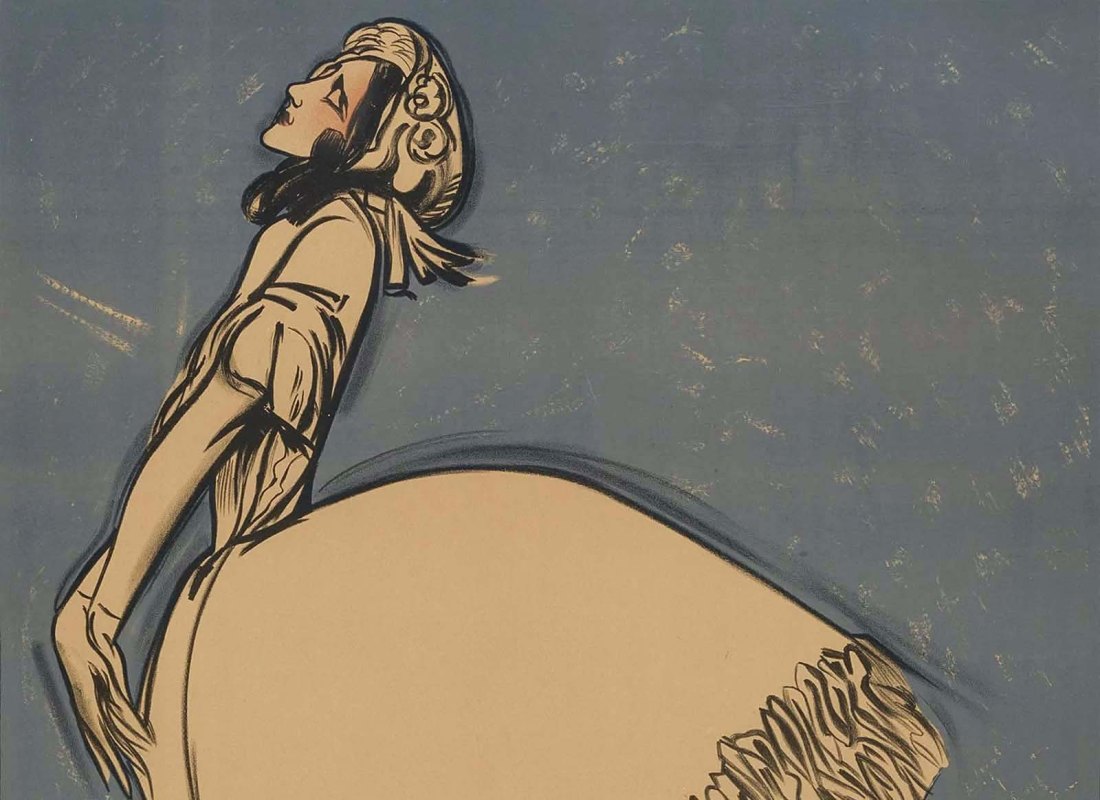
A Page of Madness 1926

Eiko Minami in A Page of Madness [Kurutta Ichipeiji]. Dir: Teinosuke Kinugasa, 1926. [film still from the mask sequence]

Advances in Japanese cinema, as much as any other nation, are about breaks from conventional styles and means of representation. Every generation has turned out a handful of directors whose work has broken the mould to go far beyond the standards set by their contemporaries. One of the first of these was Teinosuke Kinugasa, who all the way back in the 1920s was busily familiarising himself with developments in European cinema, Soviet theories of associative montage and movements in the artistic avant-garde such as expressionism, impressionism and surrealism, and in collaboration with a handful of young experimental writers of the day, known as the Shinkankaku school, or Neo-Perceptionists (sometimes referred to as the Neo-Sensationalists), became the first director in Japan to realise his ambition of treating cinema as a distinct art form in its own right, divorced from the commercial concerns of the new mass-audience medium. Quoted from Midnight Eye, visions of Japanese cinema

Eiko Minami in A Page of Madness [Kurutta Ichipeiji]. Dir: Teinosuke Kinugasa, 1926
Eiko Minami in the opening dance scene of A Page of Madness [Kurutta Ichipeiji]. Dir: Teinosuke Kinugasa, 1926
Eiko Minami in A Page of Madness [Kurutta Ichipeiji]. Dir: Teinosuke Kinugasa, 1926

Based on a treatment by the later 1968 Nobel Prize winning novelist Yasunari Kawabata (1899-1972), Kinugasa’s self-financed landmark production Kurutta Ippeiji, hereafter referred to as A Page of Madness (though some sources refer to it by the titles A Crazy Page or A Page Out of Order, and Aaron Gerow’s groundbreaking book on the film argues that the Japanese title should in fact be read as Kurutta Ichipeiji) seems a far cry from the bog-standard theatrically derived Kabuki adaptations and jidai-geki period swashbucklers being produced at the time en masse. The story of a retired sailor who has taken a job as a janitor in a lunatic asylum to look after his insane wife, locked away after attempting to drown their child, a synopsis of the plot can’t begin to explain the power of the film, nor the audacity of its vision.

A stunning invocation of the world as viewed by the mentally ill, within minutes, as the rapid montage of the opening storm sequences dissolves into the surrealistic fantasy of the sailor’s wife dressed in an exotic costume dancing in front of an art-deco inspired backdrop featuring a large spinning ball flanked by ornate fountains, A Page of Madness bowls you over with a barrage of startling images utilising every technique known to filmmakers of the time. Even now, Kinugasa’s film seems as fresh as a daisy and when seen on the big screen, as eye-popping an experience as anything you’re likely to see released nowadays.

At the time all of this passed by unnoticed by the rest of the world, and its impact on subsequent Japanese productions seems negligible, as the film, like so many films produced in Japan during the silent period, disappeared without a trace for fifty years. Fortunately it cropped up again in the director’s garden shed in 1971, and Kinugasa struck up a fresh print, complete with a newly composed musical score and released it around the rest of the world.

For the first time A Page of Madness could be seen outside of its country of origin, affording contemporary viewers the opportunity to place the film within a historical context alongside other seminal films produced during the silent period, revealing that in many respects, Kinugasa was way ahead of the game. As the writer Vlada Petric states in an essay entitled A Page of Madness: A Neglected Masterpiece of Silent Cinema, published in the Fall 1983 edition of Film Criticism, “The fact remains that historically Kinugasa made the first full feature film whose plot development is radically subverted, whilst its cinematic structure includes virtually every film device known at the time. These devices, moreover, are used not for their own sake but to convey complex psychological content without the aid of titles”.

A despondent Kinugasa, near-bankrupt after footing the bill for the film’s production, returned to commercial production for a couple of years before embarking on his next artistic experimentation, Jujiro (Crossroads, sometimes known as Crossways, or The Slums of Yoshiwara) in 1928. Quoted from Midnight Eye, visions of Japanese cinema

Eiko Minami in A Page of Madness [Kurutta Ichipeiji]. Dir: Teinosuke Kinugasa, 1926
Mask scene from : A Page of Madness [Kurutta Ichipeiji]. Dir: Teinosuke Kinugasa, 1926

In the last sequence before the final closure, a Western audience feels insecure because it has no spontaneous understanding of the Noh and may be disturbed by a suspicion that its interpretation of the mask (marked in the Western culture by negative allusions of a false beauty hiding the horrible truth) may not apply. If only you trust your perception, you will understand perfectly well what is going on in this sequence.

The man imagines himself to be laughing happily bringing a basket full of masks to the inmates and handing them out. The moment they don the masks their obsessively rhythmic movements stop; they relax. Then the man puts a mask on his deranged wife’s brooding face and dons one himself. A beautiful close-up shows man and wife with their radiant masks – hers softly smiling, his wrinkled but happy laughter – the image of a couple united, an image of happiness. The sequence is his fantasy of being able to overcome the mental separation from his wife. And to bring the deranged inmates deliverance from suffering. It functions, as intended by the authors (Kawabata tells us) indeed as an imagined happy end (and in the longer original version it worked as an indication of the happy end to be, the marriage of her daughter and her fiancé).

There are further insights if one tries to consider the Noh masks and the use the film makes of them. Noh is no ordinary stage entertainment, and a Noh mask is no ordinary prop. Noh belongs to the loftiest High culture, aristocratic in its origin, ritual in function. By using the masks, its most charged and prized element, the makers of A Page of Madness make a programmatic statement, claiming the status of High Art for their film, product of that very low class medium, the cinema. Using the masks freely, separated from their context, they make an ostentatious break with tradition. All of their implicit and explicit goals are fulfilled perfectly and to the advantage of the film because the masks are not desecrated or used in an arbitrary way. Their original power and function is realised in a different context; with their appearance, moods and rules of the Noh play are invoked and subtle affinities of the film with the Noh are accentuated.

Many Noh plays deal with human suffering, and one of the five categories of Noh plays are about madness; about people, usually women, gone mad through despair, longing, exhaustion, betrayal, grief of jealousy. The Noh has an aesthetic and dramatic side, telling these haunting stories, and has a ritual side of transforming, soothing and liberating the human mind from suffering and giving it peace. This function is invoked in the mask sequence. Okina, the Divine Old Man whose white mask Inoue dons, brings good fortune and divine blessing. It is the oldest and most sacred type of Noh mask (called hakushikijo). The ritual of the Okina dance is performed only on New Year, the highest holiday of the year, to invoke blessing and good fortune, and for the same purpose, on rare occasions like the inauguration of a new stage. Maybe it was purely a case that among the masks they could borrow from an antique dealer for the shooting there was also a white Okina, but this mask underlines the positive power of the scene approaching the protagonist into the laughing divinity who brings blessing and happiness. (Interview with Mariann Lewinsky) Quoted from Midnight Eye, visions of Japanese cinema

link to full movie on internet archive
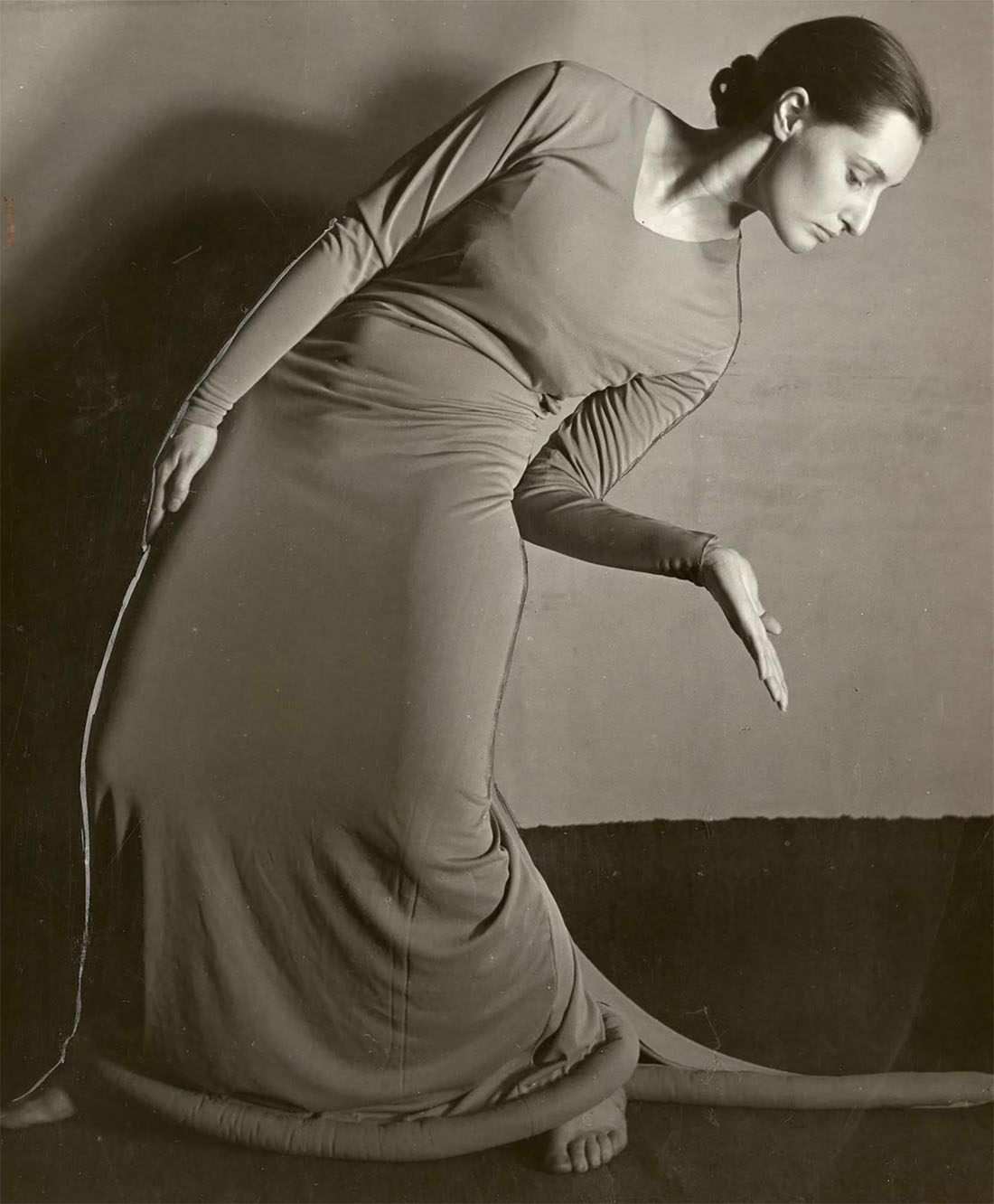
Eleanor (Buchla) Danced

Eleanor Danced! A live show that tells the amazing story of Eleanor Buchla Kubinyi, pioneer of modern dance © Cleveland Public Library | src cleveland.com
Eleanor Danced! A live show that tells the amazing story of Eleanor Buchla Kubinyi, pioneer of modern dance © Cleveland Public Library | src cleveland.com (for higher resolution see image on bottom of this post)

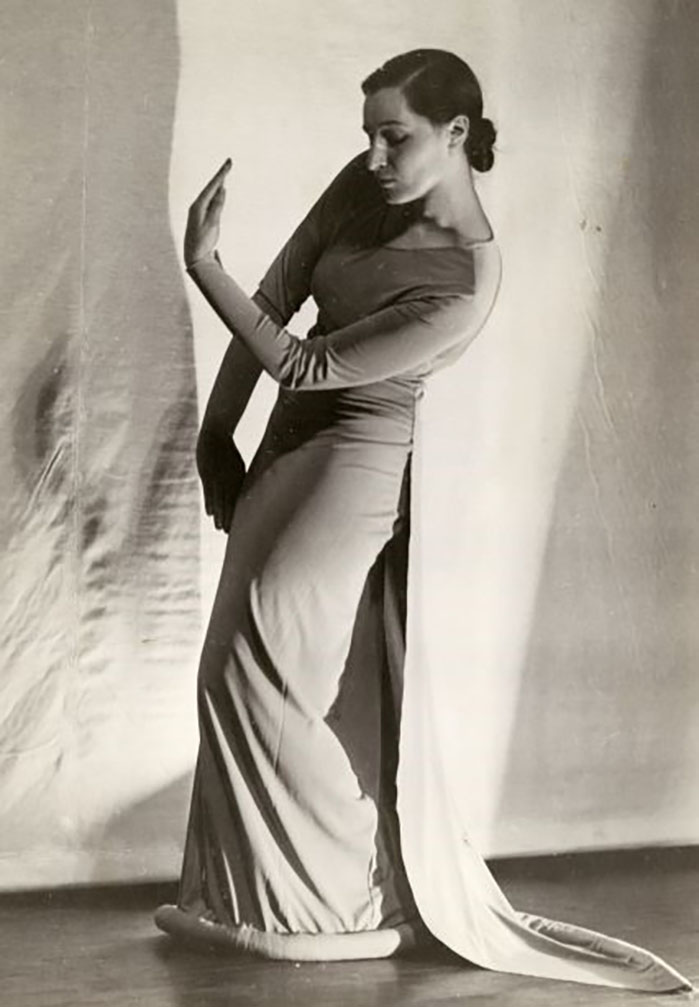
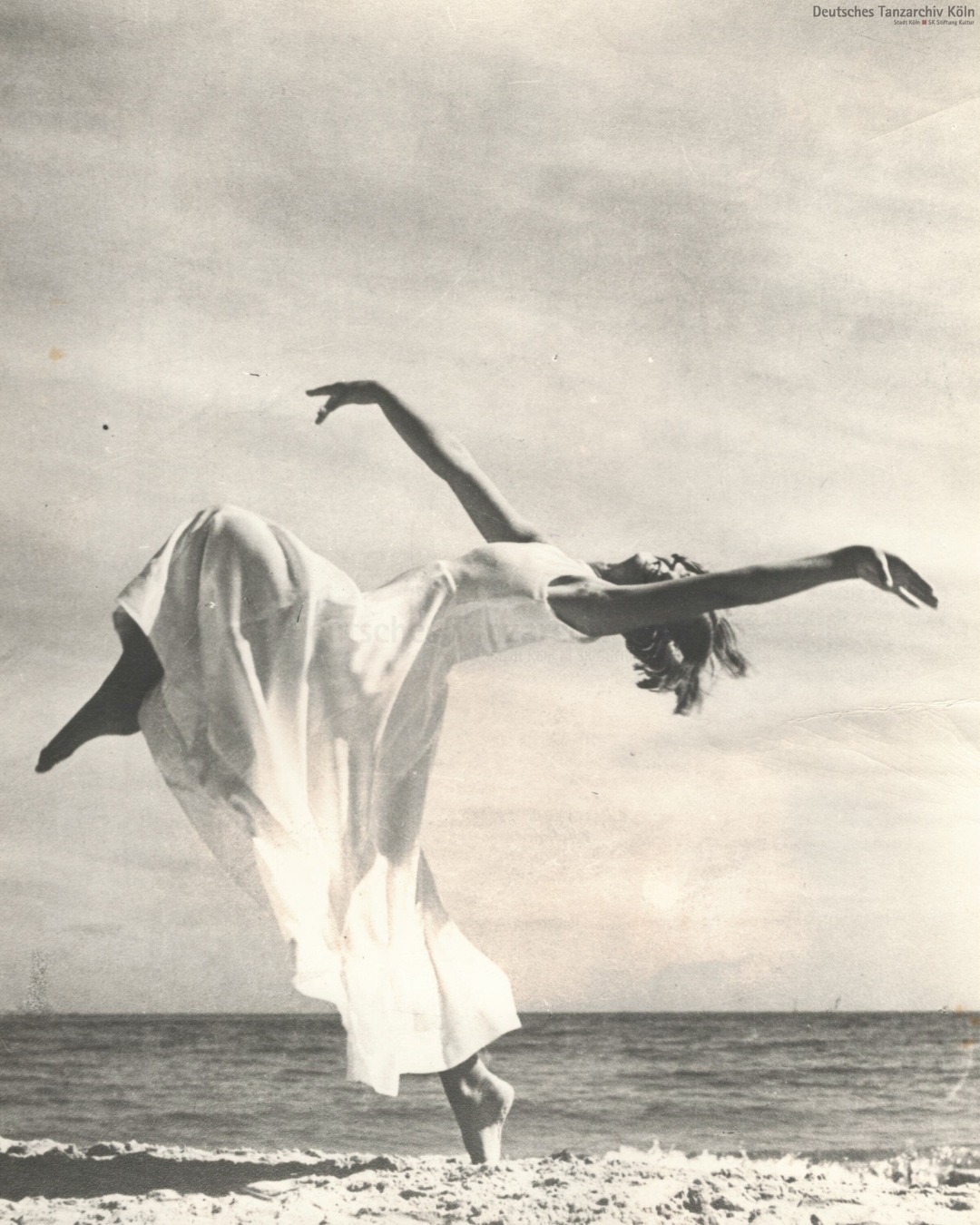
Eleanor Buchla (1910–1972) the first local dancer to gain a large audience, who began, c. 1931, performing her own choreography. Buchla’s dances,  reportedly acclaimed by dance critics throughout the country, were a mixture of modern dance and Hungarian folk dance. She was the featured performer at the State of Ohio’s first dance symposium, hosted in 1933 by Ohio University, that drew students and devotees of modern dance from Ohio State, Wesleyan, Oberlin, Cincinnati, Kent State, the University of Virginia and the City of Detroit. Set to the music of Debussy, Chopin, Kodaly and the beloved Hungarian violinist and composer Jenö Hubay (1858–1937), her dancing evoked for Athens critic Forest Hopkins by turns the simplicity of Greek sculpture and the “severe and stylized [spirit of] Egyptian art. In some art circles,” said Hopkins, “Miss Buchla’s dancing is called modern, perhaps because of its free use of the entire body, particularly the torso, yet it is classic in conception. It carries refinement of form and simplicity of design molded successfully with the music.” She had studied ballet as a young girl and then in the late 1920s discovered modern dance.

“Buchla’s work as a whole merits high praise,” Cleveland Plain Dealer music critic Herbert Elwell wrote, “and there is no doubt about her success in her concert here, for the spectators lingered in their seats and clamored for more.” He praised “the subtle grace, the objectivity, the persuasive and suggestive immobility characteristic of [her] style.” Her physical beauty evoked for him “classic models,” while her arresting “personality made what she does seem important and interesting. Her dancing is sculpturesque in slow motion, and a sense of beauty is created in every line, which shows grace of movement. The impression at any moment is one of sculpture liquified and flowing with life.”

A strong proponent for dance in the schools, Buchla not only opened Cleveland’s first modern dance studio but also began a dance curriculum in the city’s summer playgrounds. She provided the choreography (and directed a number of  productions) for several area theaters, including the Hudson Players, the Peninsula Players and, for six years, Cain Park in Cleveland Heights, and was instrumental in cultivating the first

Modern Dance Association, which was founded in 1934. An interesting footnote: Buchla was the sister-in-law of celebrated Cleveland artist Kalman Kubinyi. In the 1960s she and her husband Julius Kubinyi joined other Ohio families in providing temporary homes for Hungarian refugees in the wake of the uprising against the communist government. Though both Eleanor and Julius were born in America, they learned Hungarian from their parents and visited Hungary. In 1943 she played a key role in founding the Peninsula Library, on whose board she served until shortly before her death in 1972. / quoted from past masters project

Eleanor Danced! A live show that tells the amazing story of Eleanor Buchla Kubinyi, pioneer of modern dance © Cleveland Public Library | src cleveland.com
Eleanor Buchla, pioneer of modern dance © Cleveland Public Library | src cleveland.com
Eleanor Buchla, pioneer of modern dance © Cleveland Public Library | src Cleveland Public Library
Eleanor Danced! A live show that tells the amazing story of Eleanor Buchla Kubinyi, pioneer of modern dance © Cleveland Public Library
Eleanor Danced! A live show that tells the amazing story of Eleanor Buchla Kubinyi, pioneer of modern dance / hi-res

Kreutzberg und Tanzpaar

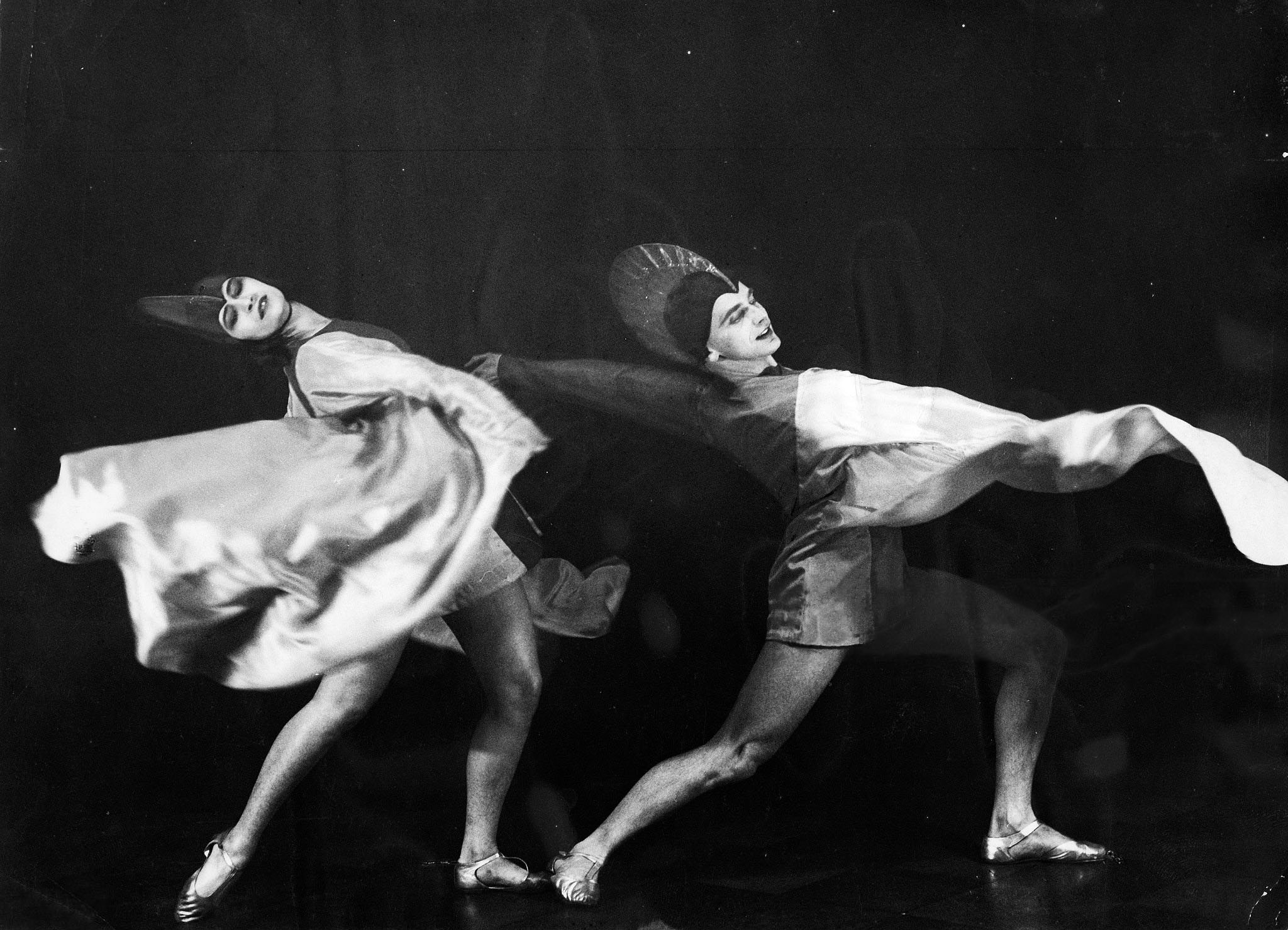
Atelier Riess :: Harald Kreutzberg dancing with Yvonne Georgi in a scene of the ballet 'Variationen von Mozart'. Published in 'Zeitbilder' 38/1929 - Photo by Frieda Riess | src Getty Images
Atelier Riess :: Harald Kreutzberg dancing with Yvonne Georgi in a scene of the ballet ‘Variationen von Mozart’. Published in ‘Zeitbilder’ 38/1929 – Photo by Frieda Riess | src Getty Images
Harald Kreutzberg, Tänzer, Ballettmeister, mit der Tänzerin Yvonne Georgi in einer Tanzstudie. Aufnahme: Atelier Binder
veröffentlicht: Die Dame 1/1929/30 | src Getty Images
Harald Kreutzberg, Tänzer, Ballettmeister, mit der Tänzerin Yvonne Georgi in einer Tanzstudie. Aufnahme: Atelier Binder
veröffentlicht: Die Dame 1/1929/30 | src Getty Images
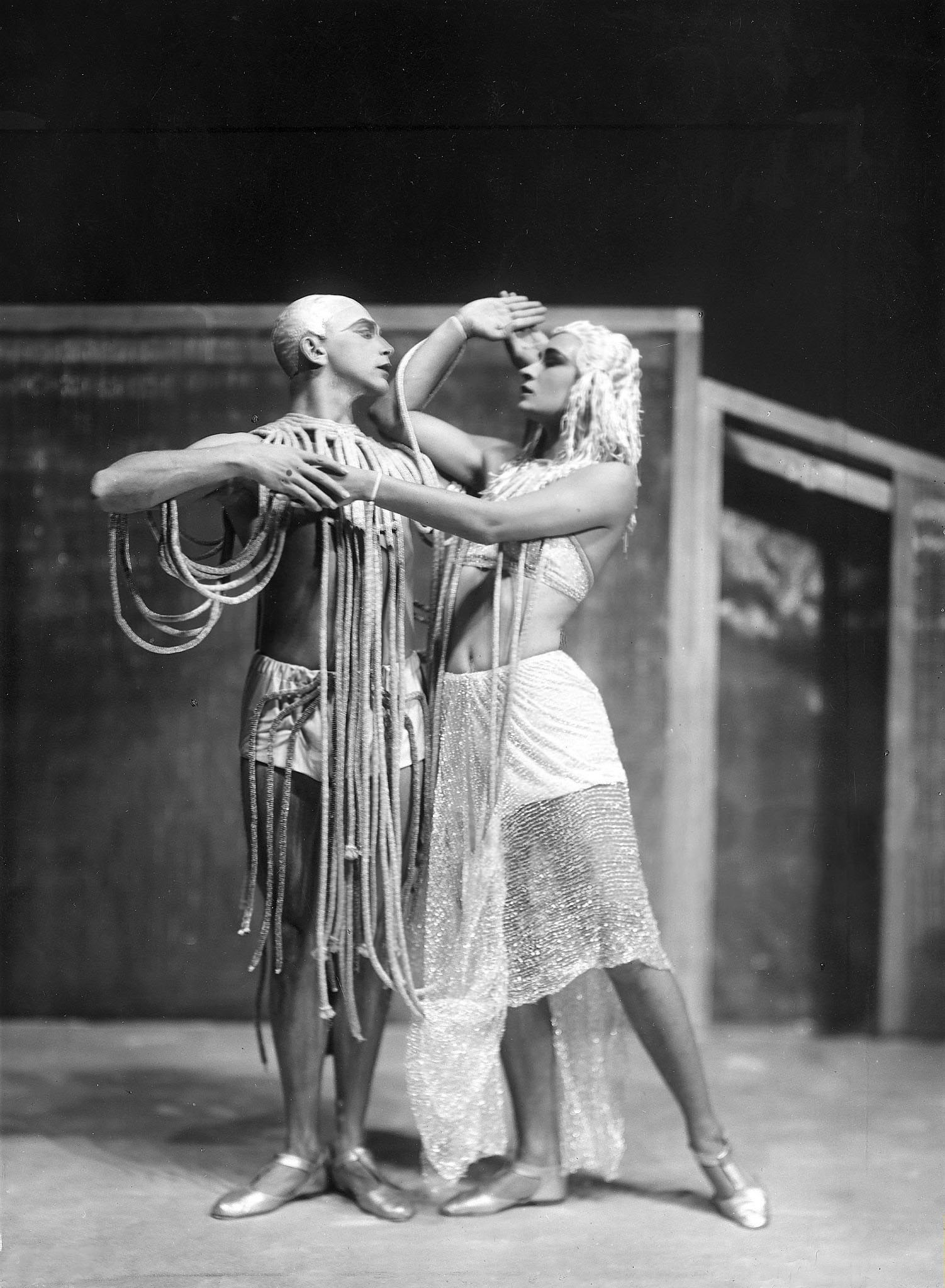
Harald Kreutzberg; Solotänzer an der Berliner Staatsoper. Szene aus einem Bühnentanz mit seiner Tanzpartnerin, der ehemaligen Solotänzerin an der Staatsoper Berlin, Elisabeth Grube, 1925. Aufnahme: Atelier Baruch
Atelier Baruch :: Harold Kreutzberg; Solo dancer at the Berlin State Opera. Scene from a stage dance with his dance partner, the former solo dancer at the Berlin State Opera, Elisabeth Grube, 1925
Harald Kreutzberg; Solotänzer an der Berliner Staatsoper. Szene aus einem Bühnentanz mit seiner Tanzpartnerin, der ehemaligen Solotänzerin an der Staatsoper Berlin, Elisabeth Grube, 1925. Aufnahme: Atelier Baruch
src Getty Images

Kreutzberg and Georgi ca 1928

Yvonne Georgi and Harald Kreutzberg in a dance of flags - ca. 1929- Photographer: Hans Robertson / Atelier Robertson - Published: 'Berliner Illustrirte Zeitung' 43/1929 via Getty Images
Yvonne Georgi and Harald Kreutzberg in a Dance of Flags, ca. 1929. Photographer: Hans Robertson / Atelier Robertson.
Published: ‘Berliner Illustrirte Zeitung’ 43/1929 | src Getty Images
Harald Kreutzberg dancing with Yvonne Georgi in a scene of the ballet 'The creation of the World' by Blaise Cendrars; Neues Theater, Leipzig, 1929. Music by: Darius Milhaud Photographer: Hans Robertson / Atelier Robertson
Published in: 'Zeitbilder'; 38/1929 | src Getty Images
Harald Kreutzberg dancing with Yvonne Georgi in a scene of the ballet ‘The creation of the World’ by Blaise Cendrars; Neues Theater, Leipzig, 1929. Music by: Darius Milhaud Photographer: Hans Robertson / Atelier Robertson. Published in: ‘Zeitbilder’; 38/1929 | src Getty Images
Atelier Robertson :: Harald Kreutzberg with Yvonne Georgi in the play 'Stravinsky Suite', ca. 1928. Photographer: Hans Robertson / Atelier Robertson. Published in 'Berliner Illustrirte Zeitung' 48/1928. | src Getty Images
Atelier Robertson :: Harald Kreutzberg with Yvonne Georgi in the play ‘Stravinsky Suite’, ca. 1928. Photographer: Hans Robertson / Atelier Robertson. Published in ‘Berliner Illustrirte Zeitung’ 48/1928. | src Getty Images

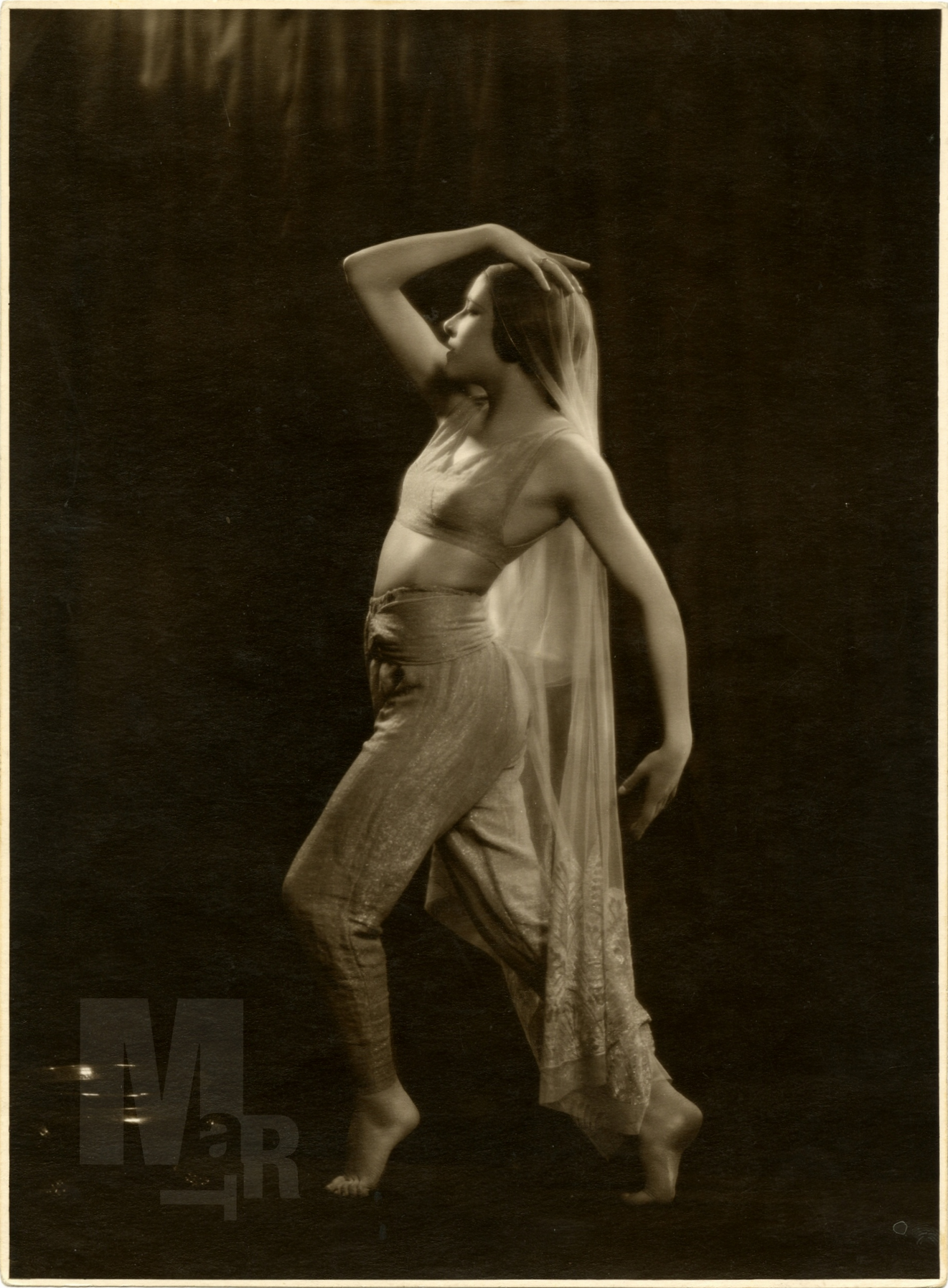
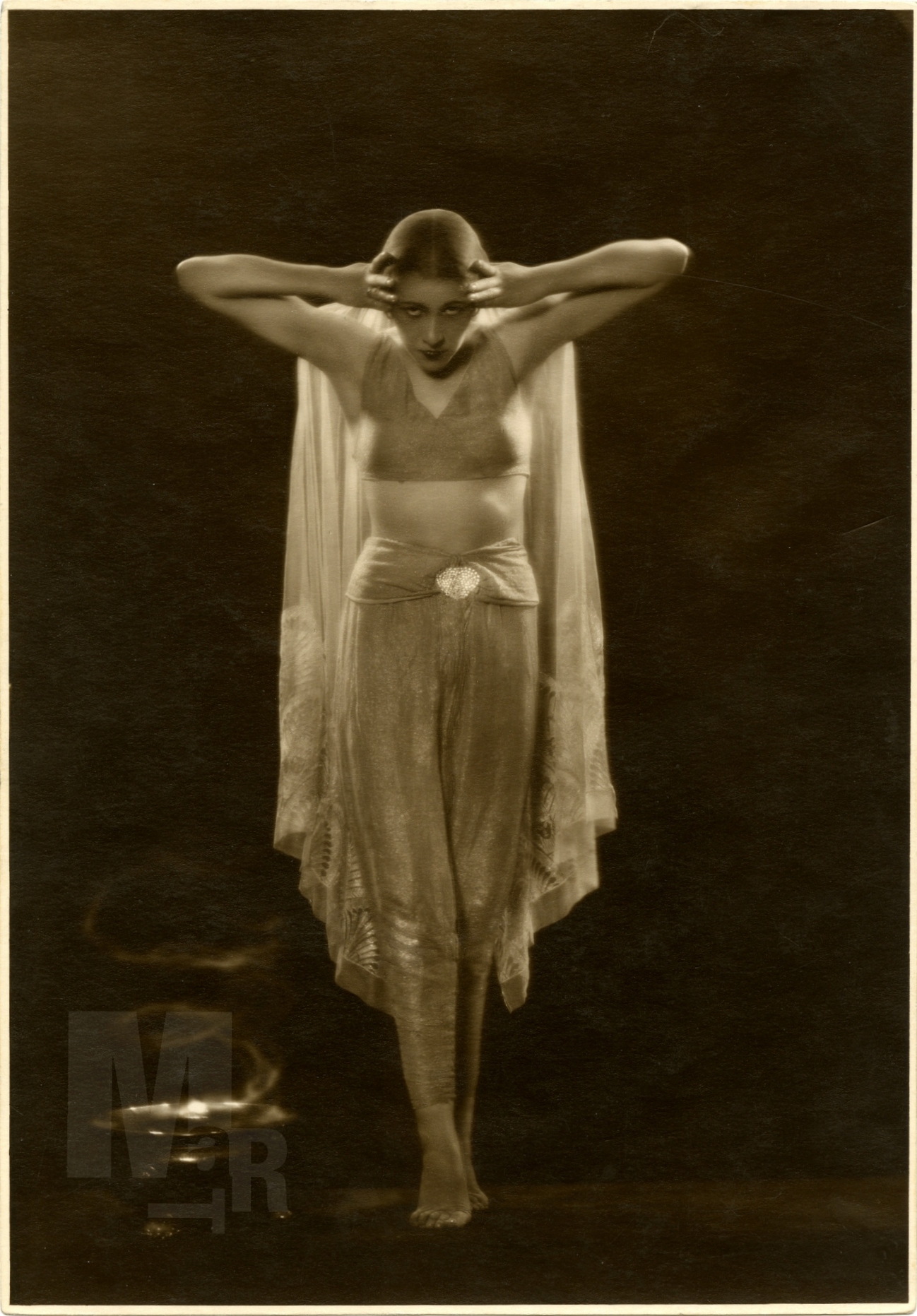
Censi in costume di scena

Giannina Censi con un costume di scena di ispirazione medieval-religiosa, ca. 1930 [# 3] | src MART · Fondo Giannina Censi
Giannina Censi con un costume di scena di ispirazione medieval-religiosa, ca. 1930 [# 2] | src MART · Fondo Giannina Censi
Giannina Censi con un costume di scena di ispirazione medieval-religiosa, ca. 1930 [# 1] | src MART · Fondo Giannina Censi
Giannina Censi con un costume di scena di ispirazione medieval-religiosa, ca. 1930 [# 5] | src MART · Fondo Giannina Censi

All these images (plus one more from this series) had been published in:

Vaccarino E., (a cura di) Giannina Censi: danzare il futurismo. Milano: Electa; Museo di arte moderna e contemporanea di Trento e Rovereto, 1998, p.30

Giannina Censi con un costume di scena di ispirazione medieval-religiosa, ca. 1930 [# 3] | src MART · Fondo Giannina Censi
Giannina Censi con un costume di scena di ispirazione medieval-religiosa, ca. 1930 [# 2] | src MART · Fondo Giannina Censi
Giannina Censi con un costume di scena di ispirazione medieval-religiosa, ca. 1930 [# 1] | src MART · Fondo Giannina Censi
Giannina Censi con un costume di scena di ispirazione medieval-religiosa, ca. 1930 [# 5] | src MART · Fondo Giannina Censi

G. Censi · Le danze della jungla

Giannina Censi in costume in "Le danze della jungla" di Mauro Camuzzi. Fotografie, 1930.
Giannina Censi in costume in “Le danze della jungla” di Mauro Camuzzi. Fotografie, 1930.
Giannina Censi in costume in "Le danze della jungla" di Mauro Camuzzi. Fotografie, 1930.
Giannina Censi in costume in “Le danze della jungla” di Mauro Camuzzi. Fotografie, 1930.

Pubblicata in Vaccarino E., (a cura di) Giannina Censi: danzare il futurismo. Museo di arte moderna e contemporanea di Trento e Rovereto, 1998 | src & © MART · Fondo Giannina Censi

Giannina Censi in costume in "Le danze della jungla" di Mauro Camuzzi. Fotografie, 1930. | detail
Giannina Censi in costume in “Le danze della jungla” di Mauro Camuzzi. Fotografie, 1930. (detail)

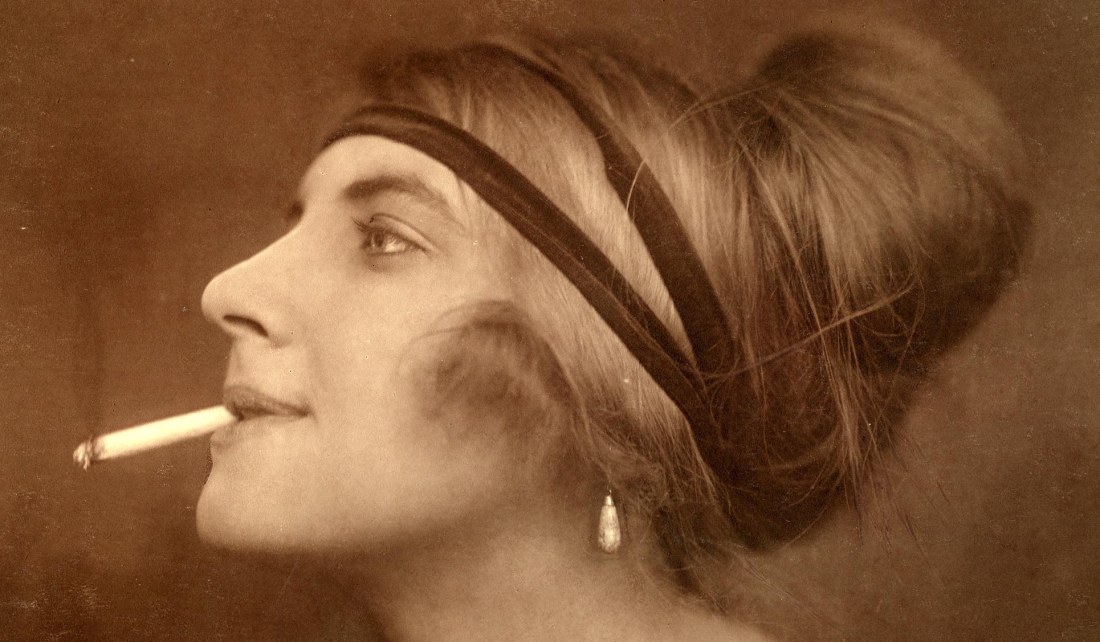

Modedanspaar by Merkelbach

Atelier Merkelbach, Juan Morhart, danspaar, modedanspaar, smoking, smoker, portrait
Jacob Merkelbach :: Danseres, 1918. | src Leiden University Library · Universitaire Bibliotheken Leiden
Atelier J. Merkelbach :: Danseres. Juan Morhart Danspartner, 1919-1920. Glass negative.| Collectie Atelier J. Merkelbach
Atelier J. Merkelbach :: Modedanspaar Juan Morhart en partner 1919-1920. | Collectie Atelier J. Merkelbach
Atelier J. Merkelbach :: Modedanspaar Juan Morhart en partner 1919-1920. Glass negative. | Collectie Atelier J. Merkelbach
Atelier J. Merkelbach :: Danseres. Juan Morhart Danspartner, 1919-1920. Glass negative. | Collectie Atelier J. Merkelbach

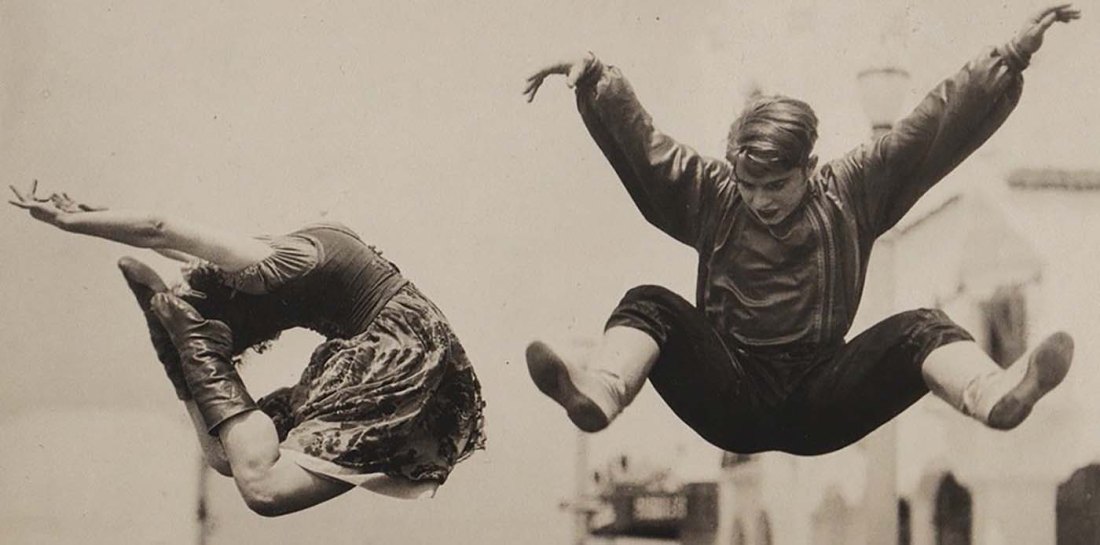
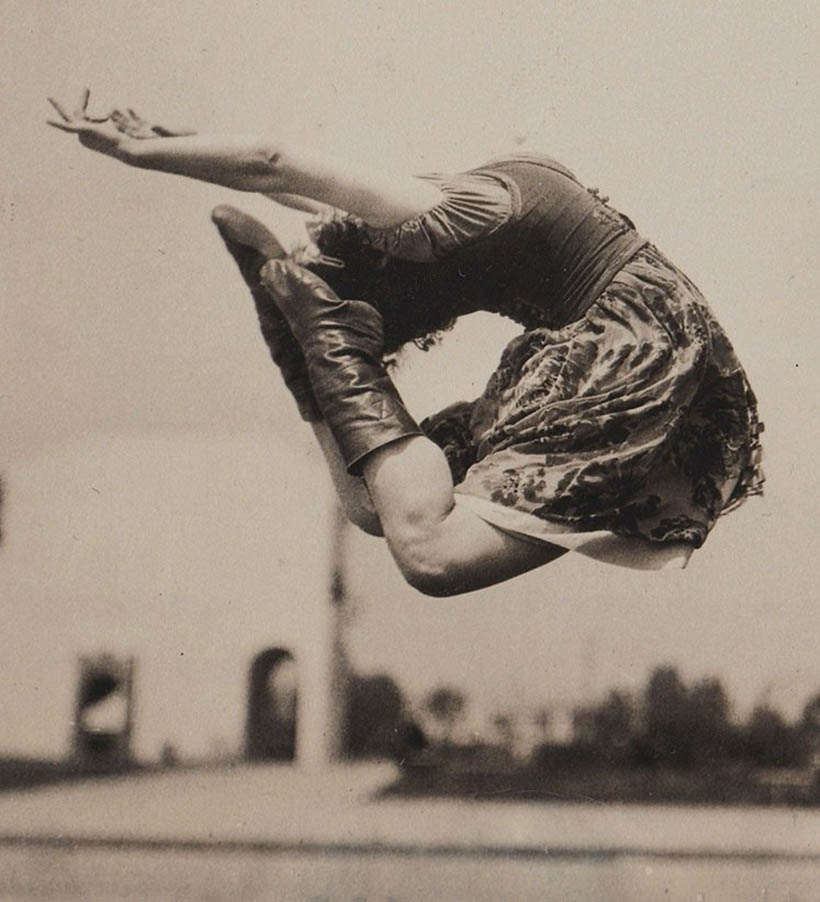
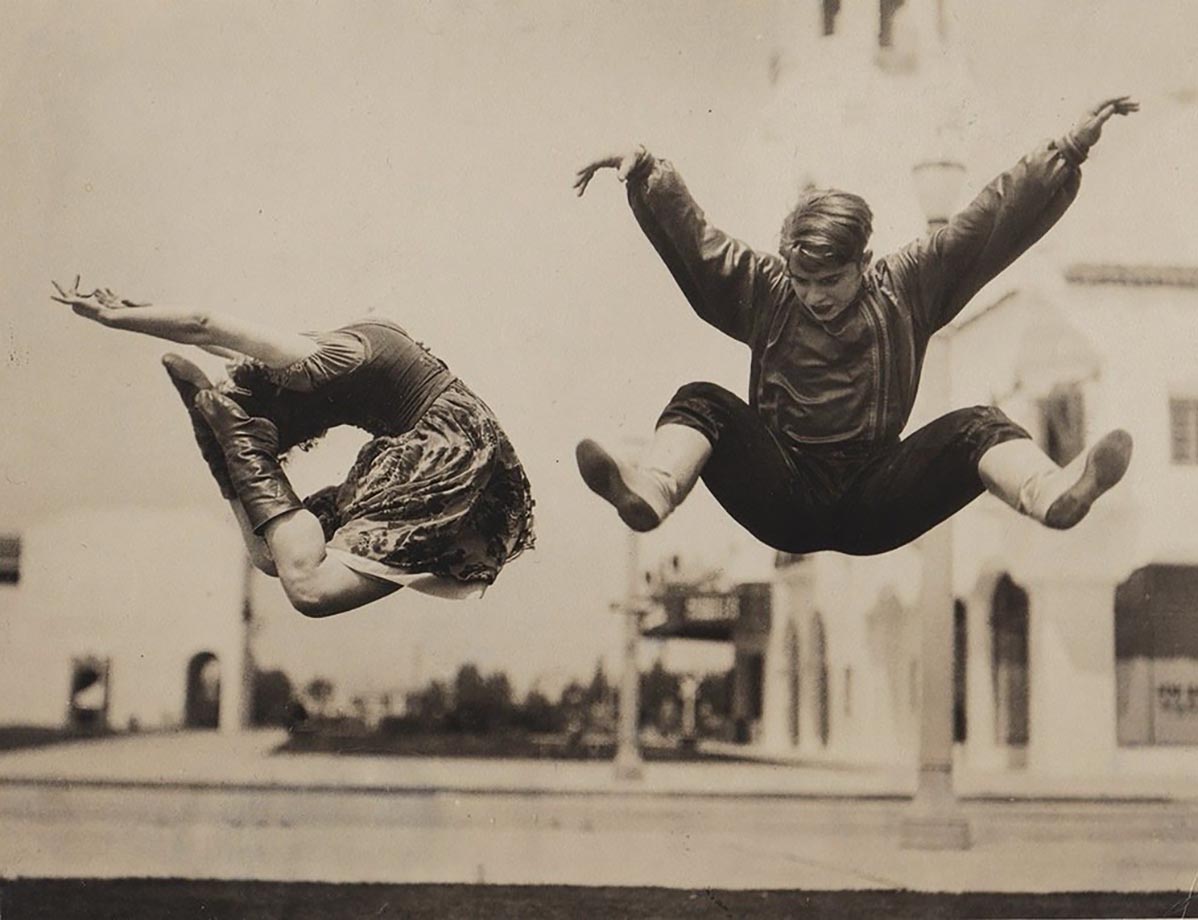
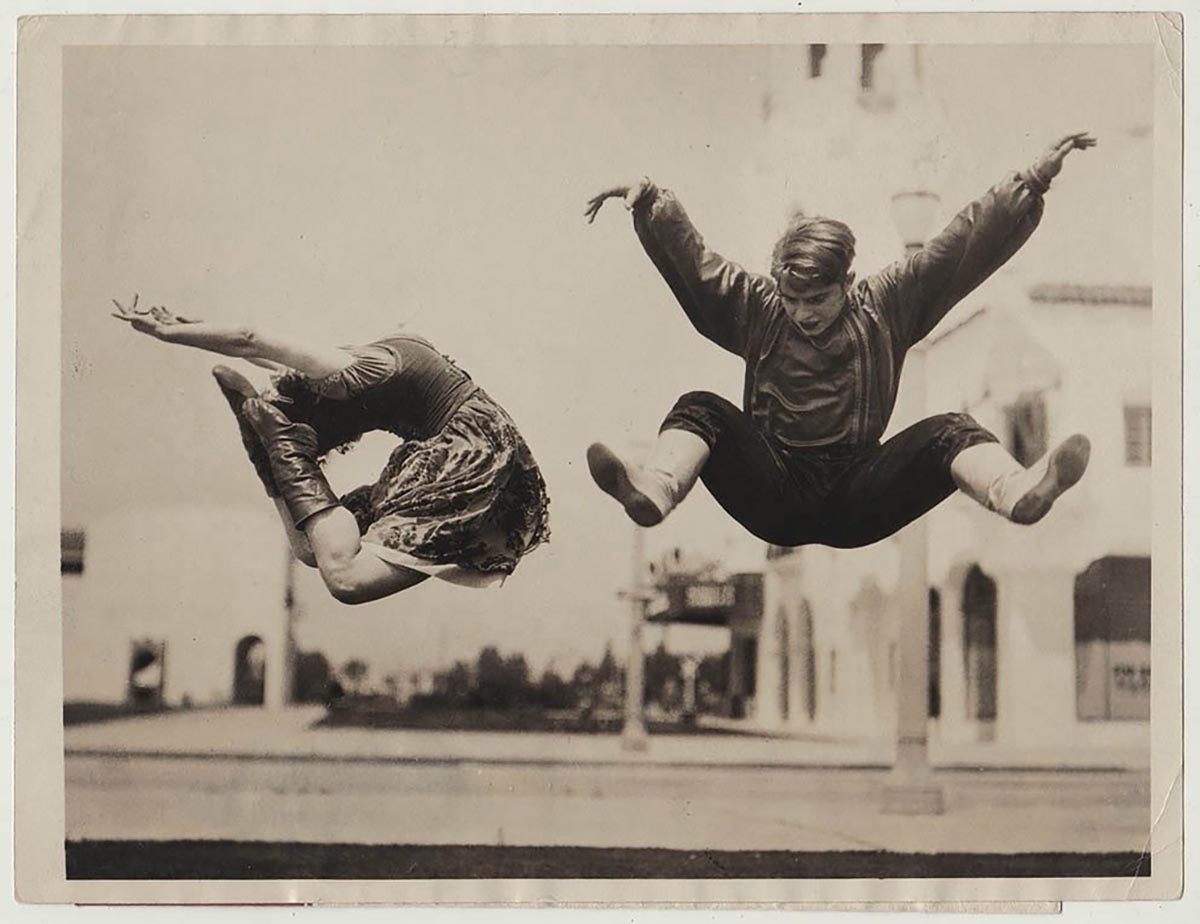
Frieda and Louis Berkoff

detail
Dancer Frieda Berkoff during a leap in the air. Underwood & Underwood. 1920s | src catawiki
Dancers Louis and Frieda Berkoff during a leap in the air. Underwood & Underwood. 1920s | src catawiki

Press Agency / Newspaper Stamp on the reverse reads: S/644A309 By Underwood and Underwood. / Louise and Frieda Berkoff. Here’s action: How many can do this? / For once in his life “Old Man Gravity”, the well known friend of Isaac Newton, came out second best when Louis and Frieda Berkoff prectised these spectacular flying “steps” of a new Russian dance on the lawn of the Carthay Circle, a Los Angeles suburb.
Photo shows: brother and sister “Up in the air”. An exclusive Underwood photograph. Watch your credit line

Nijinsky and Karsavina

Jean Cocteau (1889-1963) :: Théatre de Monte-Carlo; Ballet Russe; [Nijinsky]. Lithograph in colours, 1911
Jean Cocteau (1889-1963) :: Théatre de Monte-Carlo; Ballet Russe; [Nijinsky]. Lithograph in colours, 1911, printed by Eugène Verneau & Henri Chachoin, Paris. | src Christie’s
Jean Cocteau (1889-1963) :: Théatre de Monte-Carlo; Ballet Russe; [Karsavina], 1911. Lithographic poster in colors on wove paper, printed by Eugène Verneau & Henri Chachoin, Paris. Severin Wunderman Family Museum | src Bonhams
Jean Cocteau (1889-1963) :: Théatre de Monte-Carlo; Ballet Russe; [Karsavina], 1911
Jean Cocteau (1889-1963) :: Théatre de Monte-Carlo; Ballet Russe; [Karsavina], 1911 [Detail]
Jean Cocteau (1889-1963)
THÉATRE DE MONTE-CARLO, BALLET RUSSE [Karsavina]
Lithograph in colours, 1911, printed by Eugène Verneau & Henri Chachoin, Paris | src Christie's
Jean Cocteau (1889-1963) :: Théatre de Monte-Carlo; Ballet Russe; [Karsavina]. Lithograph in colours, 1911, printed by Eugène Verneau & Henri Chachoin, Paris. | src Christie’s
d'après Jean Cocteau (1889-1963)
EXPOSITION BALLETS RUSSES DE DIAGHILEW
lithographic poster in colours, 1939, cond. A, backed on linen
Exposition: Ballets Russes de Diaghilew; d’après Jean Cocteau (1889-1963); lithographic poster in colours, 1939. | src Bonhams