Laure Albin-Guillot (1879-1962) :: Vase aux orchidées (*), 1938. Épreuve au charbon, tirage Fresson, signée et datée au recto, inscription manuscrite « New York expo Art décoratif français » au verso | src Piasa auction Dec. 2016 (lot 11)
(*) Note: not orchids but irises; vase with irises. Unless they were a variety of orchids that look very much like irises. If anybody happen to have the knowledge to disambiguate, please drop a line below. Thank you!
Laure Albin-Guillot :: Orchidées, 1927. Carbon Fresson print, on metalised golden paper. Auctioned at Sotheby’s May 2013 PF 1310 Lot 79. | src Luminous Lint : LL/50901
“Le sujet le plus banal, quelques fleurs dans un vase par exemple, devient nouveau par la façon dont les lumières y sont groupées et par l’extrème variété des valeurs. (…) Pour donner plus de richesse à ses compositions, l’auteur [Laure Albin Guillot] les a tirées sur fond or selon un procédé dont elle a le brevet.” Jean Gallotti, ‘La photographie est-elle un art? Laure Albin-Guyot [sic!]’, dans L’art vivant, No. 99, 1er février 1929, p. 138. [Quoted from Sotheby’s]
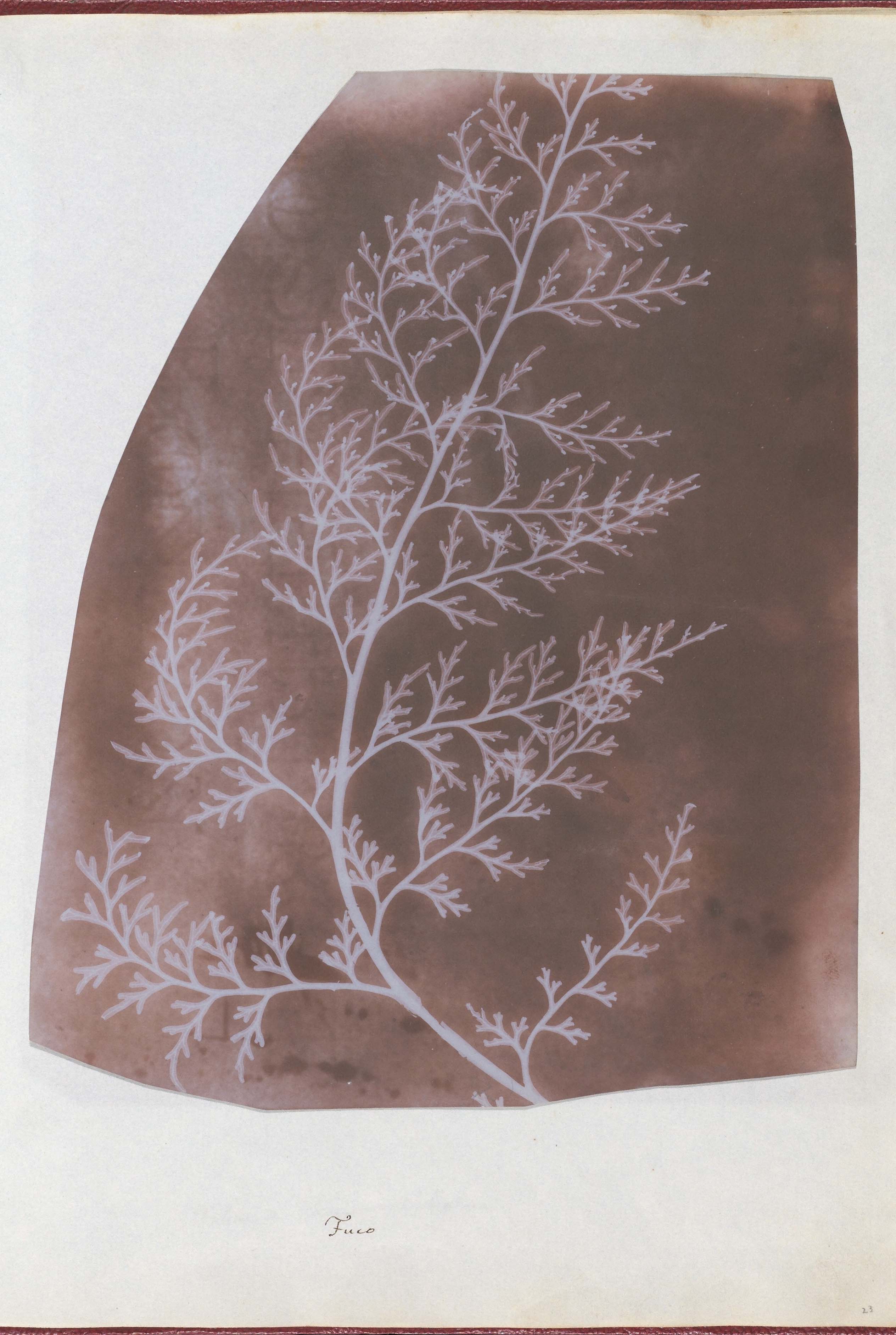
William Henry Fox Talbot :: Wrack (seaweed). Salted paper print, 1839. Photogenic drawing. | src The Met
This evanescent trace of a biological specimen, among the rarest of photographs, was made by William Henry Fox Talbot just months after he first presented his invention, photography—or “photogenic drawing,” as he called it—to the public. Talbot’s earliest images were made without a camera; here a piece of slightly translucent seaweed was laid directly onto a sheet of photosensitized paper, blocking the rays of the sun from the portions it covered and leaving a light impression of its form.
Plants were often the subject of Talbot’s early photographs, for he was a serious amateur botanist and envisioned the accurate recording of specimens as an important application of his invention. The “Album di disegni fotogenici,” in which this print appears, contains thirty-six images sent by Talbot to the Italian botanist Antonio Bertoloni in 1839–40. It was the first important photographic work purchased by the Metropolitan Museum. [quoted from source]
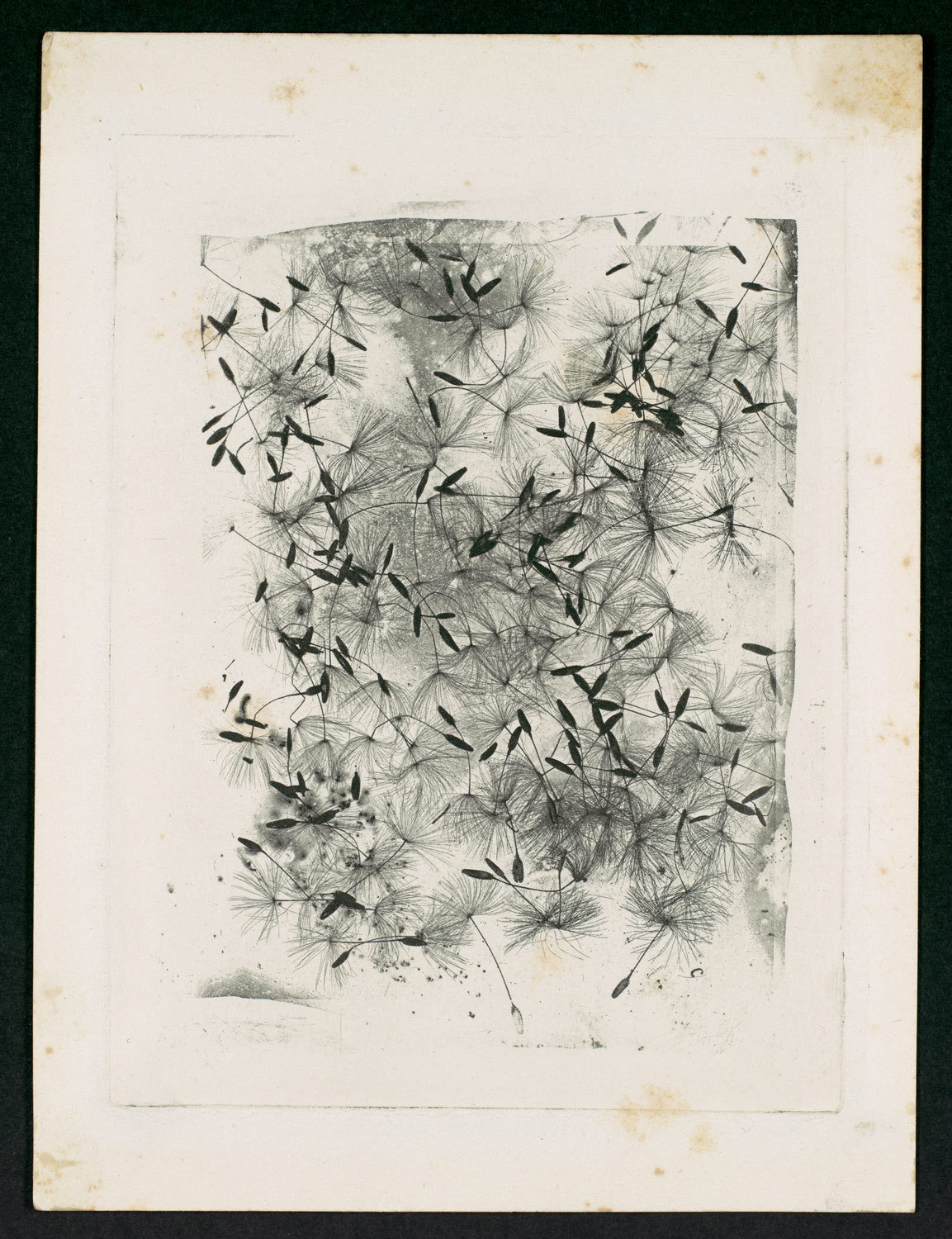
William Henry Fox Talbot :: Dandelion Seeds, 1858 or later. Photogravure (photoglyphic engraving from a copper plate). | source The Metropolitan Museum of Art
This experimental proof is a fine example of the capacity of Talbot’s “photoglyphic engraving” to produce photographic results that could be printed on a press, using printer’s ink-a more permanent process than photographs made with light and chemicals. Like Talbot’s earliest photographic examples, the image here was photographically transferred to the copper engraving plate by laying the seeds directly on the photosensitized plate and exposing it to light, without the aid of a camera. Equally reminiscent of Talbot’s early experiments, this image is part of Talbot’s lifelong effort to apply his various photographic inventions to the field of botany. In a letter tipped into the Bertoloni Album, Talbot wrote, “Je crois que ce nouvel art de mon invention sera d’un grand secours aux Botanistes” (“I think that my newly invented art will be a great help to botanists”). Such uses were still prominent in Talbot’s thinking years later when developing his photogravure process; he noted in 1863 that “if this art [of photoglyphic engraving] had been invented a hundred years ago, it would have been very useful during the infancy of botany.” Had early botanists been able to print fifty copies of each engraving, he continued, and had they sent them to distant colleagues, “it would have greatly aided modern botanists in determining the plants intended by those authors, whose descriptions are frequently so incorrect that they are like so many enigmas, and have proved a hindrance and not an advantage to science.” [quoted from The Met]
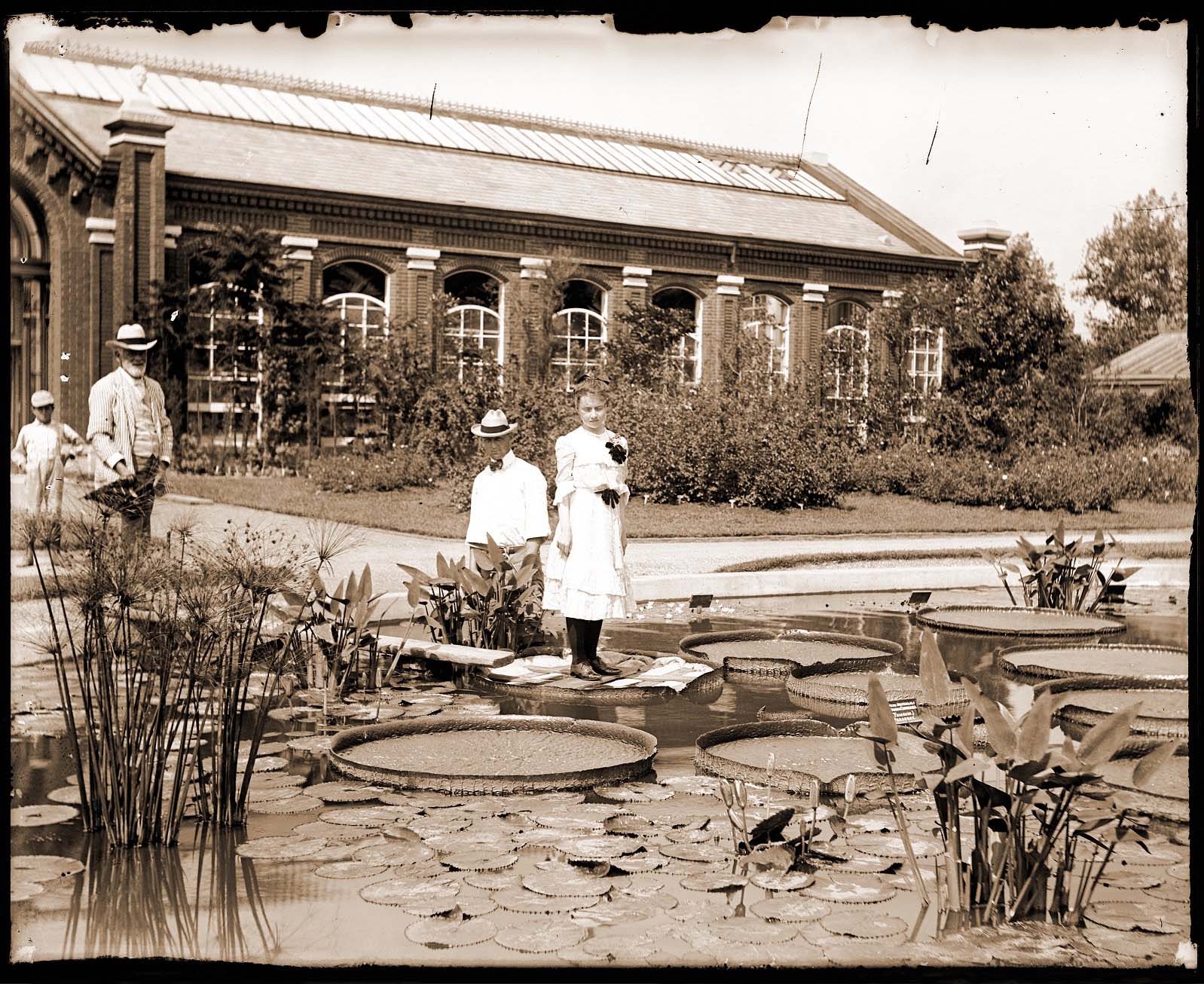
Triennial Conclave of the Knights Templar, 1895 | src USC
Phipps Conservatory was presented as a gift to the City of Pittsburgh from philanthropist Henry W. Phipps, who wished to “erect something that [would] prove a source of instruction as well as pleasure to the people.” In a letter to City of Pittsburgh Mayor H.I. Gourley in November 1891, Phipps expressed his intentions to add this new conservatory as a complement to an already existing “Phipps Conservatory” built in 1887 in Allegheny, now known as the North Side. Henry Phipps stipulated that both conservatories operate on Sundays in order to allow the working people to visit on their day of rest.
On Dec. 7, 1893, Phipps Conservatory opened to the public. It showcased over 6,000 exotic plants originating from the World’s Columbian Exposition in Chicago — cacti, trees, ferns and more made the journey by train and horse-drawn cart to Pittsburgh and the nation’s newest and largest conservatory.
In 1895 Phipps Conservatory hosted the 26th Triennial Conclave of the Knights Templar, during which this iconic image was captured. In the photo, a woman, Angie Means, stands on a giant Amazonian water lily pad, or Victoria regia, in the Victoria Room.
In October 1898, the 27th Triennial Conclave of the Knights Templar was held in Pittsburgh. Horticulture staff decorated the Conservatory with flowerbeds designed as Masonic emblems for the Conclave’s visit on Oct. 13th.
Woman standing on a leaf of Victoria cruziana in the lily pond in front of the Linnean House of the Missouri Botanical Garden, 1902. Notice the wood sheet used to distribute her weight, so as to prevent the ripping of the delicate leaf, 1902 | Missouri Botanical Garden
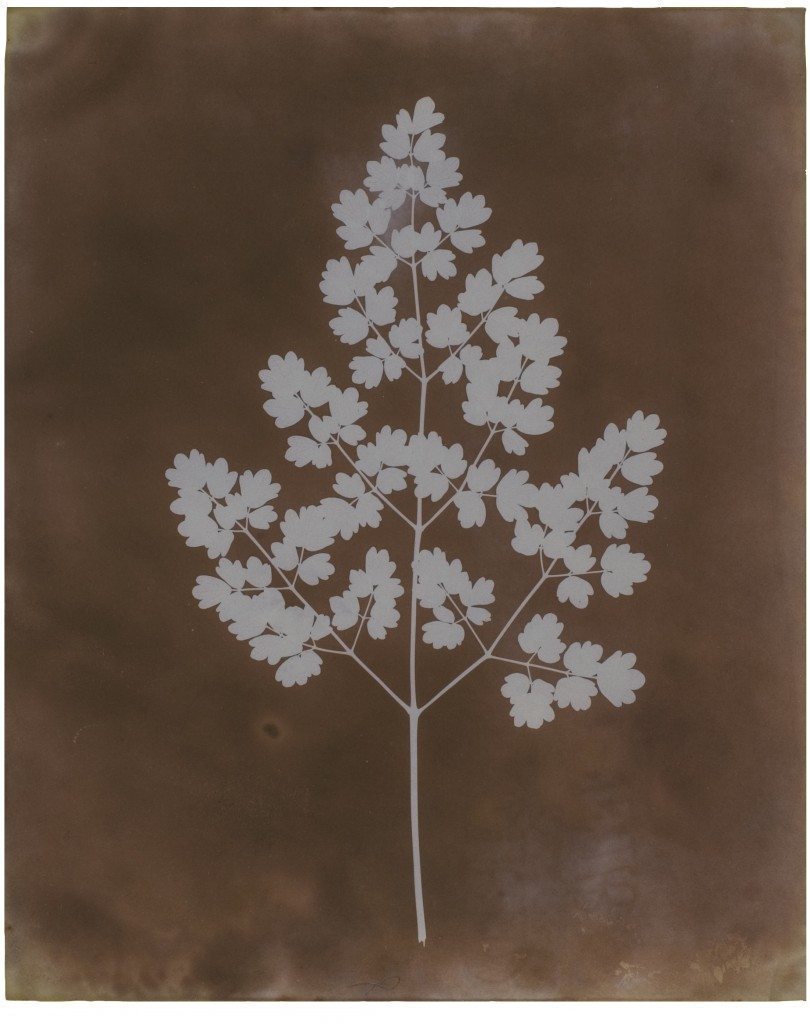
William Henry Fox Talbot :: Adiantum Capillus-Veneris (Maidenhair Fern), probably early 1839. Photogenic drawing (salted paper negative). Courtesy of Hans P. Kraus Jr., New York. | src diptyqueparis
This image of a fern was an experiment by Englishman William Henry Fox Talbot. It probably dates back to 1839, the year in which he publically announced his invention of paper photography. But back then, this did not mean taking a snap using a camera in the sense that we understand it today. This was a photogram. Talbot took a small object with delicate contours like a piece of lace or a plant specimen and exposed it to light on a sheet of paper that had been bathed in a solution of salt and silver nitrate. When the object was removed after having been exposed to sunlight (a trial and error process to determine how long it should be exposed to best effect), a clear silhouette would emerge from the darkened background of the paper.
Talbot is the English inventor of photography, just as Niépce and Daguerre were the French inventors of the same. While Daguerre was working alongside Niépce and fine-tuning the daguerreotype process, Talbot, who didn’t have a clue about their research, was experimenting with photography on paper himself in his property at Lacock Abbey in Wiltshire. His early interest in botany, maths, travel and a meeting with the great scientist John Herschel in 1824 fuelled his passion for the physical and chemical sciences. His light bulb moment came in 1833 when on honeymoon at Lake Como. His idea was to chemically fix the images produced by the camera obscura used by artists at the time to create sketches from nature. He succeeded around mid 1830. It was the first time that an image had been created without human intervention, hence the word photogenic drawings followed by the expression photography, a word created from two Greek words meaning «written with light».
The story goes that these delicate little silhouettes that look like herbarium plants or sketches by naturalists became the first manifestations of the invention – and great revolution – of photography. [quoted from src]
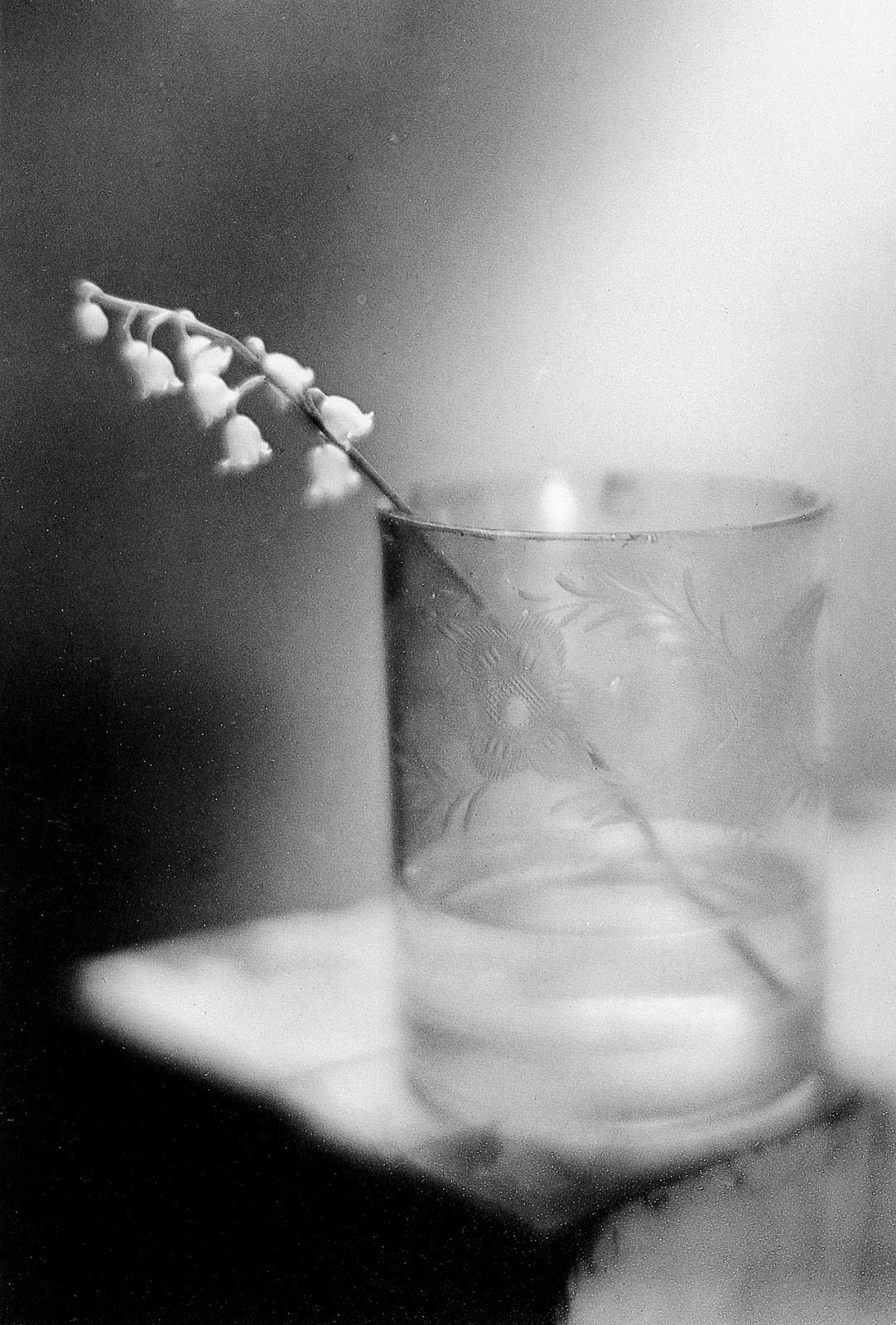
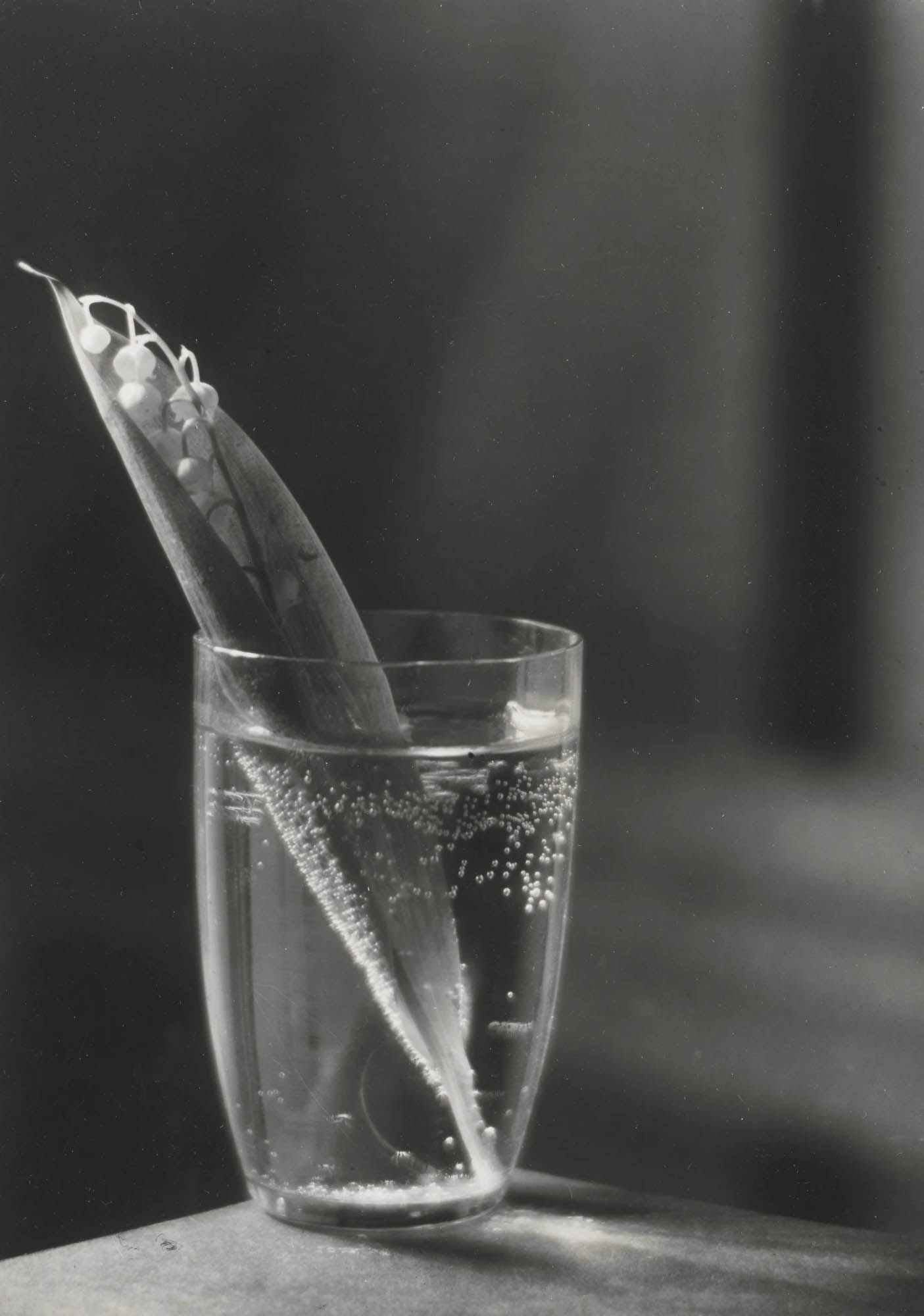
Josef Sudek (1896 – 1976) ~ Still Life with Lily of the Valley (konvalinka), 1940s-50s | src Stephen EllcockJosef Sudek (1896 – 1976) ~ Lily of the Valley (Konvalinka), ca. 1954 | src mutualart




 un regard oblique