Alfred Stroganoff & Iris Delysia

Atelier Jacob Merkelbach :: Alfred (Alfred Stroganoff) Nöggerath*, Louise (Iris Delysia) Bernard, 1923.(**) | src Red een Portret ~ Toneelnamen ~ Stage Names: “A successful dance career requires at least Russian names”. (*) Born as Alfred Cäcil Alscher on July 10, 1900. (**) Stage names: Alfred and Léonid Stroganoff and Iris Delysia and Vera Tamarowska respectively.

Stage Names, 1923

Atelier Jacob Merkelbach :: Alfred (Alfred Stroganoff) Nöggerath*, Louise (Iris Delysia) Bernard, 1923.(**) | src Red een Portret ~ Toneelnamen ~ Stage Names: “A successful dance career requires at least Russian names”. (*) Born as Alfred Cäcil Alscher on July 10, 1900. (**) Stage names: Alfred and Léonid Stroganoff and Iris Delysia and Vera Tamarowska respectively.

Toneelnamen, 1923

Atelier Jacob Merkelbach :: Alfred (Alfred Stroganoff) Nöggerath*, Louise (Iris Delysia) Bernard, 1923.(**) | src Red een Portret ~ Toneelnamen ~ Stage Names: “A successful dance career requires at least Russian names”. (*) Born as Alfred Cäcil Alscher on July 10, 1900. (**) Stage names: Alfred and Léonid Stroganoff and Iris Delysia and Vera Tamarowska respectively.

Green with violin and snake, 1918

Jacob Merkelbach :: Lily Green, danseres, met viool en slang, 1918. | src Het Stadsarchief Amsterdam - Collectie Atelier J. Merkelbach
Jacob Merkelbach :: Lily Green, danseres, met viool en slang, 1918. | src Het Stadsarchief Amsterdam ~ Collectie Atelier J. Merkelbach
Jacob Merkelbach (1877-1942) :: Lily Green, dancer, with violin and snake, 1918. | Collectie Atelier J. Merkelbach

Chaja Goldstein by Merkelbach

Atelier Jacob Merkelbach - Chaja Goldstein performing, 1930s
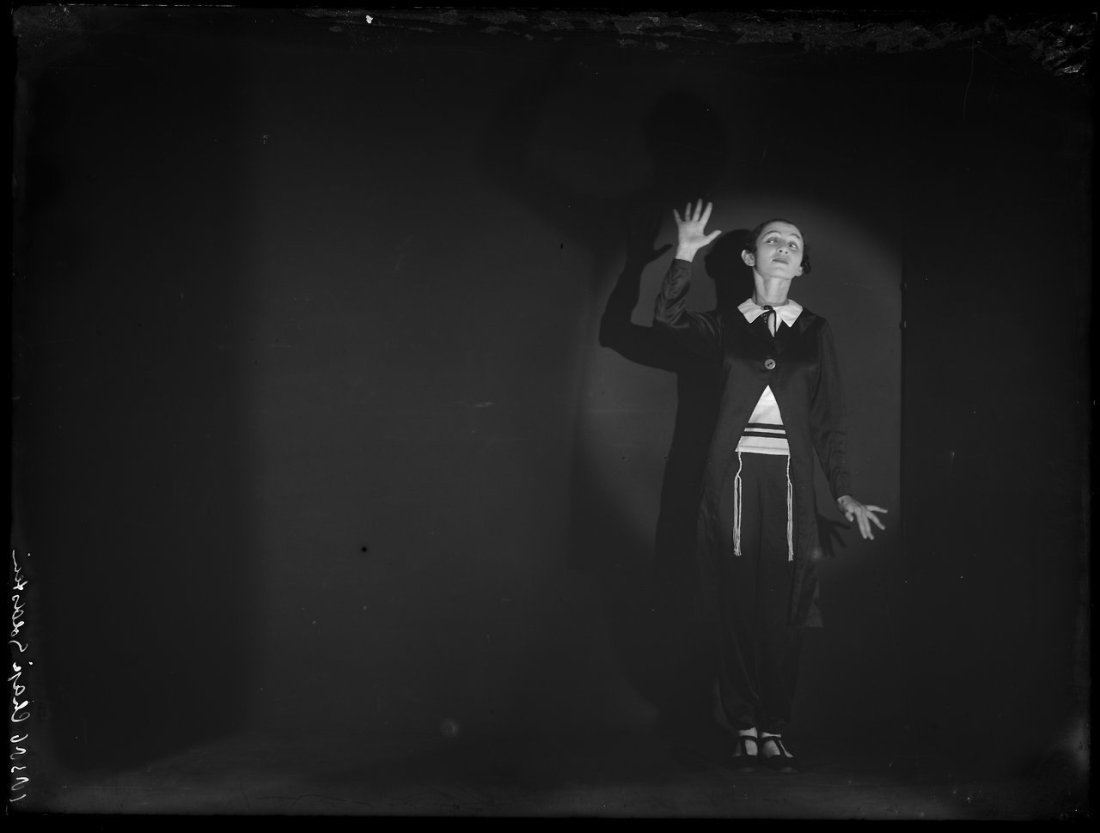

Atelier Jacob Merkelbach :: Danseres en zangeres, gespecialiseerd in het Jiddische lied en dans; scenefoto als Jeshiva student | Dancer and singer specialized in Yiddish song and dance; scene photo as Yeshiva student, 1937. | src Stadtsarchief Amsterdam
Atelier Jacob Merkelbach :: Danseres en zangeres, gespecialiseerd in het Jiddische lied en dans; scenefoto als Jeshiva student | Dancer and singer specialized in Yiddish song and dance; scene photo as Yeshiva student, 1937. | src Stadsarchief Amsterdam
Atelier Jacob Merkelbach :: Portrait of Chaja Rachul Goldstein (1908-1999), after 1933. | src Stadtsarchief · Collectie Atelier J. Merkelbach
Atelier Jacob Merkelbach :: Portrait of Chaja Rachul Goldstein (1908-1999), after 1933. | src Stadsarchief · Collectie Atelier J. Merkelbach

Chaja Goldstein was born in a Polish ghetto, in the town of Rypin in 1908. […] When she was ten years old, Chaja moved to Berlin with her Orthodox parents, brother Eli and baby sister Sally, fleeing the pogroms in Eastern Europe.

She made her debut in Berlin in 1931 as Hanna Goldstein with dances such as Der reiche und der arme Jude and the Hebräische Lied. The Berliner Tageblatt praised her performances. Shortly afterwards she also performed in the Kaftan, a small Jewish theater on Kurfürstendamm, where she sang Yiddish songs. Over the next few years Goldstein grew into a famous dancer and singer, connecting the Yiddish folk culture of her childhood with modern Western culture. She soon led a lavish life in Berlin’s artistic avant-garde circles. She lived with the Hungarian painter György Kepes (1906-2001) and had a love affair with the Dutch artist Wijnand Grays (1906-1995).

In 1933, Chaja Goldstein fled to the Netherlands as a result of the rise of the Nazi party. In April 1933 she appeared for the first time under the name ‘Chaja Goldstein’ on the stage of the Amsterdam Conservatory and the Rotterdam Studio 32, with her Yiddish dances and songs. [quoted from Huygens Instituut]