Gordon Coster :: The Silver Mask, 1929. Bromide print. | src liveauctioneers
Bromide print mounted on artist’s paper. Signed and titled in pencil on mount recto. Nine exhibition labels and two exhibition stamps on verso. The subject is wearing a half mask, a headdress (probably made of velvet) adorned in the middle with a flower-shaped ornament and a huge fluffy collar. He/she wears heavy lipstick and a drawn mole. This is a striking enigmatic picture. It is not clear whether this is a man or a woman.
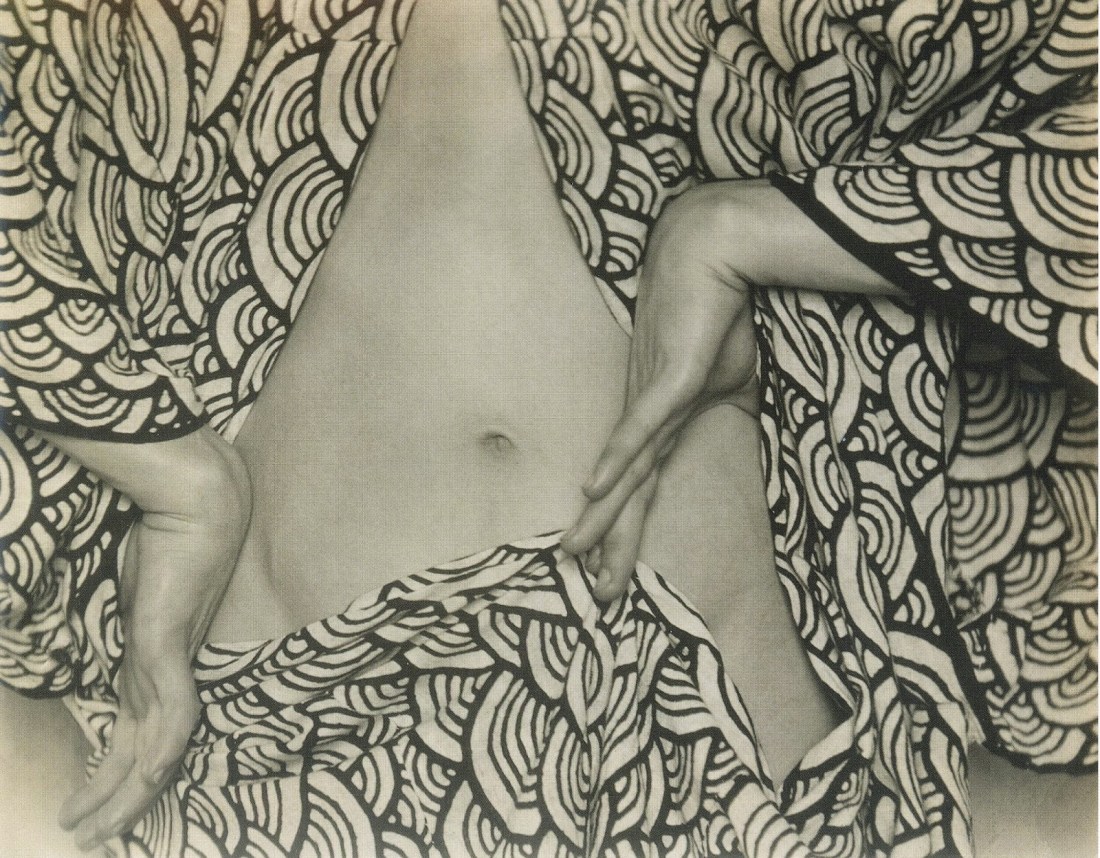
Margrethe Mather :: Semi-nude [Billy Justema wearing a Kimono]; ca. 1923. Center for Creative Photography. University of Arizona, Tucson
When Margrethe Mather (1885 or 1886-1952) met Billy Justema in 1922, she was 36 and he was 17. Through spending time with him, Mather found a way out of her grief over the unexpected suicide of her close friend Florence Deshon. Through their relationship, Justema searched for a state of mind that would allow him to define both his artistic path and his sexuality. Mather photographed him as an enigma, as he was at the time to himself, in the process creating a portfolio to rival that of Alfred Stieglitz’s images of Georgia O’Keeffe. I could point out the sure compositional structure that informs Billy Justema in a Kimono (above), the curves and angles that form a harmonious whole, all things typical of Mather’s work. [quoted from The Blue Lantern on blogspot]
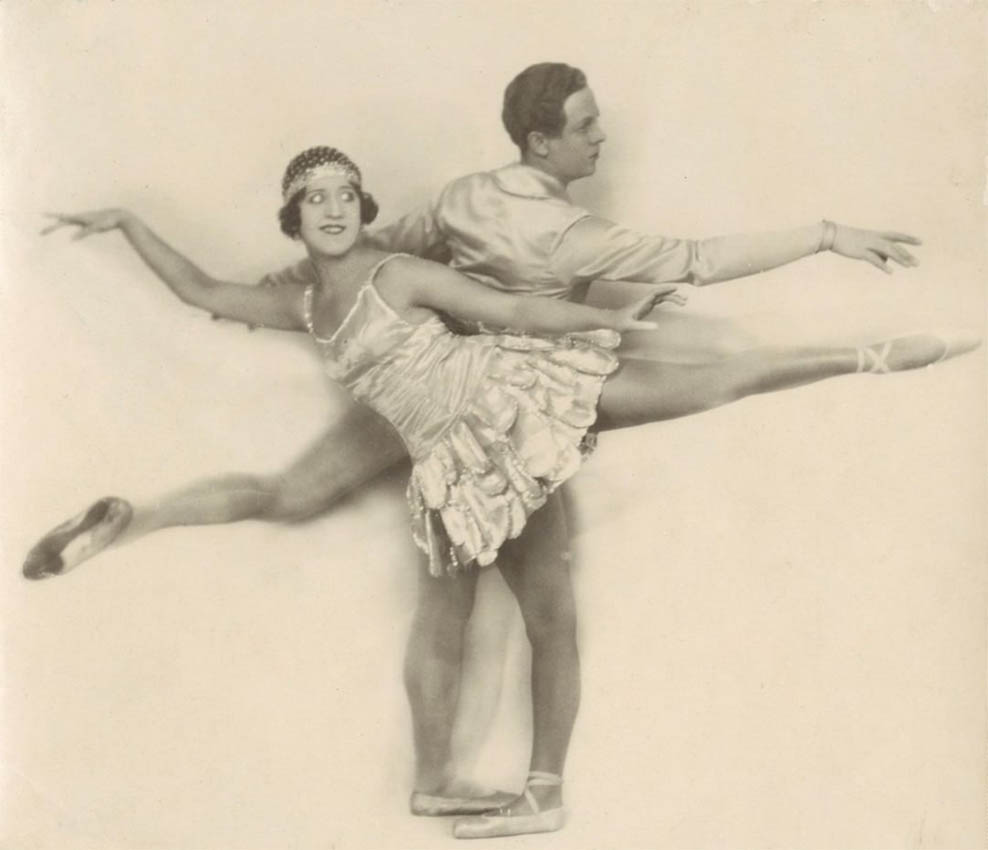
Irma Calson och Jean Börlin i Chopin av Svenska Baletten, foto: okänd. | src Dansmuseet on IGIrma Calson och Jean Börlin i Chopin, Svenska Baletten, foto: Studio V. Henry, Paris, 1920. | src Dansmuseet’s IG
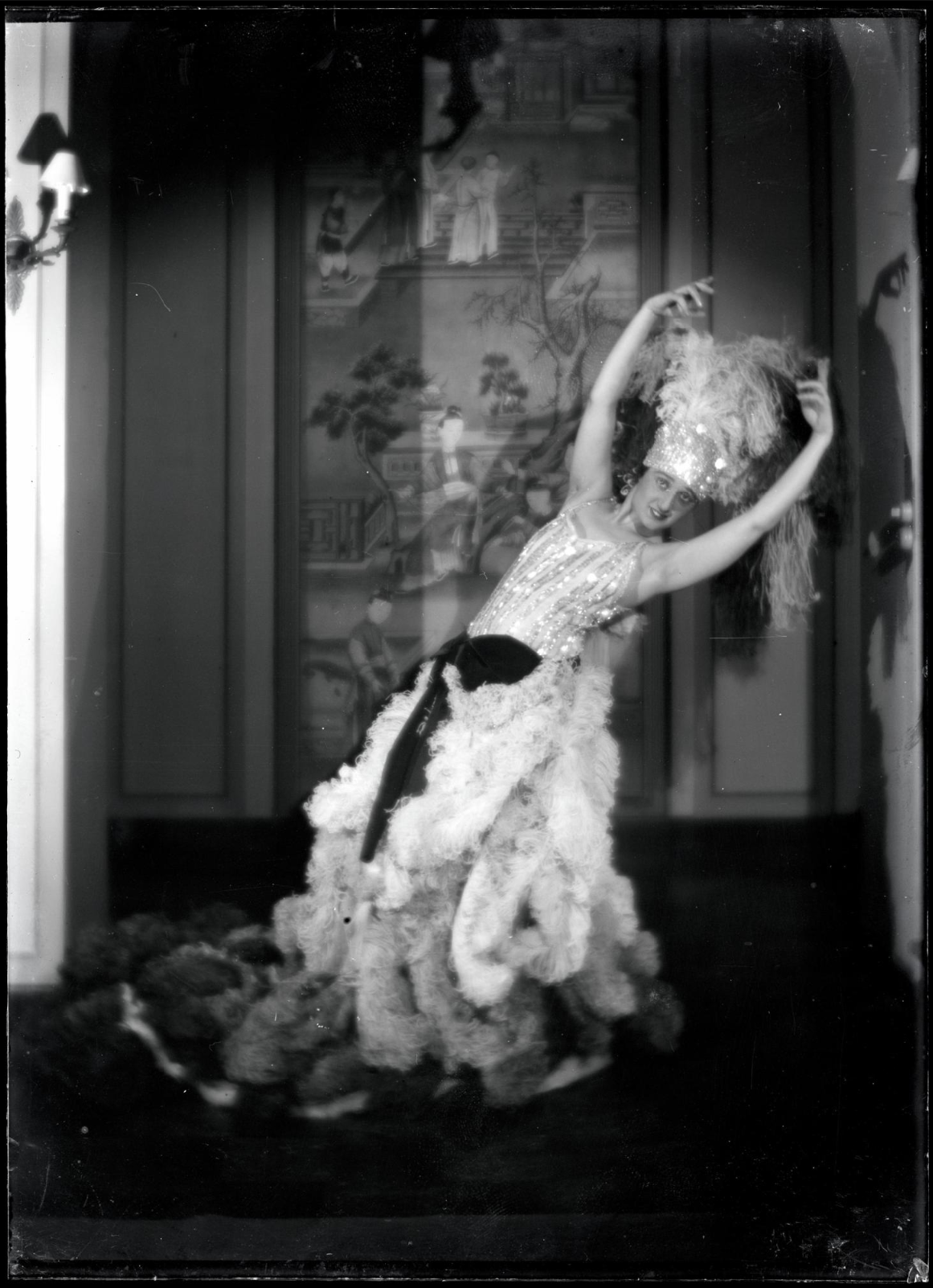
Man Ray :: Lizica Codreanu (Codreano) au bal des Beaumont, 1924. | src Centre PompidouMan Ray :: Lizica Codreanu (Codreano) au bal des Beaumont, 1924. | src Centre Pompidou
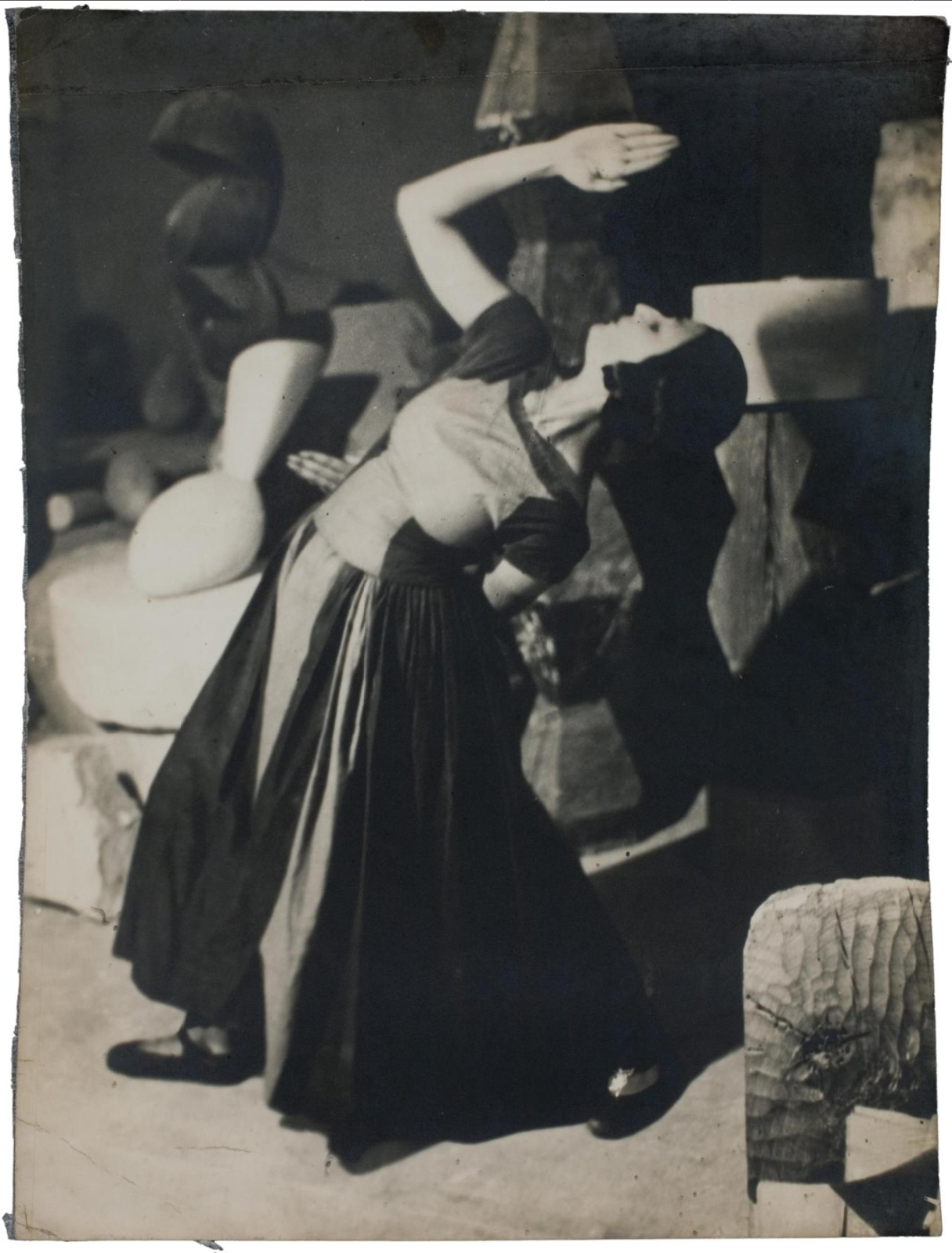
Ágnes Kalmár Kövesházi in The Breathing Dance [Lélegzőtáncban] (costume: Elsa Kalmár Kövesházi), Cikk-Cakk evenings, 1928, MTA BTK Institute of Art History | src Artmagazin
Breathing exercises played an important role in the Hungarian dance school. Air and breathing exercises also played a big role in Agnes Kövesházi’s life. Since she had lung disease, the regular practice healed the dancer’s body and soul. It is likely that this disease was also the inspiration for her choreography Breathing Dance [Lélegzőtáncban].
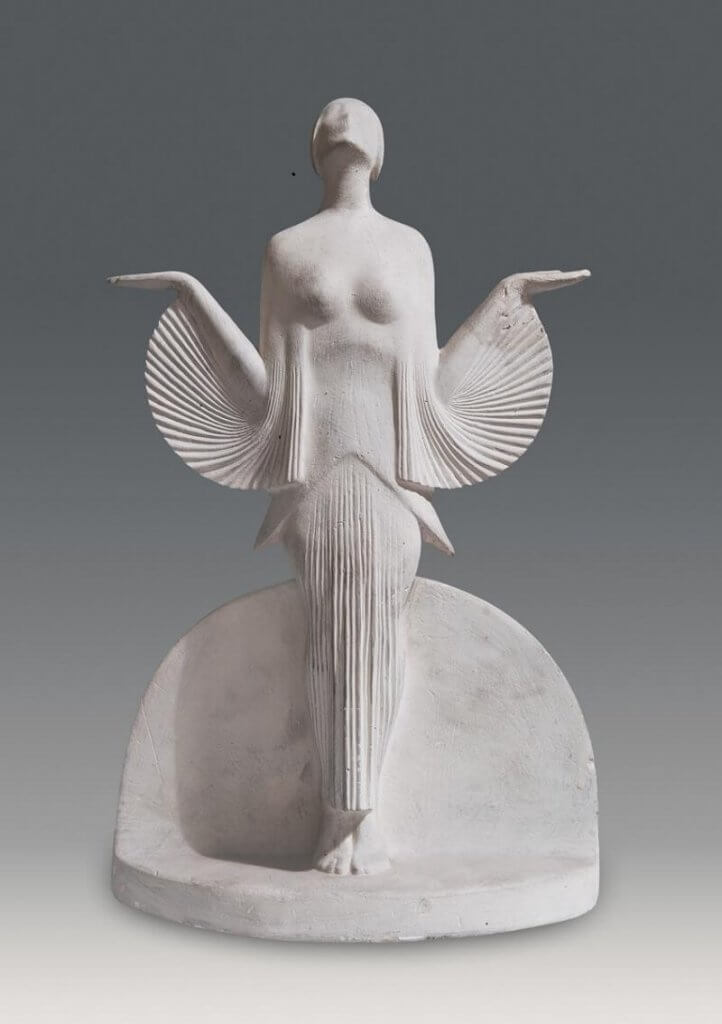
Around 1928, Elsa Kalmár Kövesházi made a plaster sculpture entitled “Breathing Dance” (image below). The sculpture was inspired by Ágnes Kövesházi, the sculptor’s daughter. In the 1920s, Agnes was the leading dancer of Alice Madzar’s artists movement and co-creator Ödön Palasofszky’s Quintessential Theatre. Her own dance composition, which ran under the same name, was the inspiration for her mother’s work. The photograph of Ágnes Kövesházi, in a position corresponding to the sculpture work of “Breathing Dance”, was also left for posterity. Her dress is the same fan-like as the sculpture. The costume was also made by Elsa Kalmár Kövesházi.
According to the idea of Elza Kalmár Kövesházi, a costume should start from the character of the movement, amplifying its characteristics: her richly pleated costume, which visually emphasizes the movement of the body, conveys every breath of the dancer. She immortalized her daughter’s solo piece together with other choreographies of the Hungarian Artists Group (Csitsibua, Bilincsek) in sculpture, creating exceptionally beautiful art deco sculptures.


![Albert Renger-Patzsch (1897-1966) :: Digitalis purpurea [location unknown], 1922-1923. National Gallery of Australia](https://unregardoblique.com/wp-content/uploads/2022/08/albert-renger-patzsch-digitalis-purpurea-location-unknown-1922-1923-ngofa.jpg)
![Margrethe Mather :: Semi-nude [Billy Justema Wearing a Kimono], ca. 1923. Center for Creative Photography. University of Arizona, Tucson](https://unregardoblique.com/wp-content/uploads/2022/07/margrethe-mather-semi-nude-billy-justema-wearing-a-kimono-ca.-1923-center-for-creative-photography-university-of-arizona-tucson.jpg)



 un regard oblique