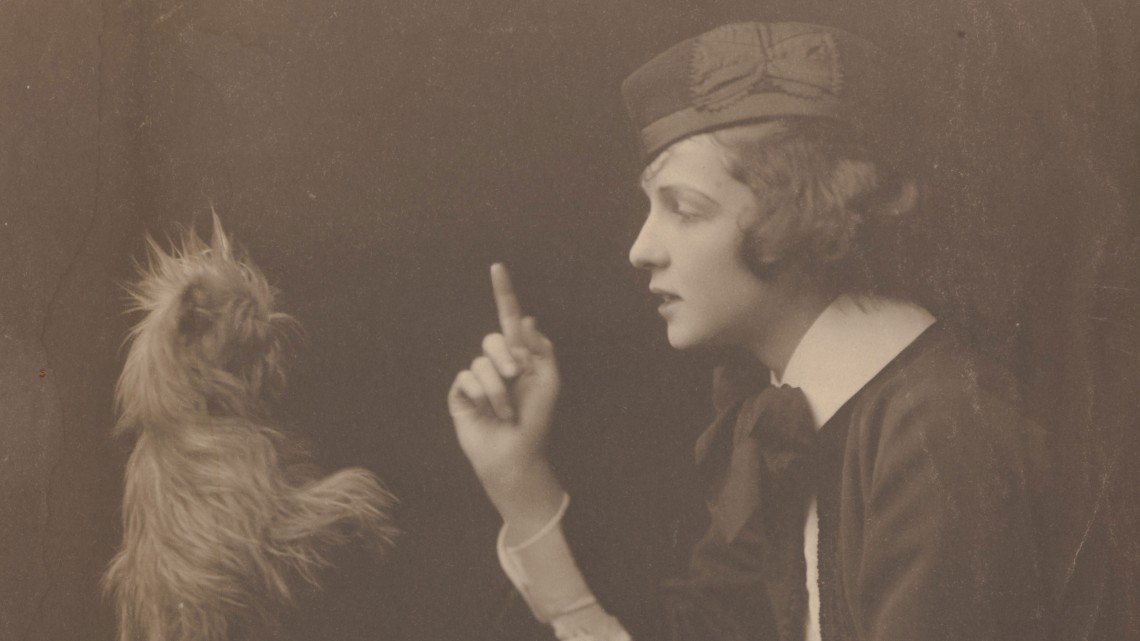
Irene Castle pictured here with one of her pups in a 1915 photo by Underwood & Underwood | Cornell fashion coll. on IG
Ballroom dancer. Silent film star. Fashion designer. Animal rights advocate. Irene Castle wore many hats – and donned countless dazzling costumes – as a celebrity during the early twentieth century.
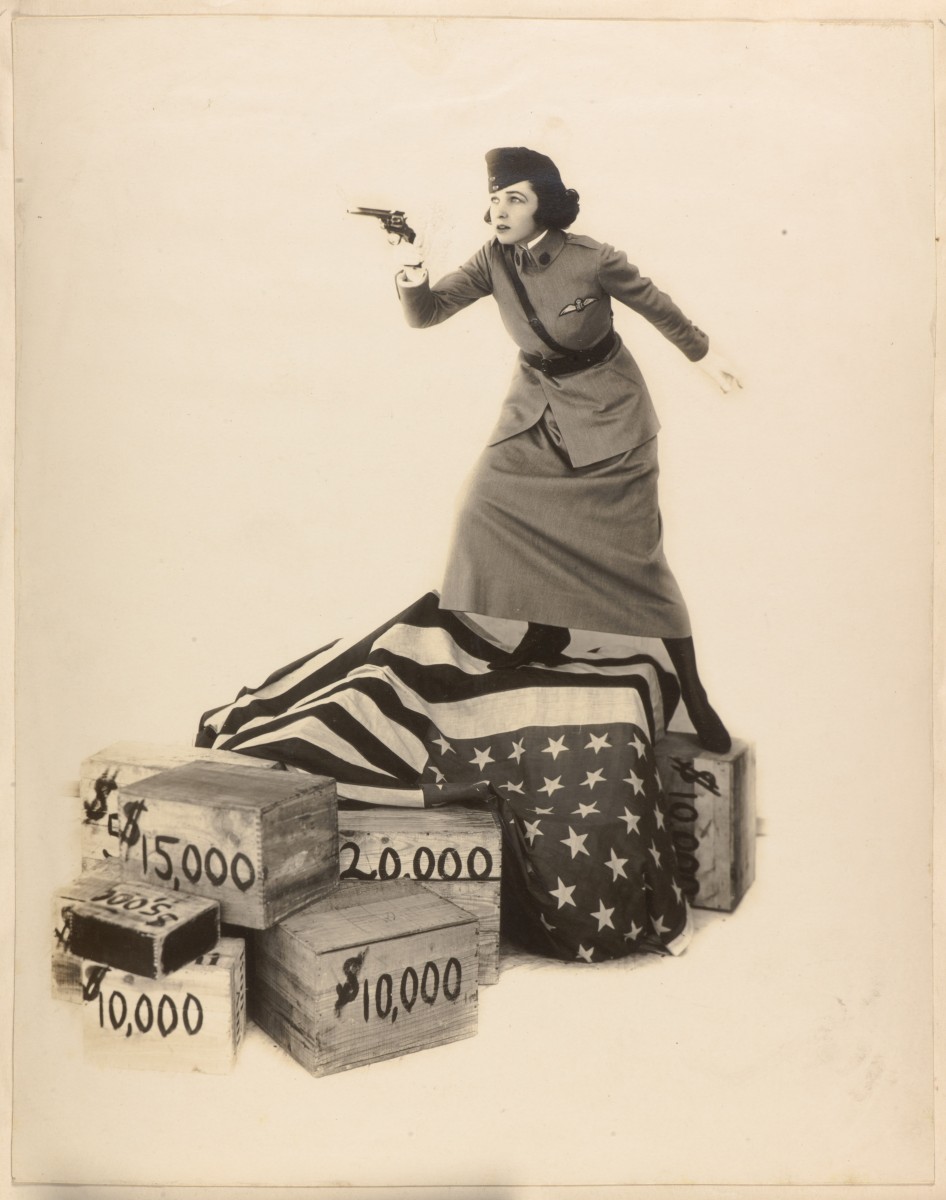
Irene Castle as Patria Channing in the serial Patria (1917). Only episodes 1 to 4, & 10 survive at the MoMA
Irene Castle was known for playing strong and stylish female leads such as the title character in the serial “Patria,” a swashbuckling, gun-toting munitions factory heiress who helps thwart a foreign invasion. Off-screen, Castle was also a pioneering entrepreneur who designed many of her own costumes and skillfully cultivated her image to become a household brand […]
“She was a very astute businesswoman,” Green said. “She knew the value of her name as a brand and so she branded all of her fashion innovations.” In 1917, Castle collaborated with Corticelli Silk Mills to develop “Patria”-themed fabrics, and started her own clothing line, Irene Castle Corticelli Fashions, in 1923. She also applied her moniker to everything from her “Castle Bob” haircut in 1913 that sparked a trend in the ’20s to the “Castle Band” of jewelry around her forehead that later resurfaced in hippie fashions of the ’60s, according to Green. / quoted from Cornell news
Silent film actress, dancer, and fashion icon Irene Castle, from the Irene Castle Photographs and Papers Coll. | src Cornell news
Photographe anonyme. Etude de Nu, France, vers 1865. Tirage albuminé. | src galerie lumiere des roses~ Paris photo 2023Photographe anonyme. Étude de nu, France, vers 1920. Tirage argentique. | src galerie lumiere des roses~ Paris photo 2023Jean-Baptiste Igout (1837-1881) ~ Étude de nu pour peintre, France, vers 1870. Tirage albuminé. | src lumiere des rosesMary Willumsen (1884-1961) ~ Baigneuse à Helgoland, Danemark, vers 1920. Tirage argentique. | galerie lumiere des rosesJacques de Lalaing (1858-1917) ~ Nu au chevalet, Belgique, vers 1910. Tirage argentique. | src galerie lumiere des roses~ Paris photo 2023
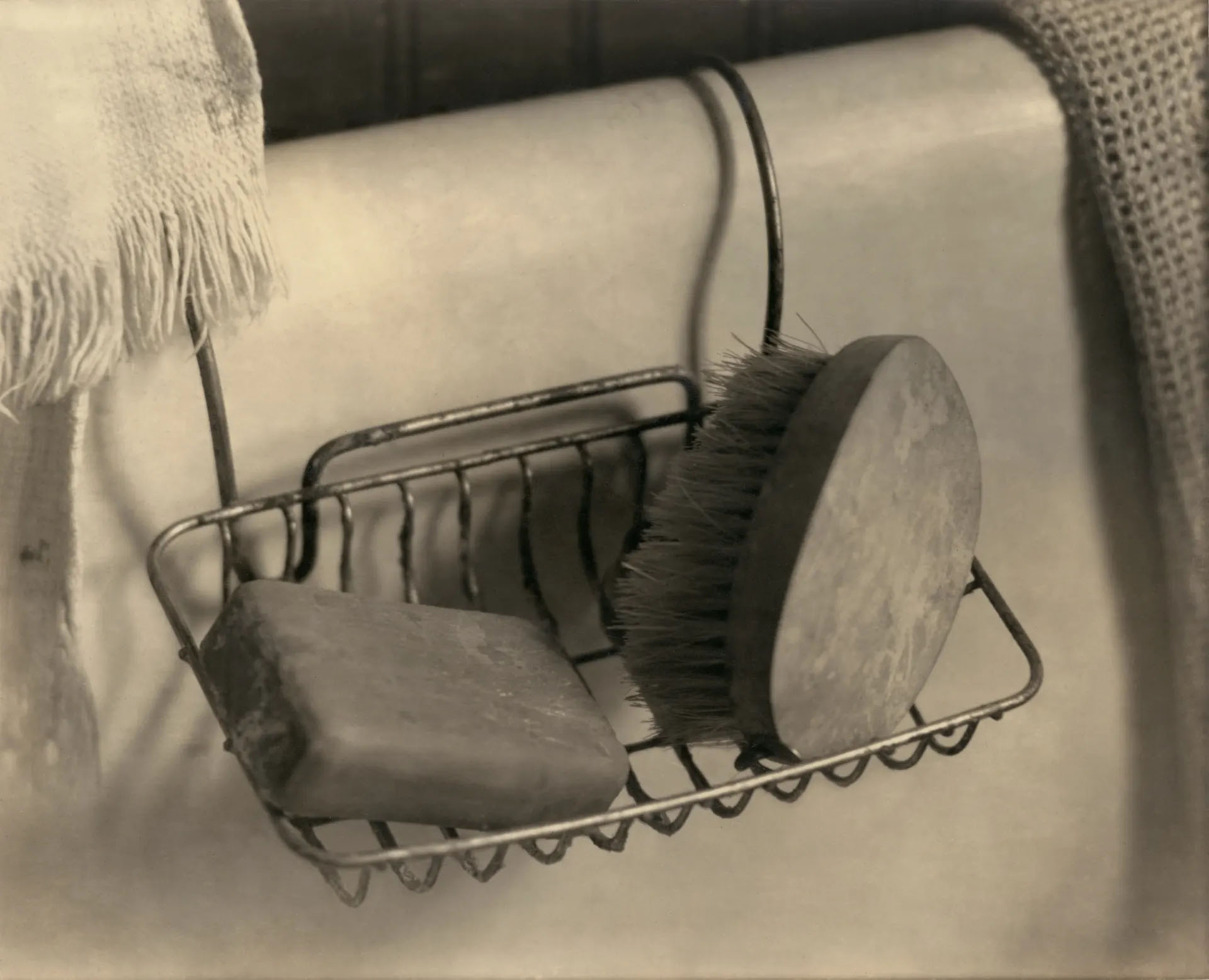
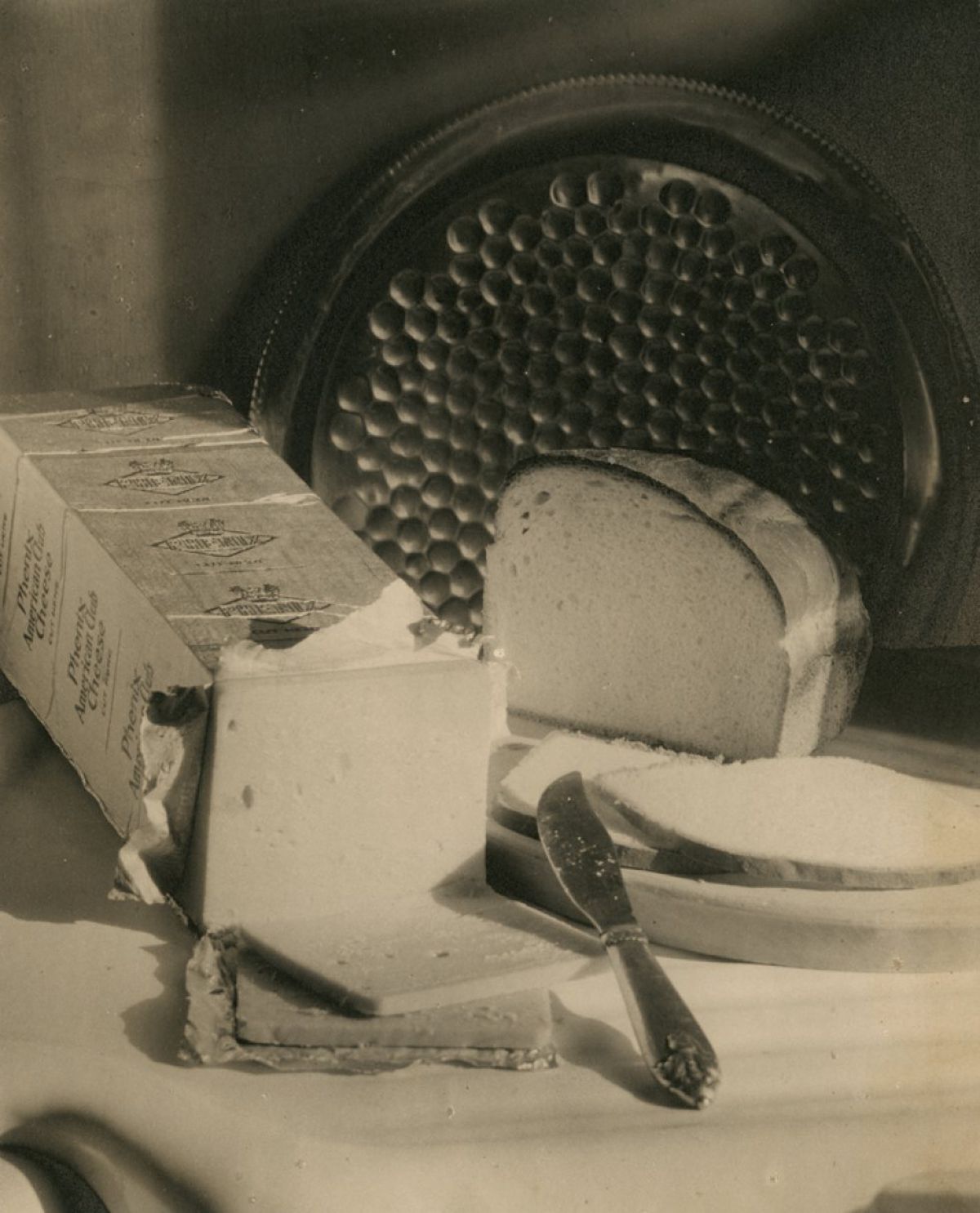
Margaret Watkins (1884-1969) ~ Still Life – Bathtub, New York, 1919 | src The Revolutionary Gaze at The GuardianMargaret Watkins (1884-1969) ~ ‘Phenix Cheese’, 1924 | src El País CulturaMargaret Watkins (1884-1969) ~ Lamp and Mirror, 1924 | src El País Cultura
Watkins was likely influenced by Arthur Wesley Dow, a Columbia University professor of fine arts who was closely associated with the White school. Dow wrote about the beauty of compositions that use curved and straight lines, and alternating light and dark masses. Dow also promoted the ideas of Ernest F. Fenollosa, who believed that music was the key to the other fine arts since its essence was “pure beauty.” Watkins herself used music as a metaphor for visual patterning in an essay about the emergence of advertising photography out of painting: “Weird and surprising things were put upon canvas; stark mechanical objects revealed an unguessed dignity; commonplace articles showed curves and angles which could be repeated with the varying pattern of a fugue.” / Quoted from: Margaret Watkins: Of Sight and Sound (National Gallery of Canada)
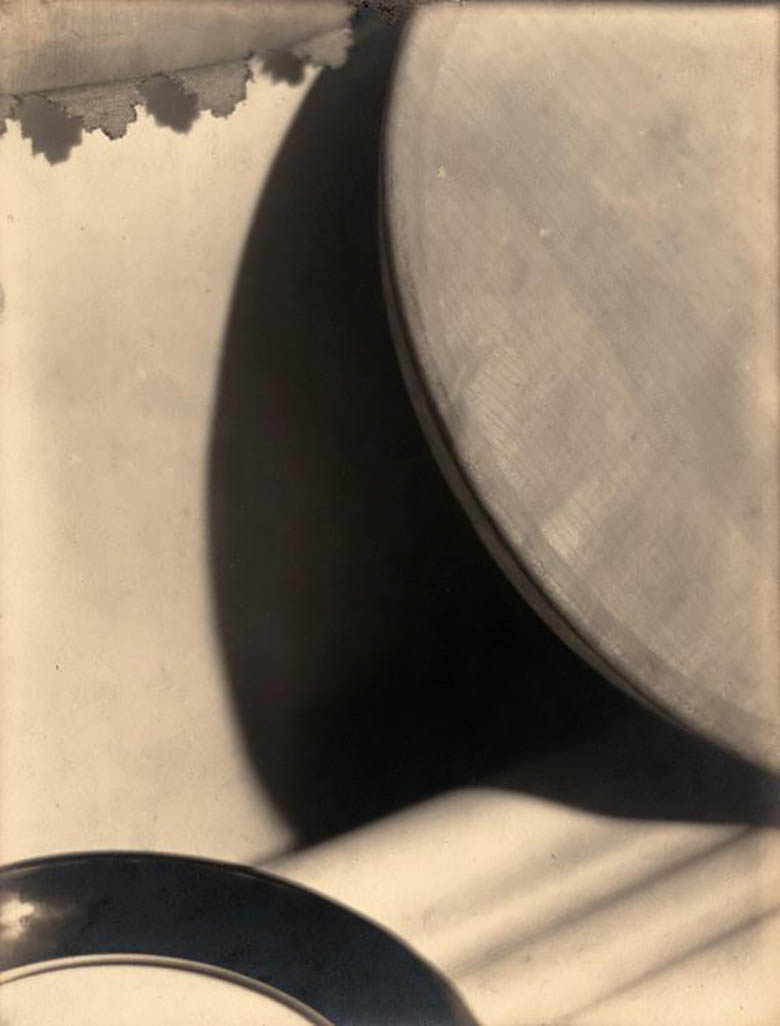
Margaret Watkins (1884-1969) ~ Design – Curves, 1919 | src The Nelson-Atkins Museum of Art
Margaret Watkins was a student at The Clarence H. White School of Photography in New York City. The school emphasized the principles of design that were common to all modes of artistic expression. This aesthetic, as seen here, resulted in works that merge realism and abstraction. Watkins received particular praise for her artistic transformation of the most common things: in this instance, the contents of her kitchen sink. / Quoted from The Nelson-Atkins Museum (x)
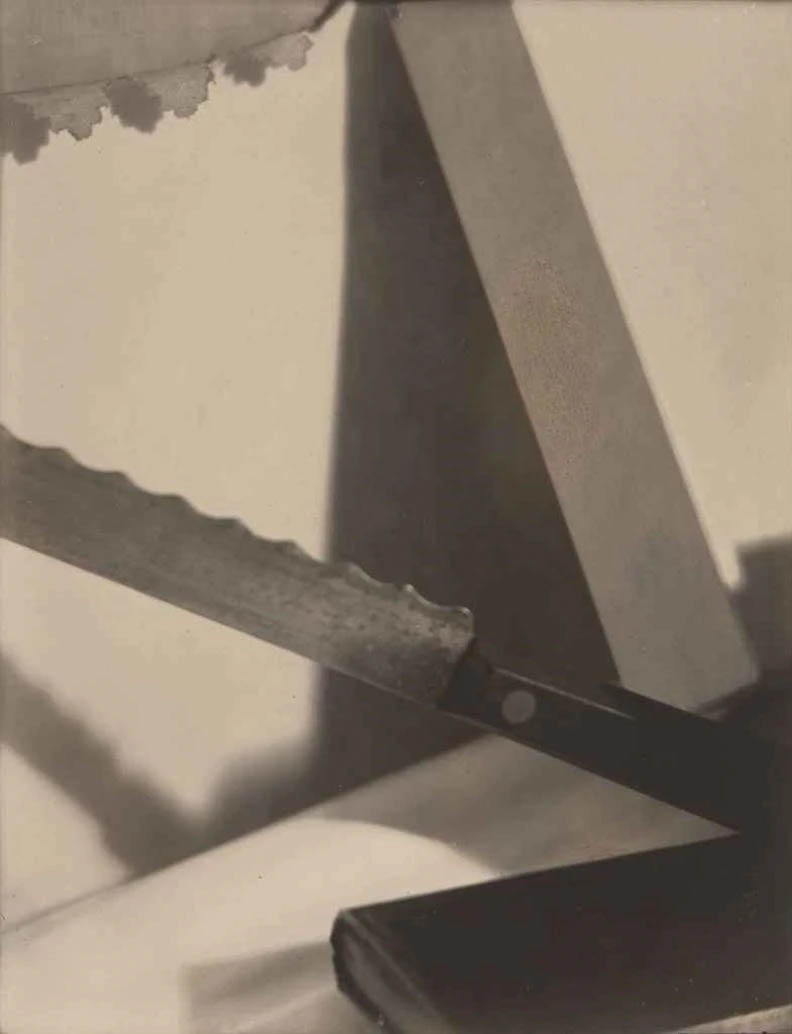
Margaret Watkins (1884-1969) ~ Design – Angles, 1919 | src MutualArtMargaret Watkins (1884-1969) ~ Domestic Symphony, (1919), palladium print | src Of Sight and Sound at NGC
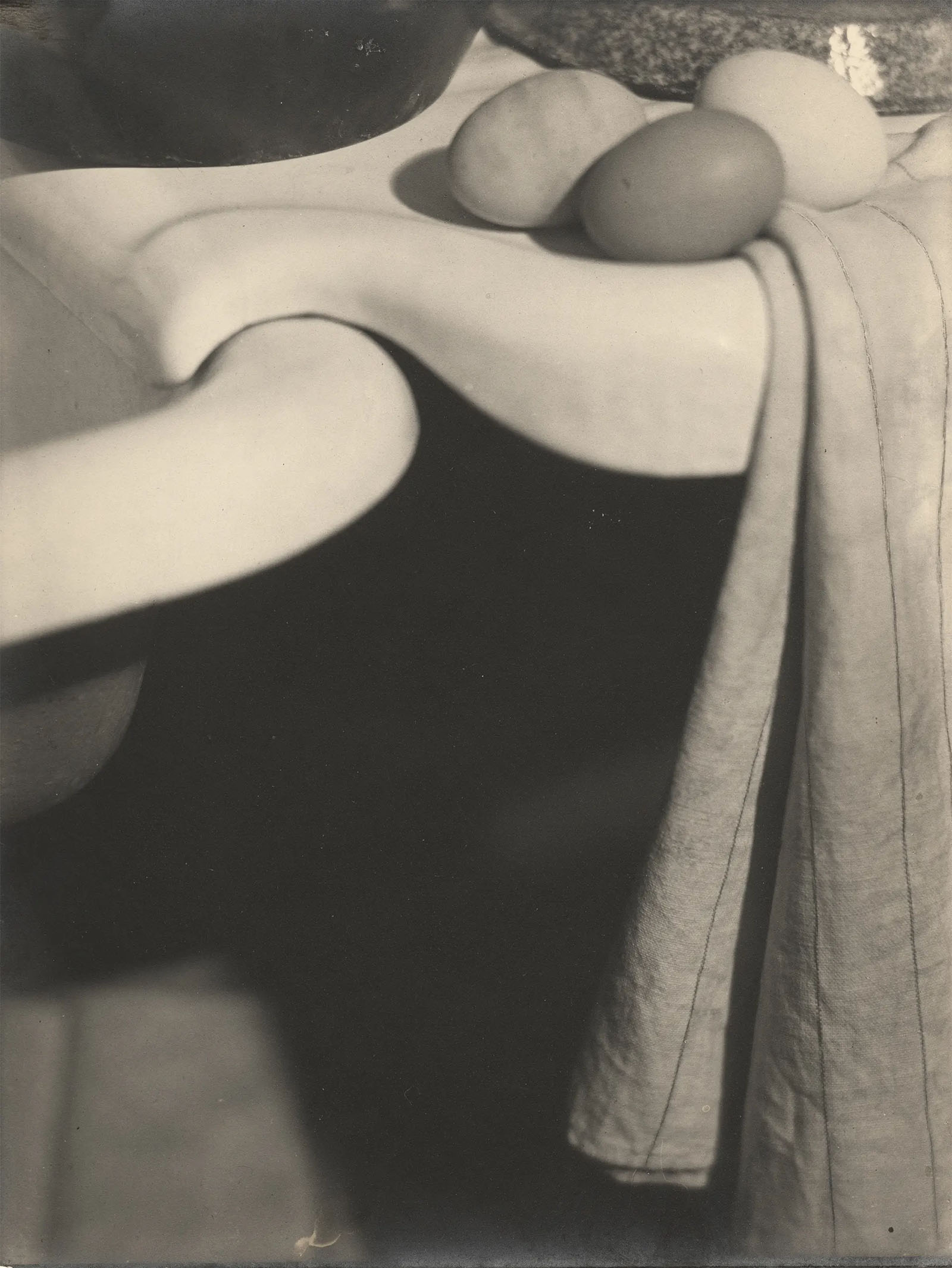
In 1919 Watkins made her first ground-breaking domestic still lifes, taking as her subject such mundane scenes as a kitchen sink and bathroom fixture. In Domestic Symphony, the graceful curve of the porcelain recalls the fern-like scroll of a violin. Again, the composition is striking: the lower three-quarters of the image is in darkness, anchoring the forms and volumes in the upper portion. / Quoted from: Margaret Watkins: Of Sight and Sound (National Gallery of Canada)
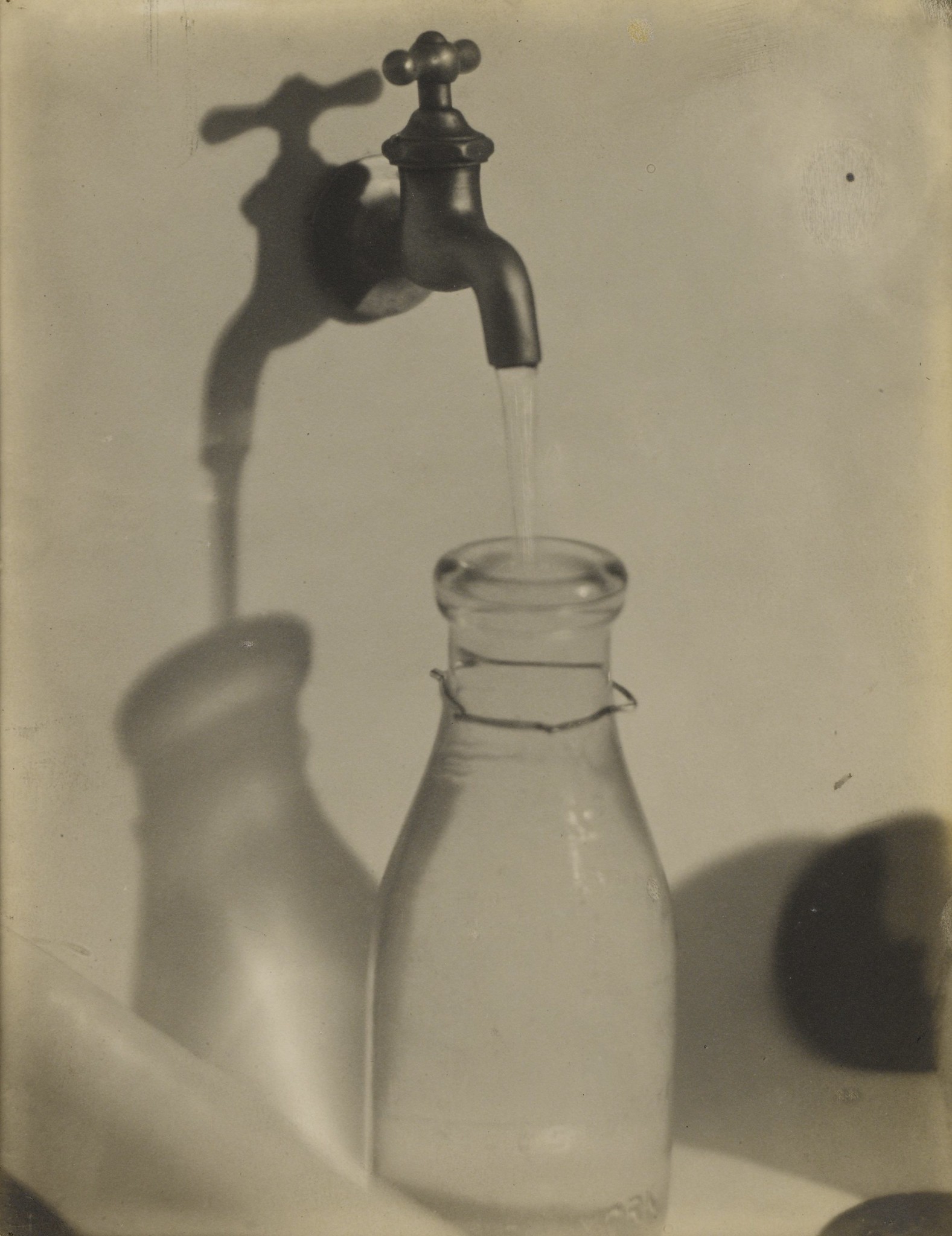
Margaret Watkins (1884-1969) ~ The Kitchen Sink, New York, 1919. | src Artland magazineMargaret Watkins (1884-1969) ~ Untitled (Milk bottle in sink), 1923. Platinum / palladium print | src Sotheby’sMargaret Watkins (1884-1969) ~ The Kitchen Sink, 1919. From Domestic Symphonies (2014) at M(M)A
Watkins was likely influenced by Arthur Wesley Dow, a Columbia University professor of fine arts who was closely associated with the White school. Dow wrote about the beauty of compositions that use curved and straight lines, and alternating light and dark masses. Dow also promoted the ideas of Ernest F. Fenollosa, who believed that music was the key to the other fine arts since its essence was “pure beauty.” Watkins herself used music as a metaphor for visual patterning in an essay about the emergence of advertising photography out of painting: “Weird and surprising things were put upon canvas; stark mechanical objects revealed an unguessed dignity; commonplace articles showed curves and angles which could be repeated with the varying pattern of a fugue.”
Margaret Watkins (1884-1969) ~ Domestic Symphony, New York, 1919 | src The Guardian
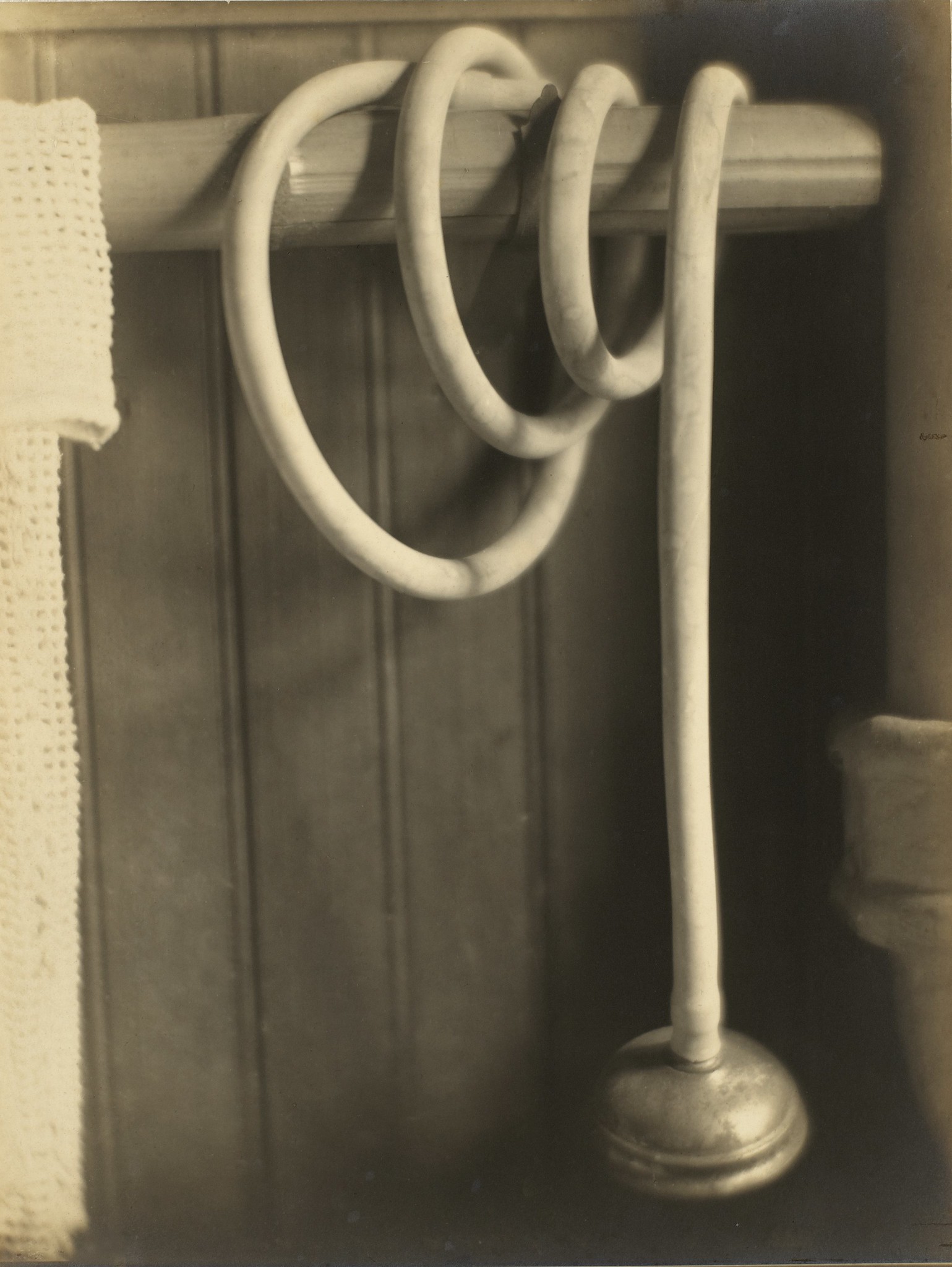
In 1919 Watkins made her first ground-breaking domestic still lifes, taking as her subject such mundane scenes as a kitchen sink and bathroom fixture. In Domestic Symphony, the graceful curve of the porcelain recalls the fern-like scroll of a violin. Again, the composition is striking: the lower three-quarters of the image is in darkness, anchoring the forms and volumes in the upper portion. Still Life — Shower Hose (1919) shows a rubber hose rhythmically looped around a towel rack.
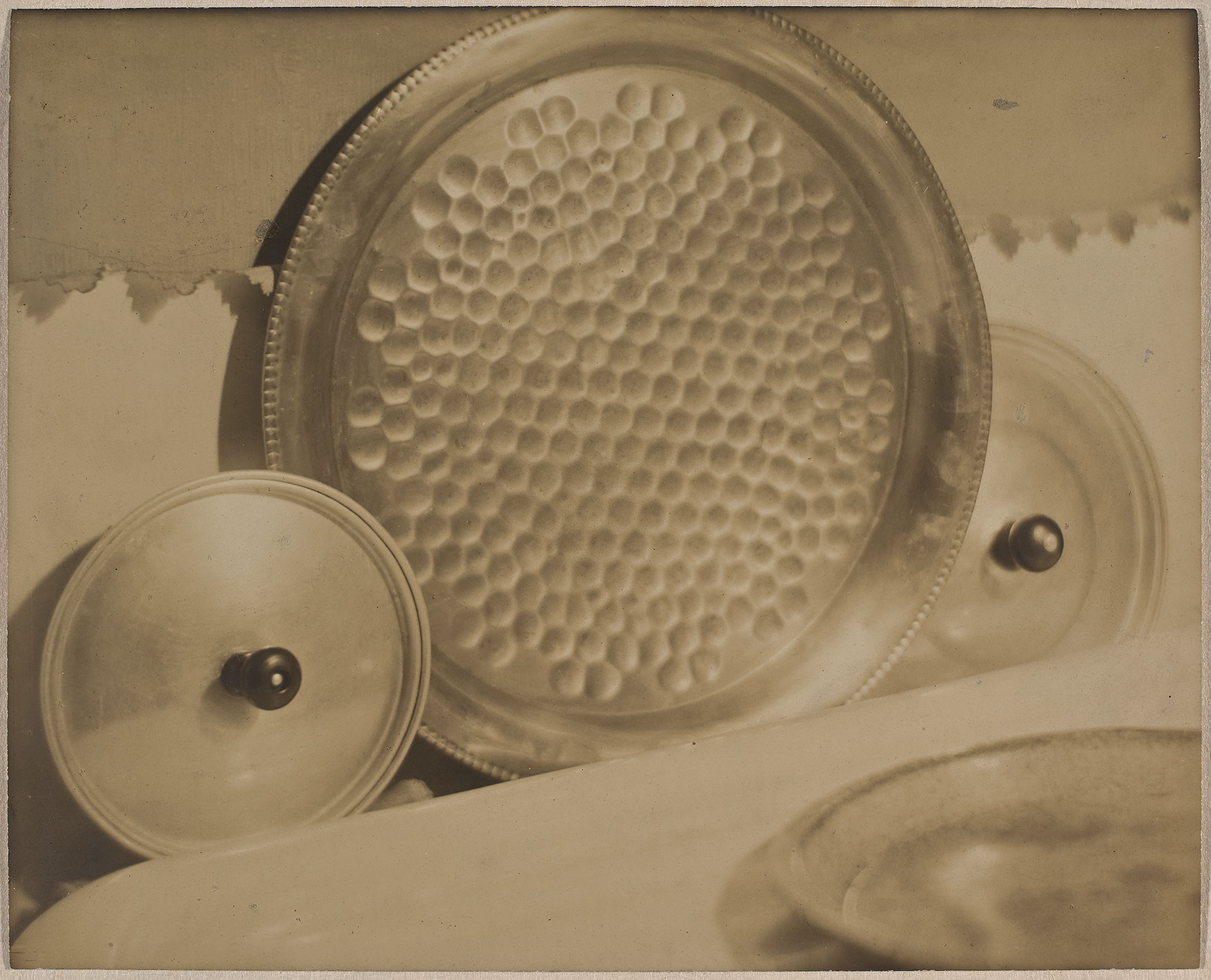
Margaret Watkins (1884-1969) ~ Still Life – Shower Hose (1919); gelatin silver print. | src National Gallery of CanadaMargaret Watkins (1884-1969) ~ Pan Lids, 1919; gelatin silver print. | src National Gallery of CanadaMargaret Watkins (1884-1969) ~ Domestic Symphony, (1919), palladium print | src Of Sight and Sound at NGC
Arthur William Emmerton ~ ‘Child posing in Pierrot costume’, probably ca. 1915. Glass negative. Inscriptions: “H17” on negative sleeve. | src National Library of AustraliaChild posing in Pierrot costume (ca. 1915) by Arthur William Emmerton [Detail]
Janis Rozentāls (1866 – 1916) ~ The Princess and the Monkey, 1913, oil on canvas. Latvian National Museum of Art via Google Arts
In the last years of his life, Janis Rozentāls repeatedly returned to the composition with the figures of a princess and monkey. The first of the painting was exhibited in 1913 at the 3rd Baltic Artists Union exhibition and at the international art show in Munich where the Leipzig publisher Velhagen & Klasing acquired reproduction rights ensuring wide popularity for the work. The symbolic content of the decoratively resplendent Art Nouveau composition has been interpreted as an allegory of the relationship between artist and society reflecting the power of money over the artist; on other occasions, the princess is seen as “great, beautiful art” but the monkey as the artist bound by golden chains – its servant and plaything. [quoted from Latvijas Nacionālā bibliotēka (link)]
Janis Rozentāls (1866 – 1916) ~ The Princess and the Monkey, 1913 [DETAIL]
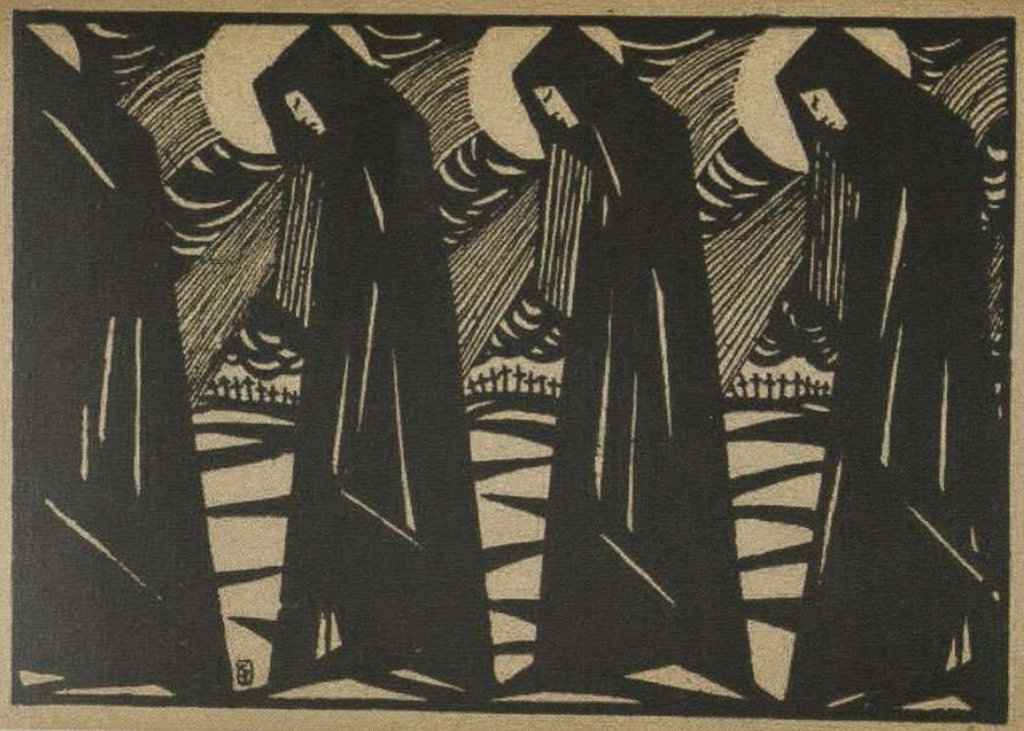
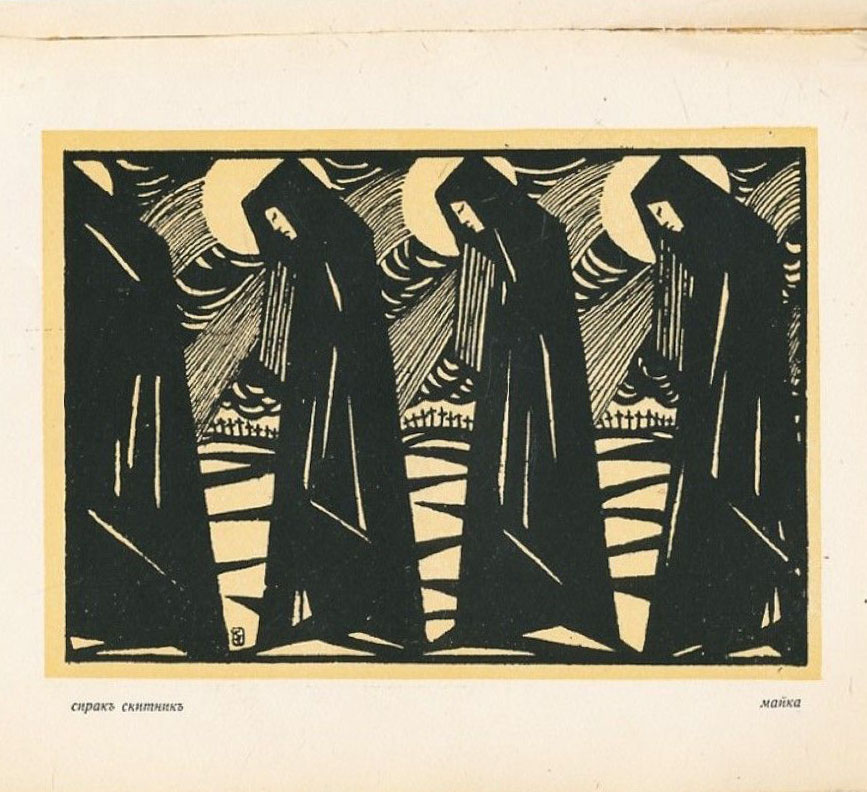
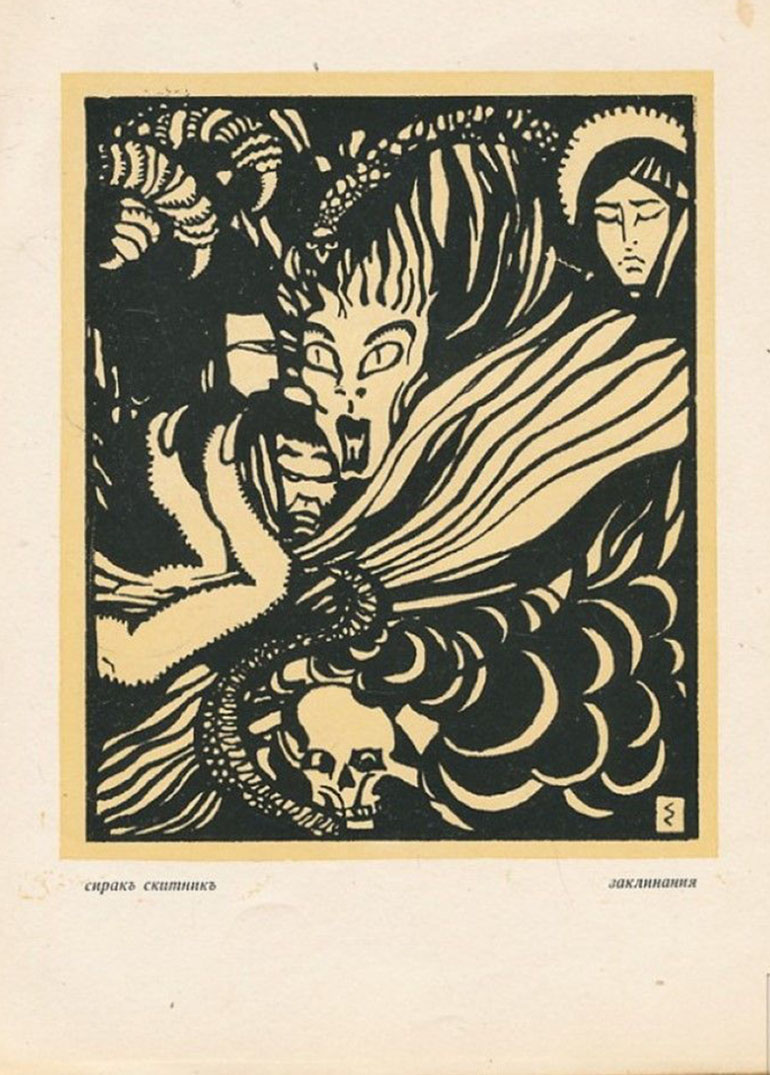
Bulgarian Ballads by Teodor Traianov, 1921; illustrator / engraver : Sirak Skitnik | detail from book coverBŭlgarski baladi / Bulgarian Ballads by Teodor Trayanov, 1921, illustrator Sirak Skitnik. Book front cover | src modernism.scas.bgMaika by Sirak Skitnik. Third illustration from the cycle Bulgarian Ballads by Teodor Trayanov, 1921Maika / Mourning mothers. From: Bulgarian Ballads by Teodor Trayanov, 1921, illustrator Sirak Skitnik. | book scan from Alba
If you wish to learn more or read more about Sirak Skitnik and Bulgarian Modernism or Native Art, you may want to dig further here:
Modernism and the National Idea in Bulgaria @ sledva.nbu.bg (in English)
The whole batch of illustrations from the book are available to be viewed (but in very poor resolution) at the NYPL
Сирак Скитник / Sirak Skitnik ~ Maika / Mourning mothers, 1920-1921 According to Irina Genova, there are three versions of this same compositionSirak Skitnik ~ (Opustoshenie / Devastation, 1920-1921 From : Bŭlgarski baladi / Bulgarian Ballads by Teodor Trayanov, 1921, illustrator / engraver : Sirak SkitnikSirak Skitnik ~ Zaklinania / Incantation, 1920-1921 Bulgarian Ballads by Teodor Trayanov, 1921, illustrator Sirak Skitnik (Zaklinania / Incantation). Book scan from Alba













 un regard oblique