Leonetto Cappiello · Dancers

Leonetto Cappiello (1875-1942) ~ A dancer in motion wearing a futuristic headpiece and billowing wide pants, 1928. Watercolor and pencil drawing | src invaluable
Leonetto Cappiello (1875-1942) ~ Folies Bergere poster, 1900s | src RetroGraphik

Leonetto Cappiello: The Father of Modern Advertising Poster

Leonetto Cappiello (1875 – 1942) was an Italian poster artist who lived much of his life in Paris, France. With no formal training in art, he emerged as one of the leading Italian artist and caricaturist in Paris that eventually succeeded the other famous lithographers such as Henri Toulouse-Lautrec (1864-1901), Jules Cheret (1836-1932) and Alphonse Mucha (1860-1939) as the leading advertising poster designer in Paris.

Talented Cappiello started his arts career as a caricature artist in 1896 illustrating for French journals like Le Rire, Le Cri de Paris, Le Sourire, L’Assiette au Beurre, La Baionnette, Femina, and others. His first album of caricatures, Lanterna Magica, was made in 1896. His early caricature style was seen to be influenced by Henri Toulouse-Lautrec, which was already the most famous artist of the time.

Today, arts historians list him as one of the most influential poster artist in the history of poster art as many would agree that he is also known as the “Father of Modern Advertising Poster”. As advertising posters were the main medium of communication during the time, Paris streets were saturated with many types of advertising posters, all trying hard to engage the increasingly distracted eyes. There was a need to rethink how poster as a medium need to be relevant and engage the faster pace of the 20th century. 
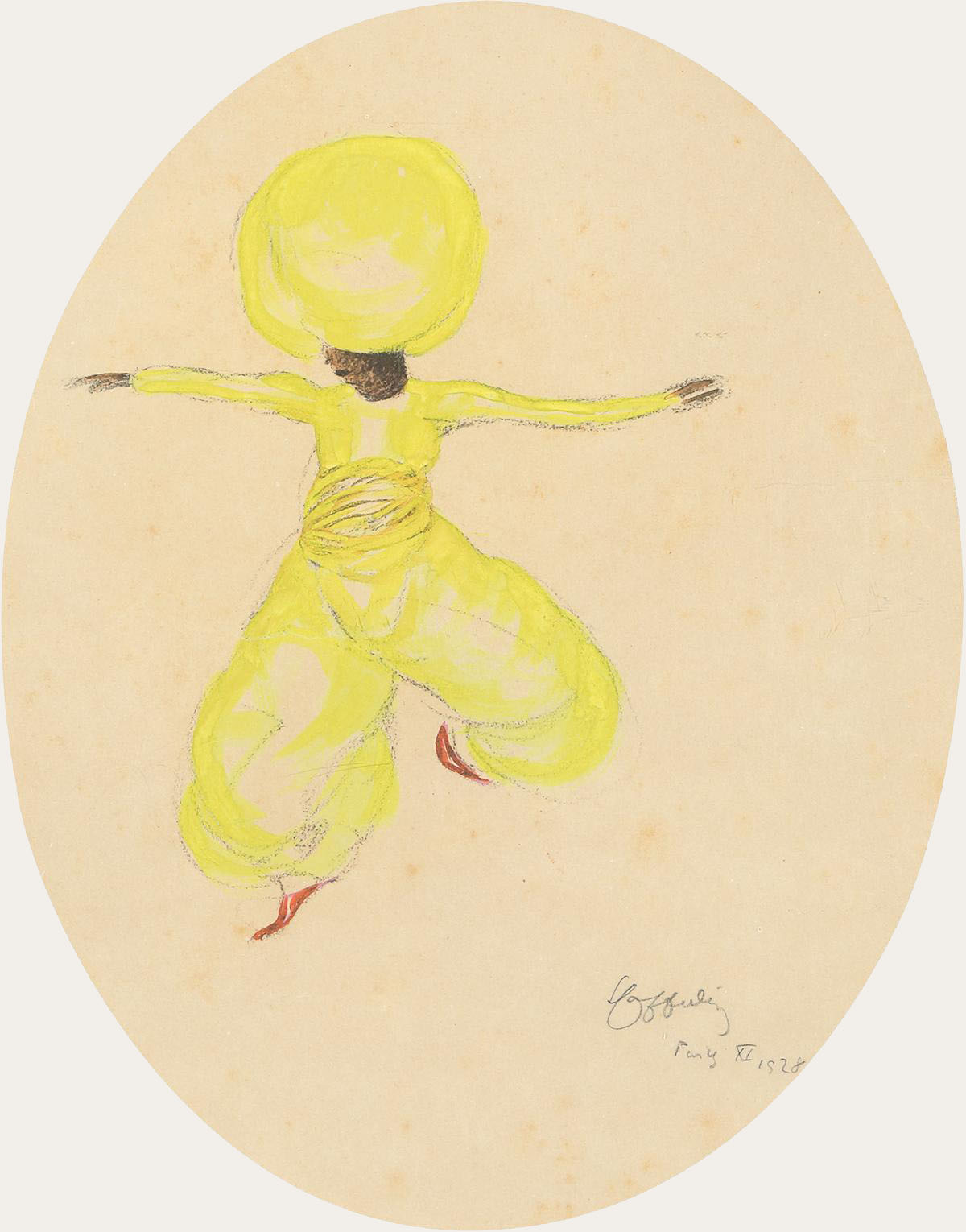
Leonetto Cappiello (1875-1942) ~ Turbaned dancer in midair wearing a bright yellow outfit, 1928. Watercolor and charcoal drawing | src invaluable
Leonetto Cappiello (1875-1942) ~ Asti Cinzano poster, 1910s | src RetroGraphik

The Cappiello Style

Cappiello is credited to revolutionize the old thinking of poster illustration during his time. His concept of poster art was simple, to simply engage audience faster by creating unconventional visual impact. He was the first poster artist to boldly experiment and innovate new graphical styles at the time. His presentation was straight forward with use of enlarged bold subjects with unconventional colors,contrasted by the very dark background, which make his art “pop out”. By doing so he moved away from illustrating intricate details in his artworks, which was famous at the time as Art Nouveau movement was popular.

Between 1901 and 1914, he created several hundred posters in a style that revolutionized the art of poster design. Cappiello redesigned the fin-de-siècle pictures into images more relevant to the faster pace of the 20th century.

His new functionalist style of graphic art, in which a single bold image would be used to grab the viewer’s attention. This graphic design proved highly effective, not only in drawing attention to the product but also in building a brand. It made Cappiello the acknowledged master of the advertising poster in his time for almost 20 years. | src RetroGraphik

Ella Ilbak civil portraits

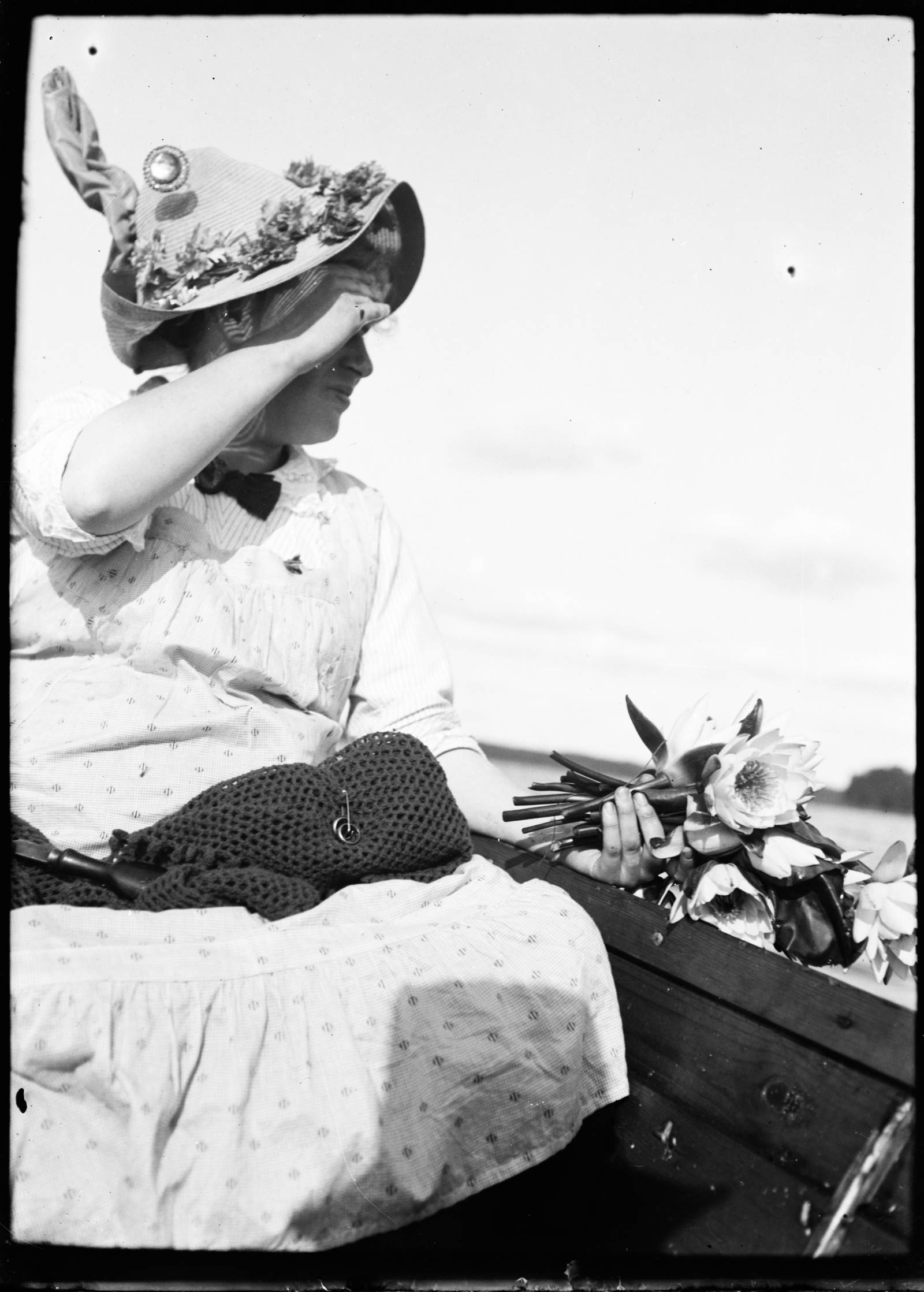
Ella Ilbak (1895-1997) [likely 1910s] | src Eesti Kirjandusmuuseum
Ella Ilbak, kirjanik, tantsija, u 1932 | src ETMM · Eesti Teatri- ja Muusikamuuseum
Georg Fayer (Wien) ~ portrait of the dancer and writer Ella Ilbak (1895 – 1997) | src Eesto Kirjanike e-leksikon

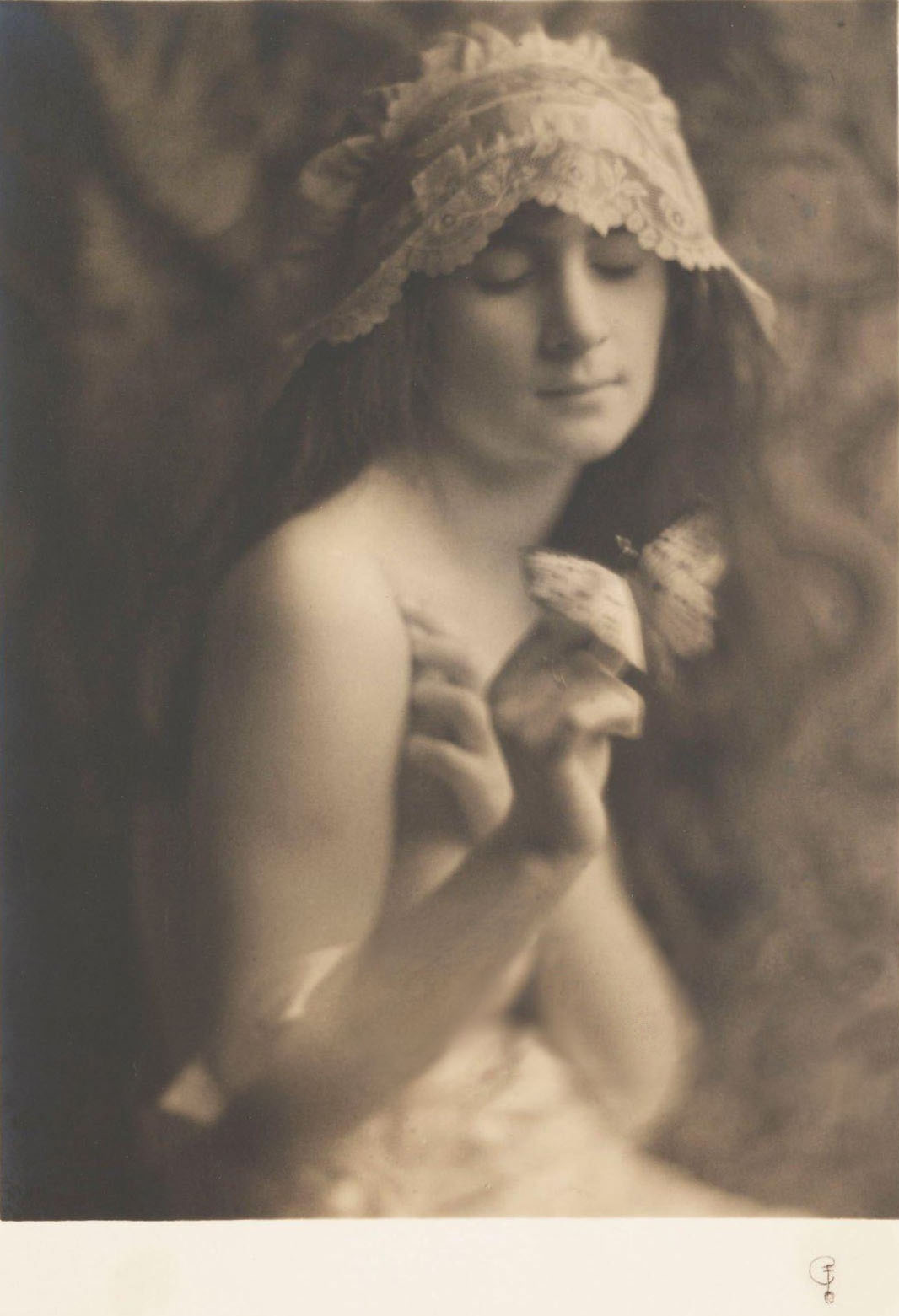
Girl and butterfly by Lord Carnarvon

Detail from: Girl and butterfly, ca. 1915 by George Herbert, 5th Earl of Carnarvon (also, Lord Carnarvon)
Earl of Carnarvon (1866-1923) ~ Girl and butterfly, ca. 1915. Royal photographic society coll. | src getty images
Earl of Carnarvon (1866-1923) ~ Girl and butterfly, ca. 1915. Royal photographic society coll., V&A museum

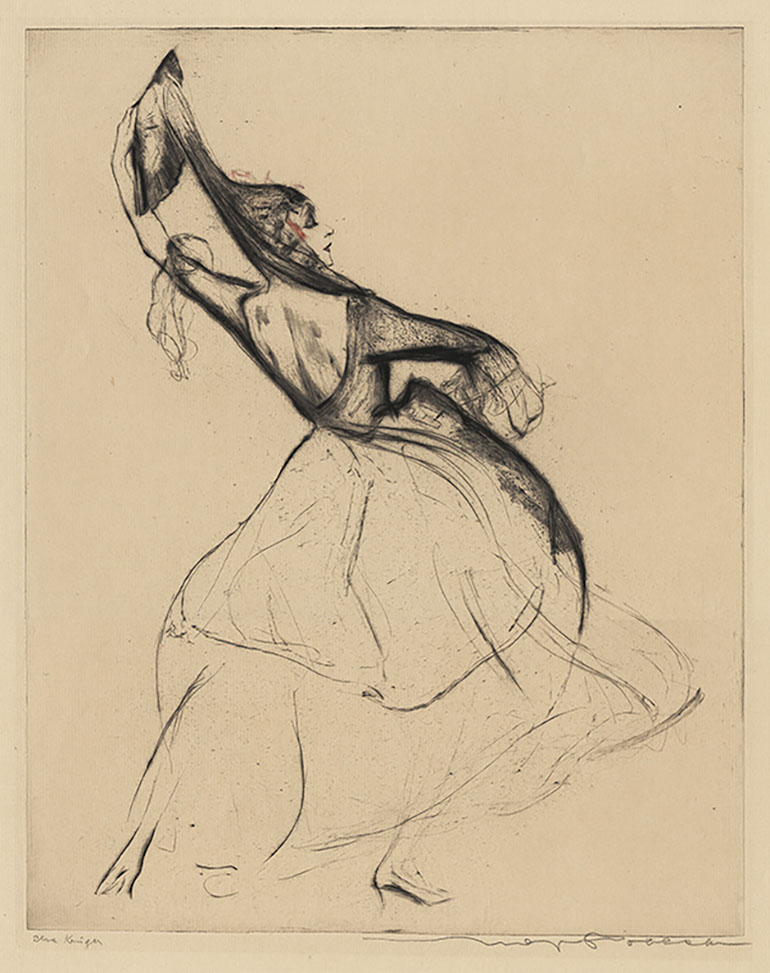
Elsa Krüger by Max Pollak

Max Pollak (1886 – 1970) ~ Elsa Krüger, 1919; drypoint with aquatint printed in color | src Annex galleries

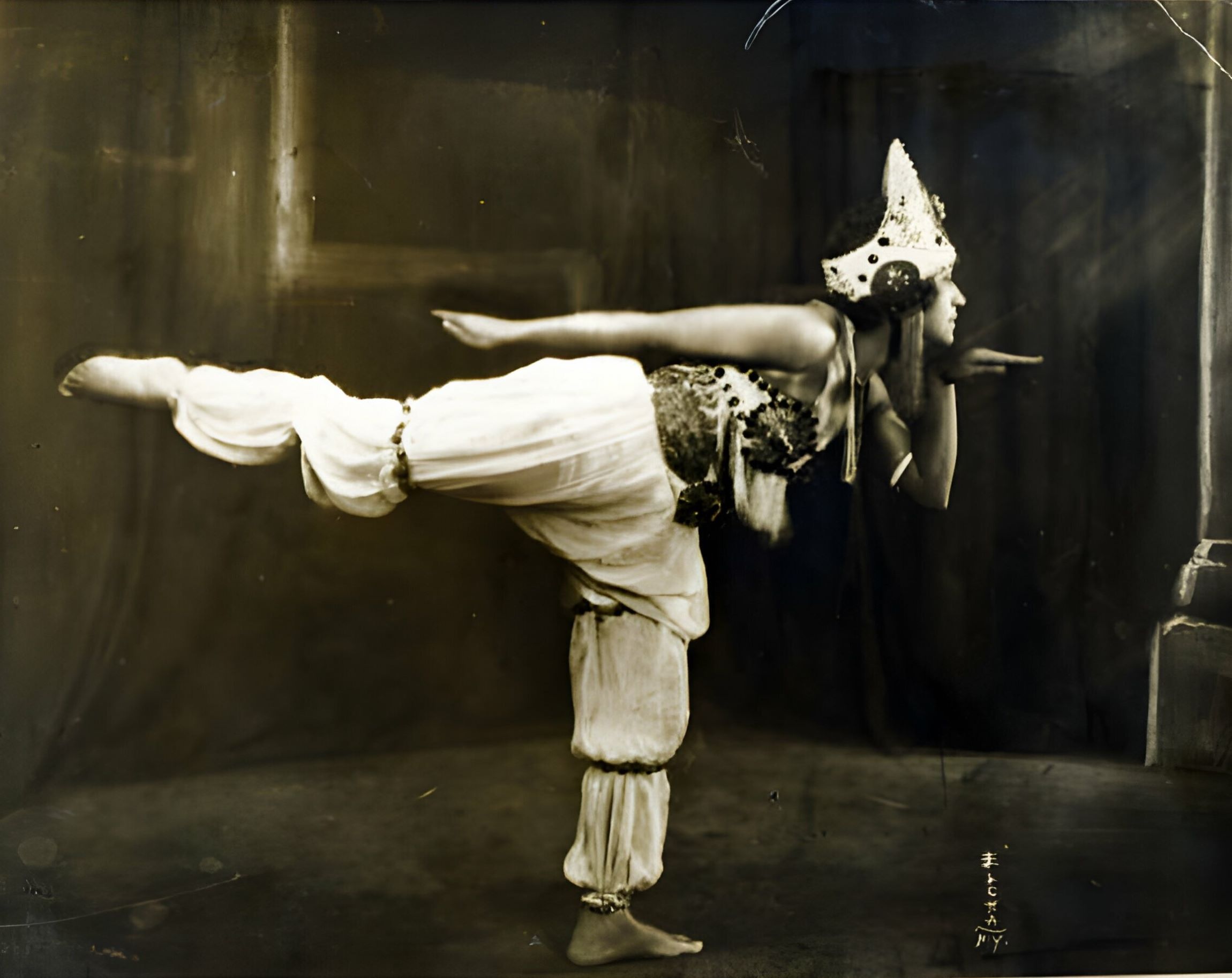
Edna Morton for Elcha studio

Anthony Barboza ~ Portrait of actress Edna Morton, in costume, early 20th century (studio Elcha, NY) | src getty images

Edna Morton (April 2, 1894 – July 31, 1980) was an American actress who was in films in the 1920s. She starred in mainly race films most of them produced by Reol Productions. Her most notable films being Spitfire (1922), Easy Money (1922), and The Call of His People (1921). She was also in a film by Oscar Micheaux called A Son of Satan (1924). She is known to have been in ten films in total. She was referred to as “the colored Mary Pickford”. (text retrieved from wikipedia entry)

Anthony Barboza ~ Portrait of actress Edna Morton, in costume, early 20th century (studio Elcha, NY stamp on bottom right)

Theda Bara in Cleopatra · 1917

Theda Bara (anagram of Arab death, 1885-1955), in Cleopatra (1917) | src alamy
Theda Bara (b. Theodosia Burr Goodman, 1885-1955), in Cleopatra (1917) directed by J. Gordon Edwards | src alamy
Theda Bara in Cleopatra (J. Gordon Edwards, 1917). Studio publicity still, Fox Film | src alamy
Detail from image # 1: Theda Bara in Cleopatra (1917) | src alamy

Olga Petrova by de Strelecki

Jean de Strelecki ~ Camera study of stage and film actress Olga Petrova (born Muriel Harding), 1910s | src abebooks

Olga Petrova, born Muriel Harding in England, Petrova moved to the US and rose to success in vaudeville before entering the film industry. She was best known for “The Vampire” (1915), “Bridges Burned” and “Daughter of Destiny” (1917), and “Tempered Steel” (1918). She retired from film in 1918, but continued working as a stage actress .

Jean de Strelecki ~ Camera study of stage and film actress Olga Petrova (born Muriel Harding), 1910s | src abebooks

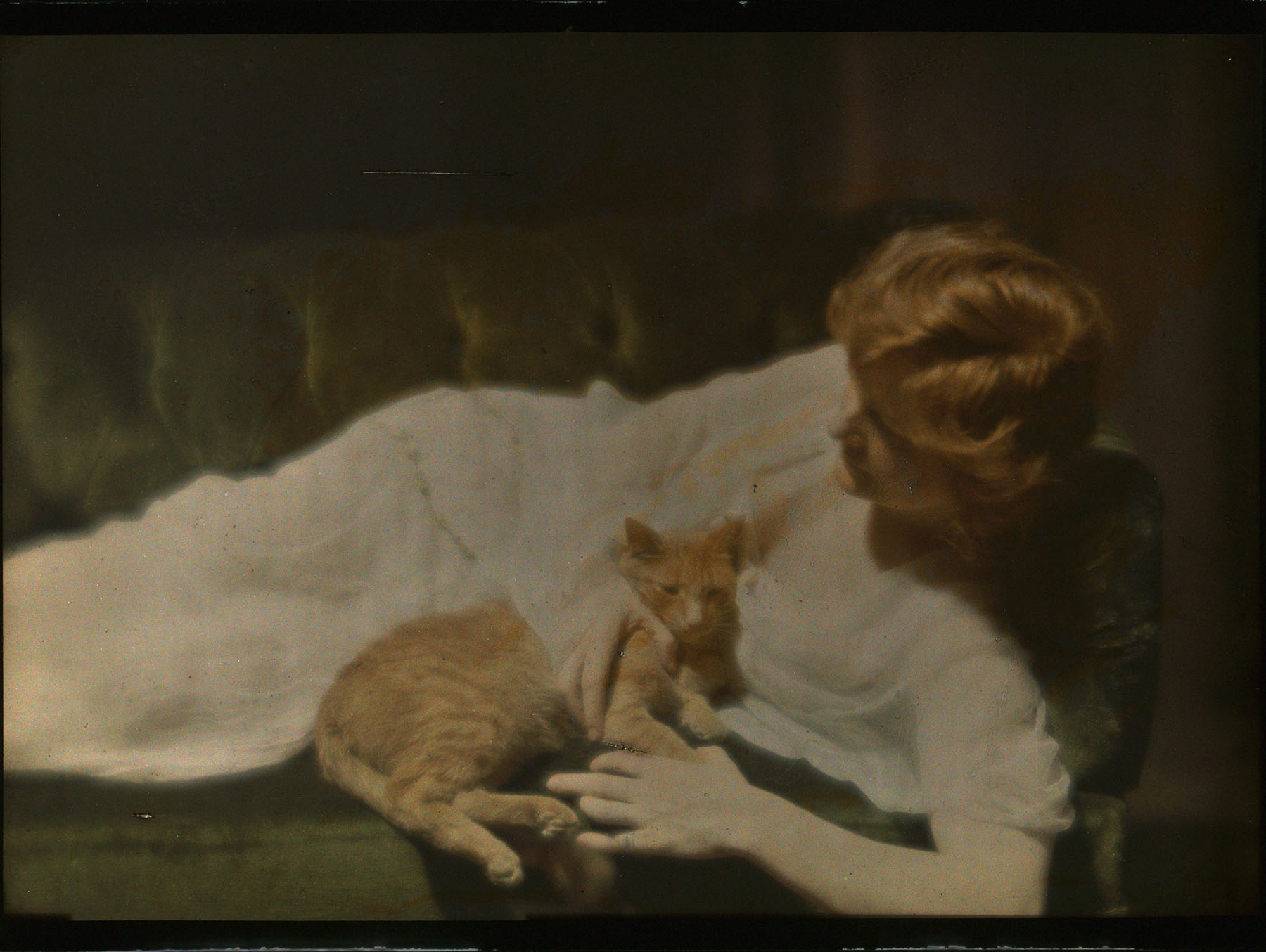
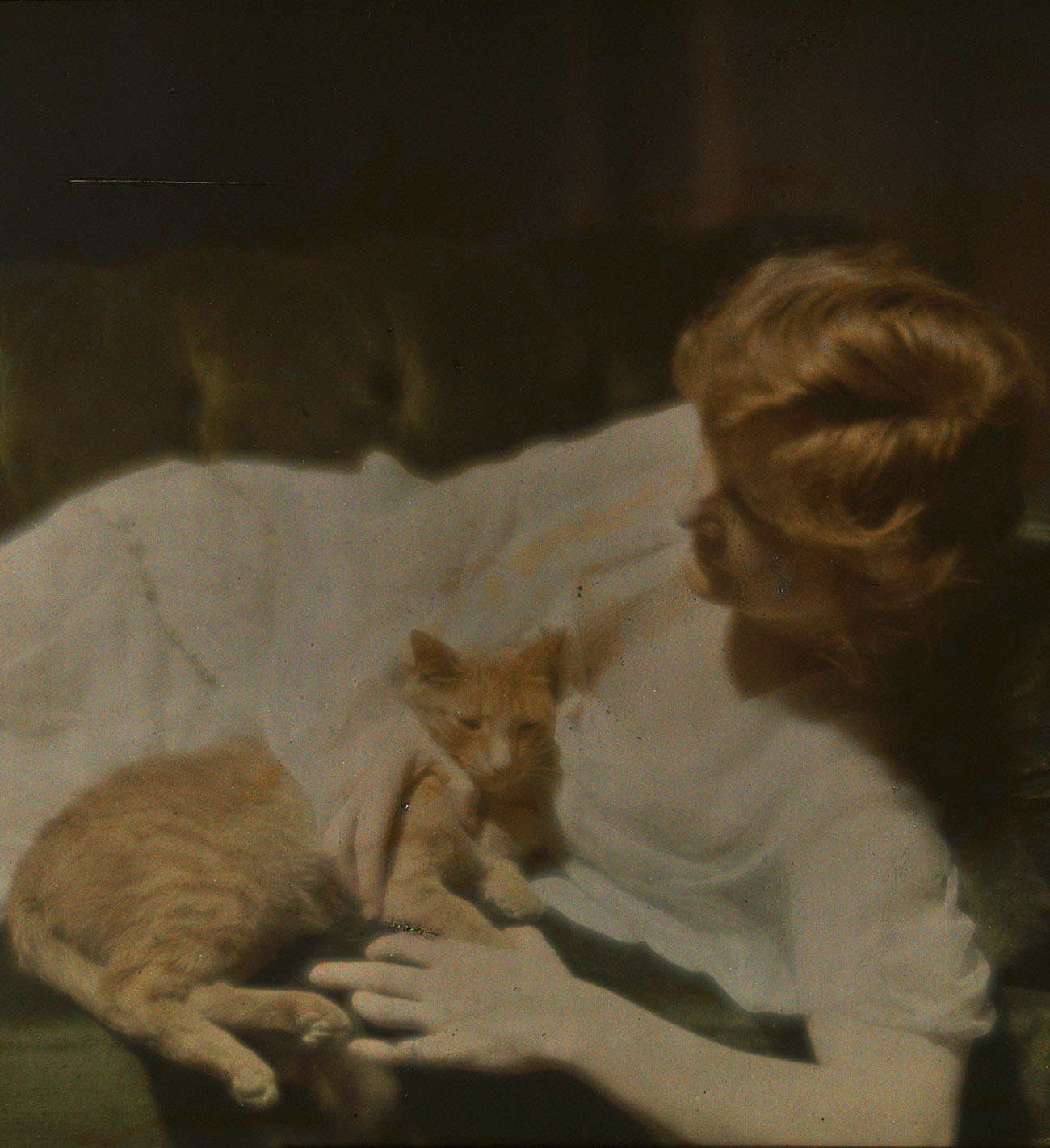
Ann Murdock with Buzzer by Genthe

Arnold Genthe (1862-1949) ~ Ann Murdock with Buzzer IV, 1914. Autochrome | src Library of Congress
Detail from Ann Murdock with Buzzer the cat, 1914. Autochrome by Arnold Genthe