

images that haunt us
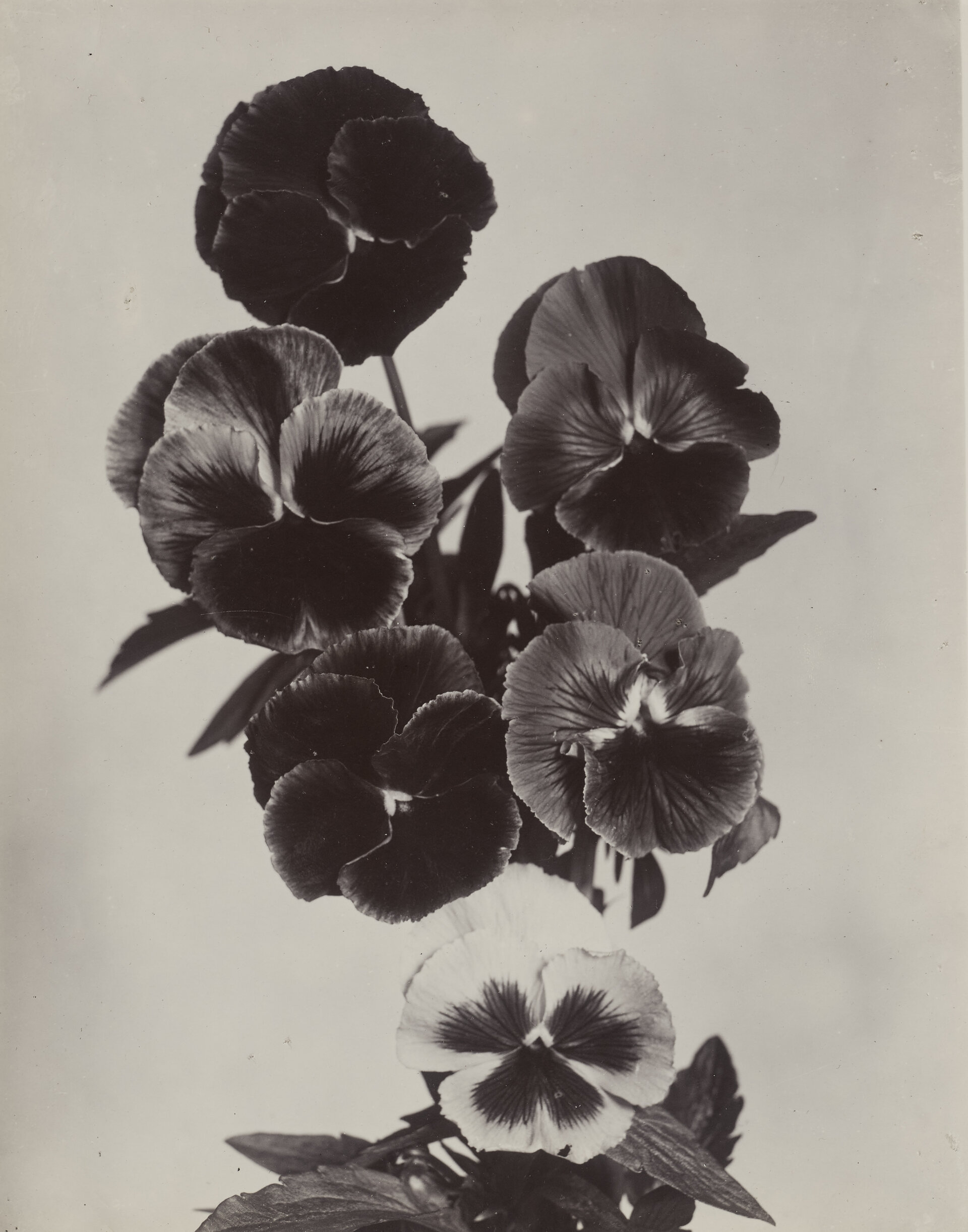
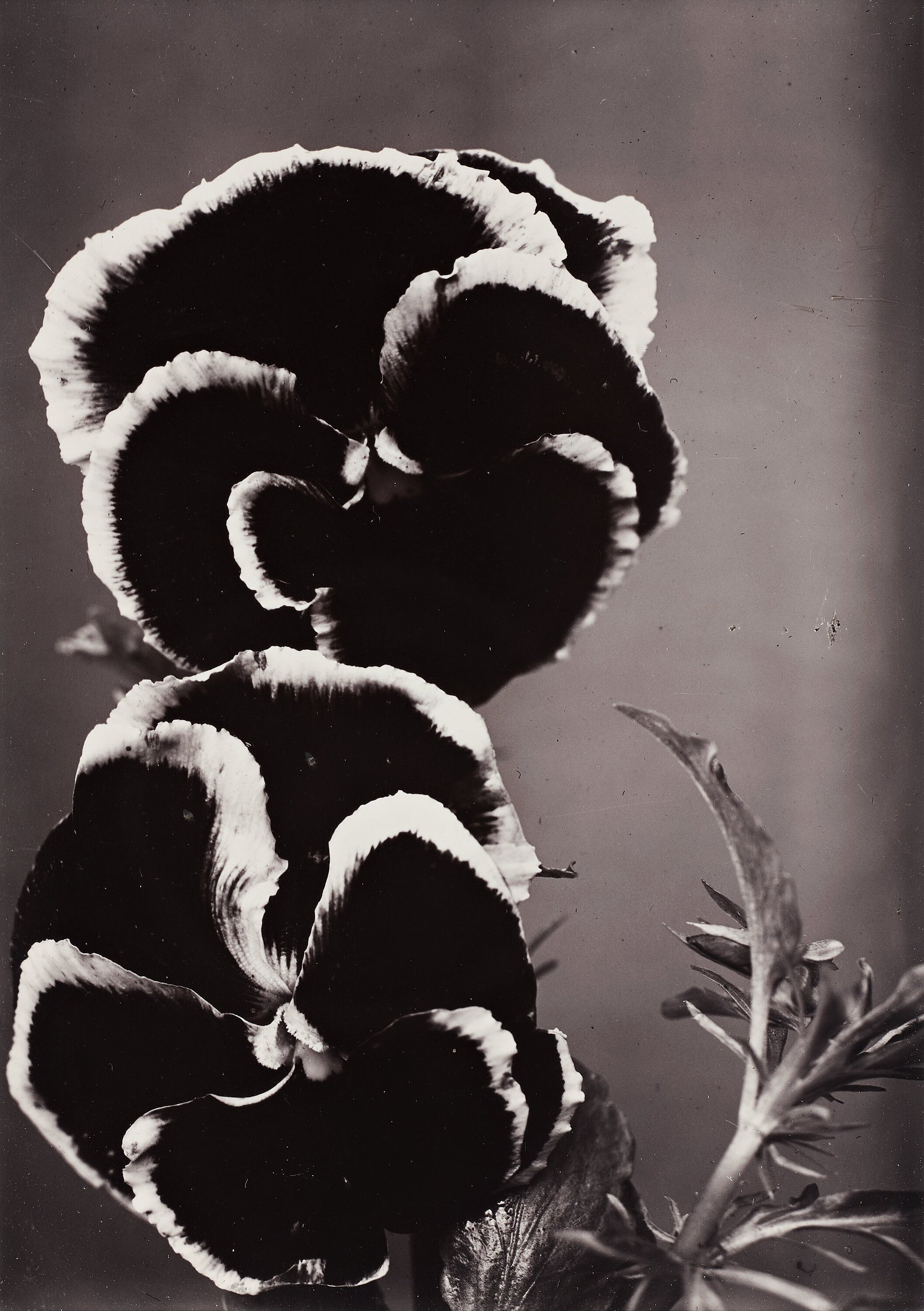
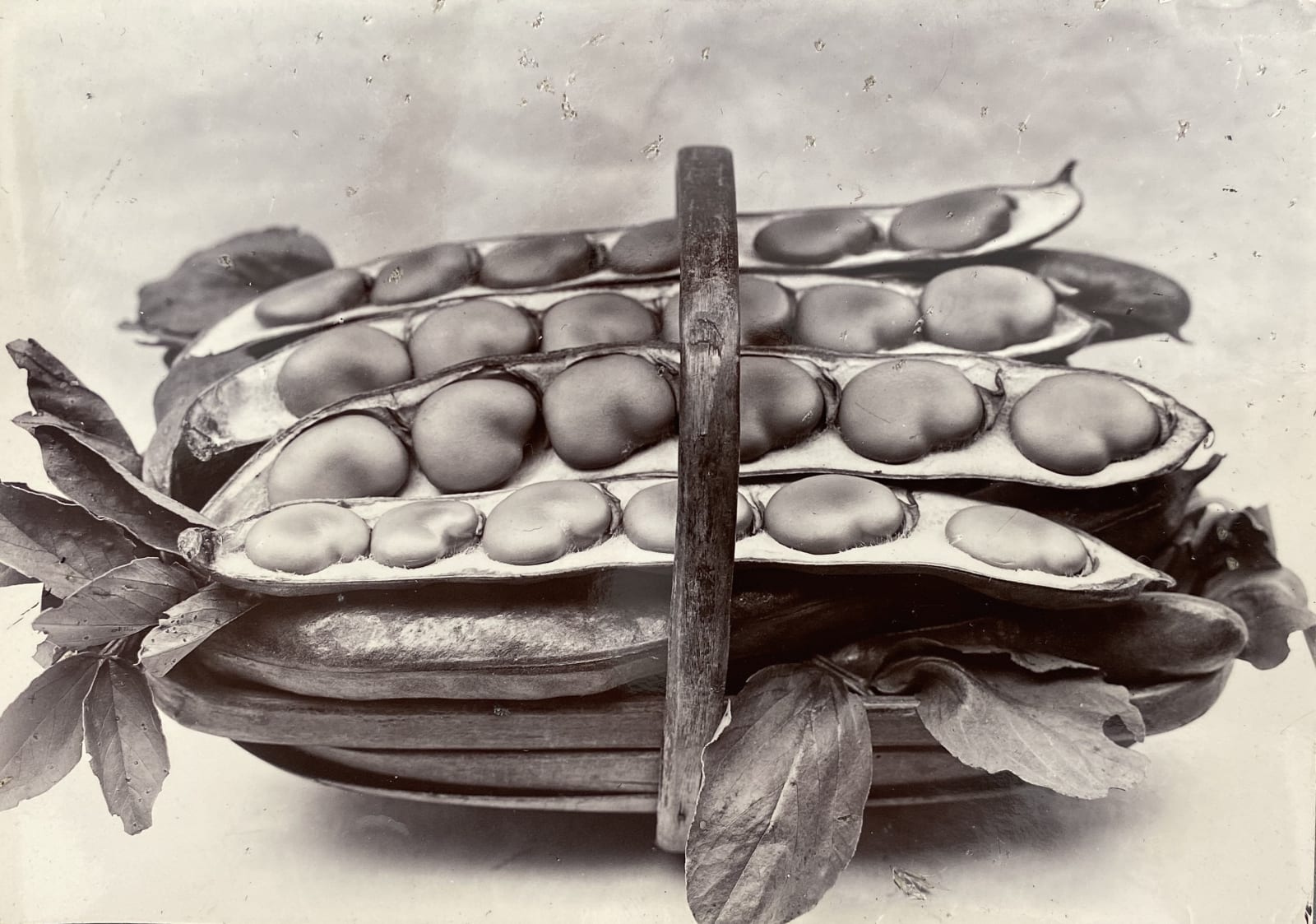

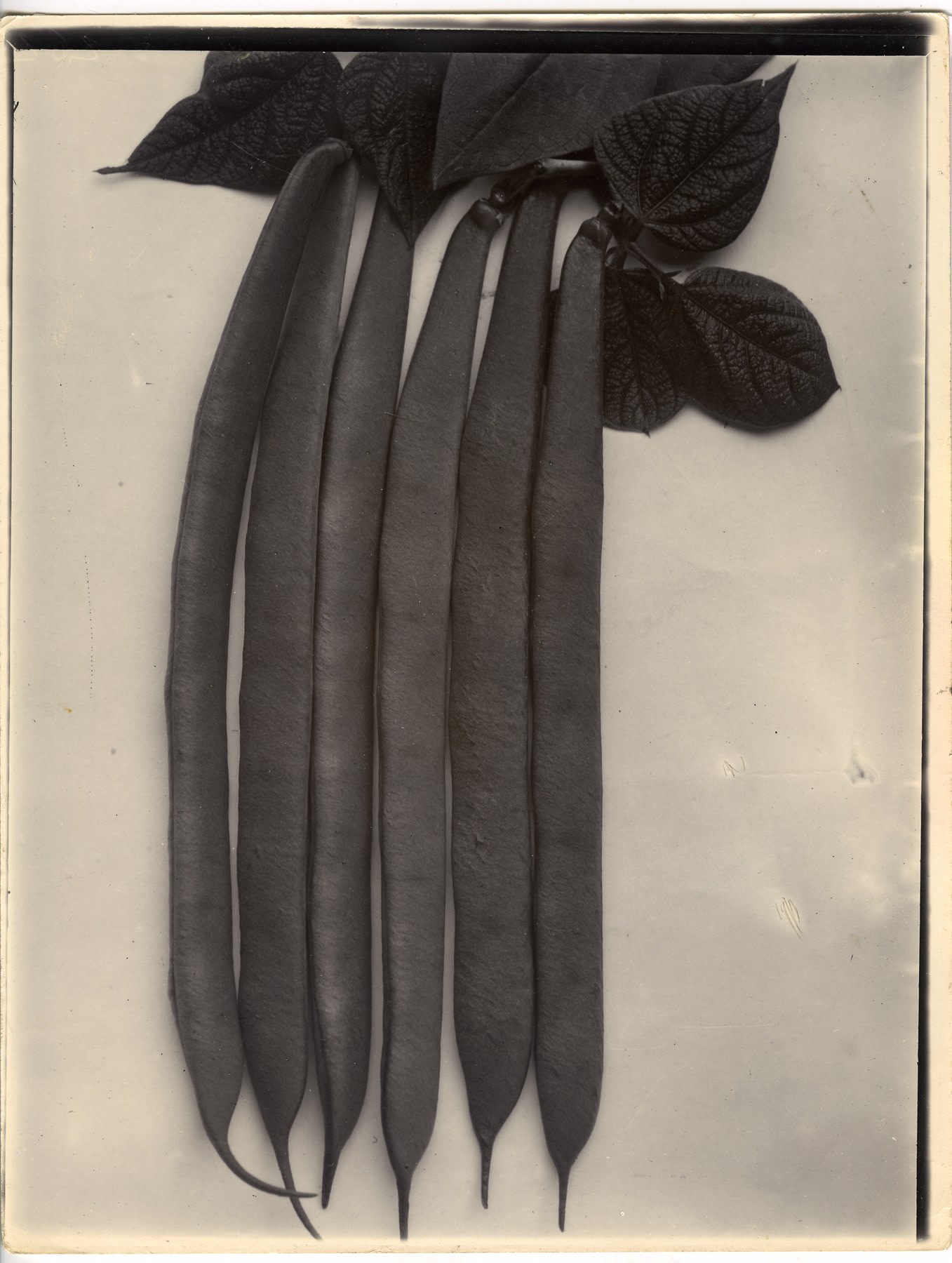
Charles Jones was an English gardener and plantsman, who worked on private estates in the 1890s. As if they were carefully crafted objects, he diligently photographed the vegetables, fruit and flowers he grew. In the era of the supermarket, they appear as a eulogy to a lost time of intimacy between producer and product, the simplicity of the forms paralleling a seemingly less complex age. Although his work wasn’t discovered until 1984 (in Bermondsey market by Sean Sexton), his life’s work is now considered to be on a par with the spare, modernist photographs of Karl Blossfeldt’s flowers and Edward Weston’s vegetables. All his negatives would have been glass and each gold toned print would have taken many hours to complete, the prints are beautiful and unique and show an adept hand in what was a very complex ‘hobby’. His work is in public institutions worldwide. [quoted from Michael Hoppen Gallery]
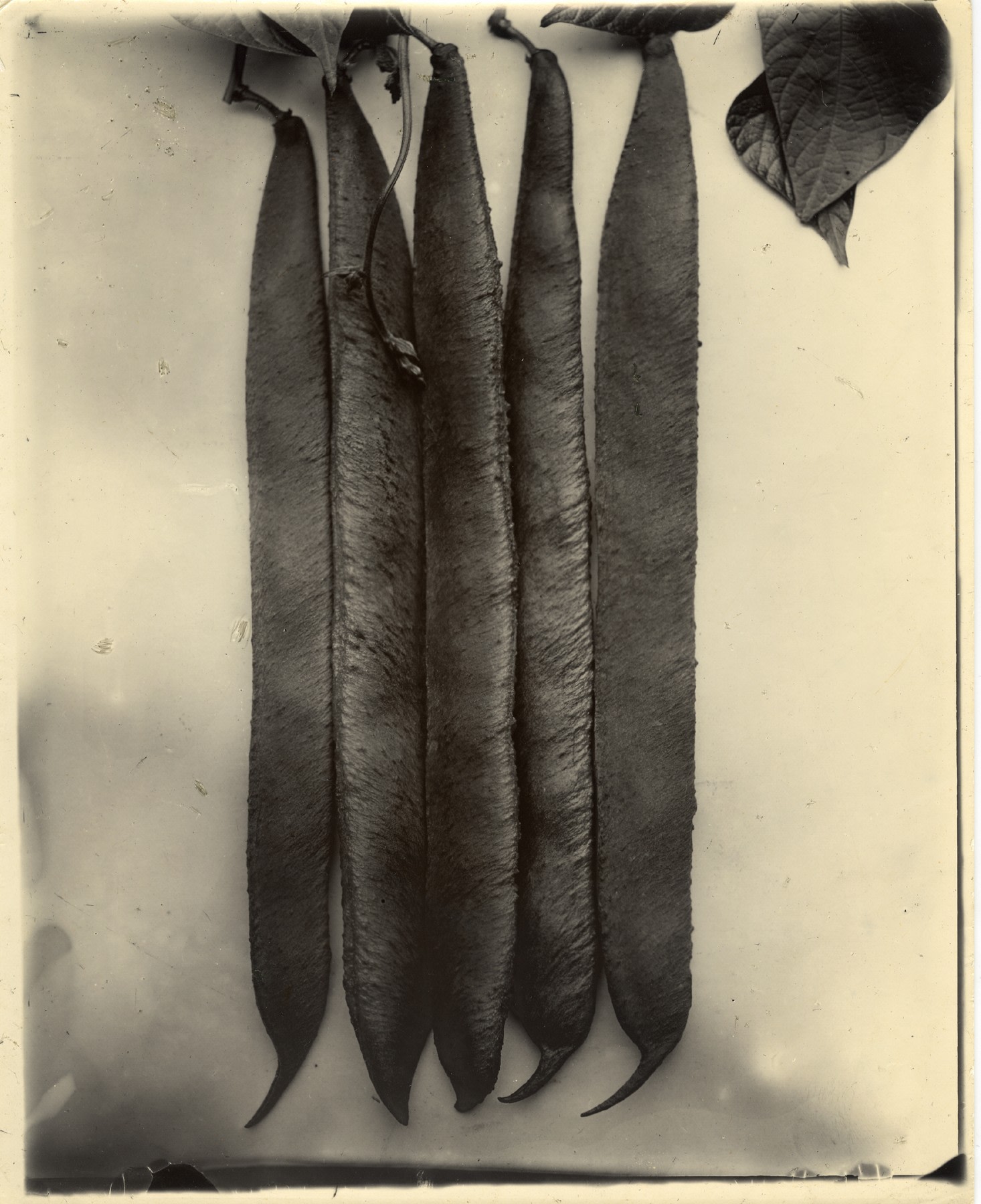
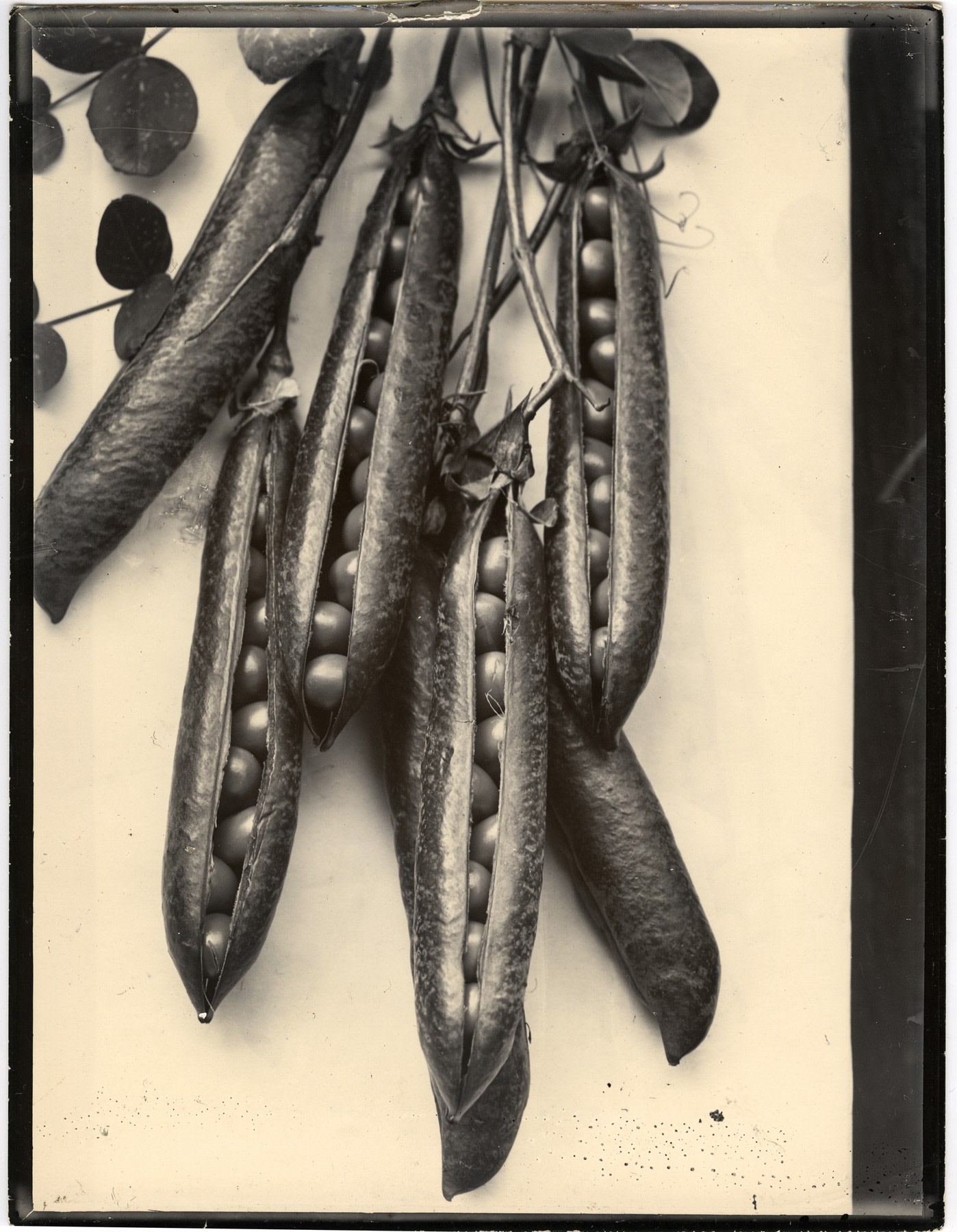

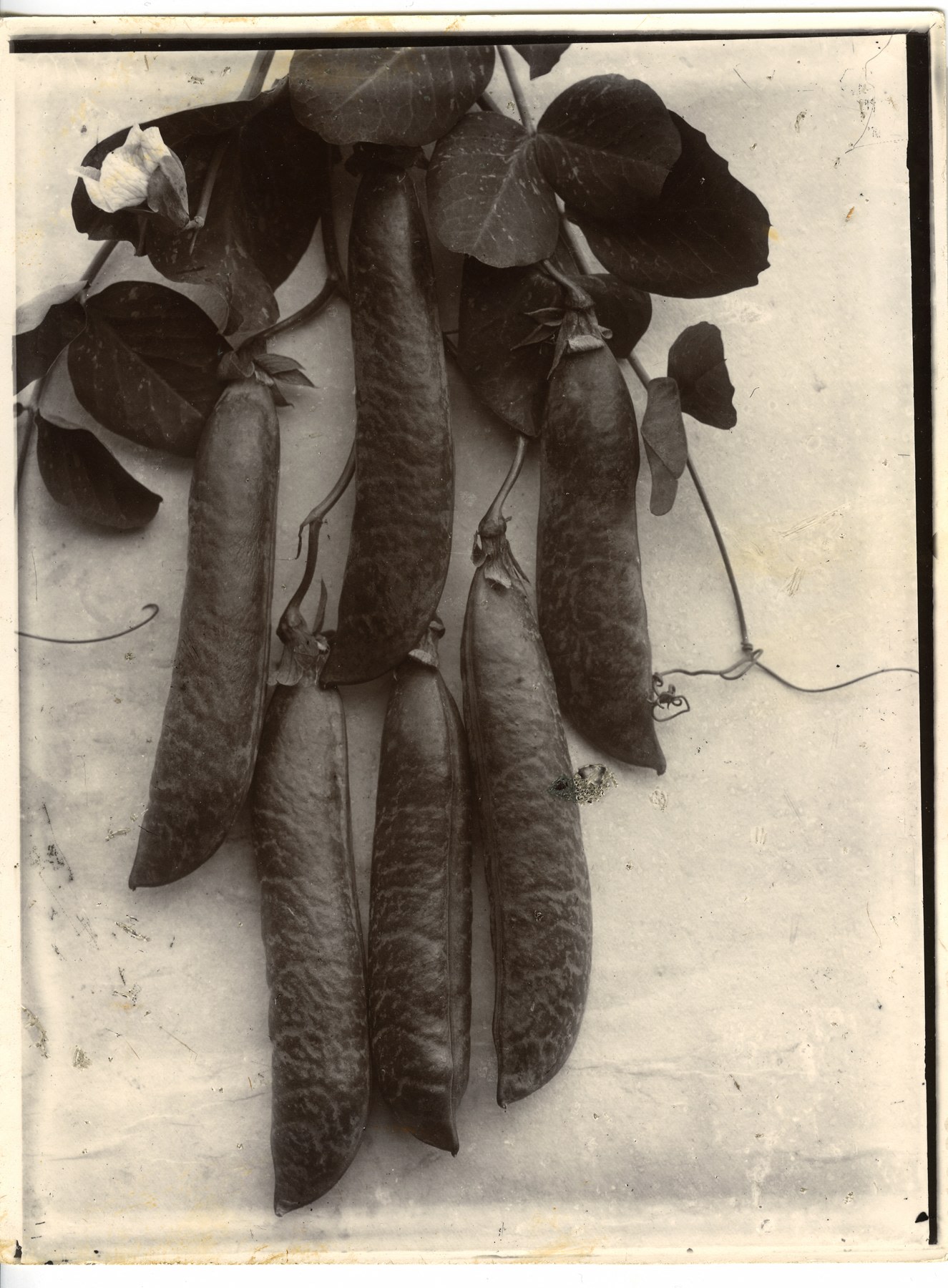
Howard Greenberg Gallery is pleased to announce an exhibition of still life photographs by British born Charles Jones. Viewed as a proto-Modernist and outsider artist, Jones, a humble English gardener and photographer working at the turn of the 20th century, is one of art’s most mysterious and recent discoveries. Jones’ work came to light in 1981, when discovered in a trunk at an antiques market in London. The only clue to the identity of the photographer were the initials “C.J.” or sometimes the signature “Charles Jones” that was scrawled on the backs of the prints along with fastidious notations giving the precise name of each of the subjects. But the story of the photographer remained unknown until a woman, seeing the photographs on BBC television, identified them as the work of her grandfather, a gardener who worked at several private estates between the years 1894 and 1910. [quoted from HGG]
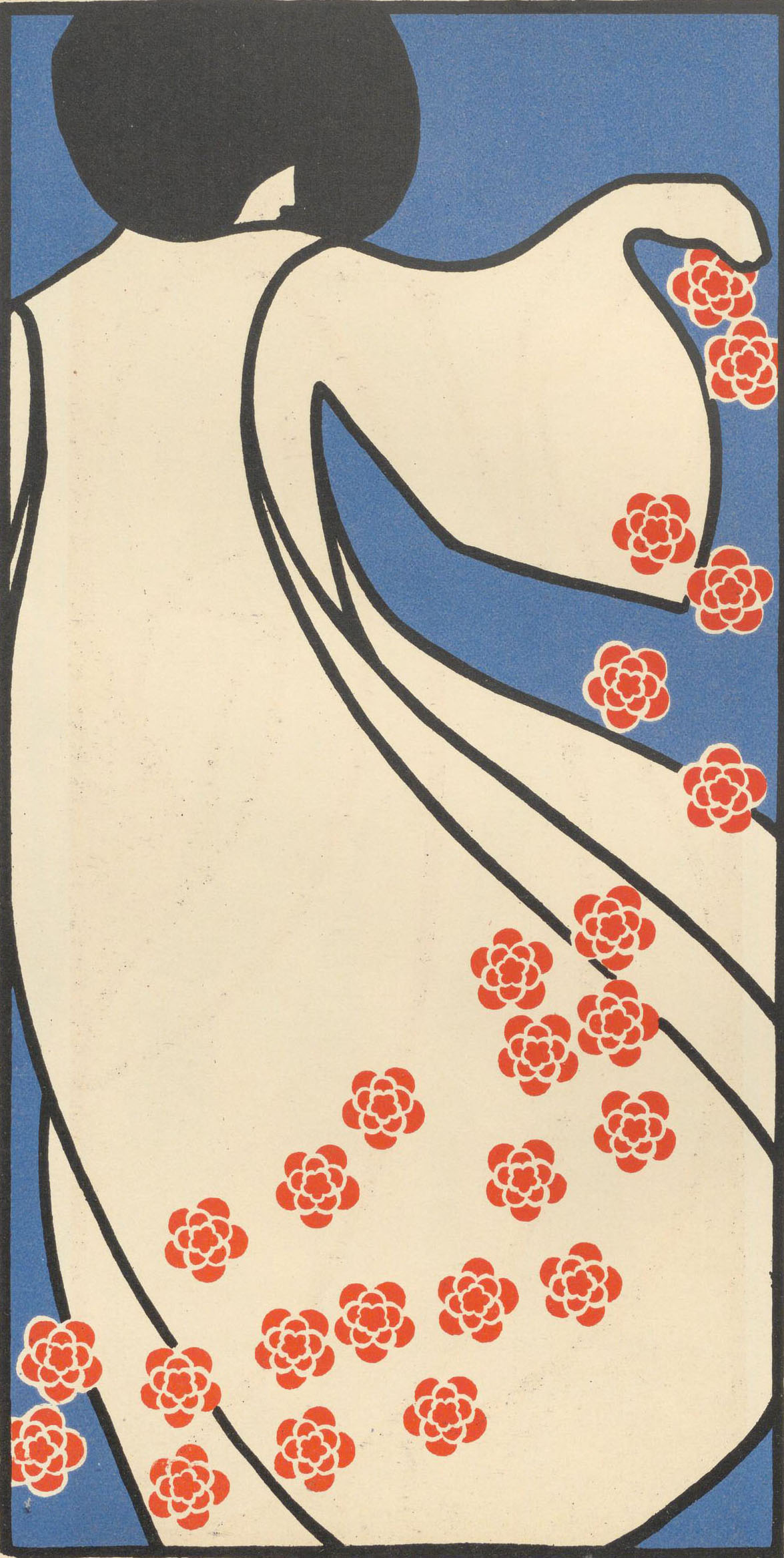
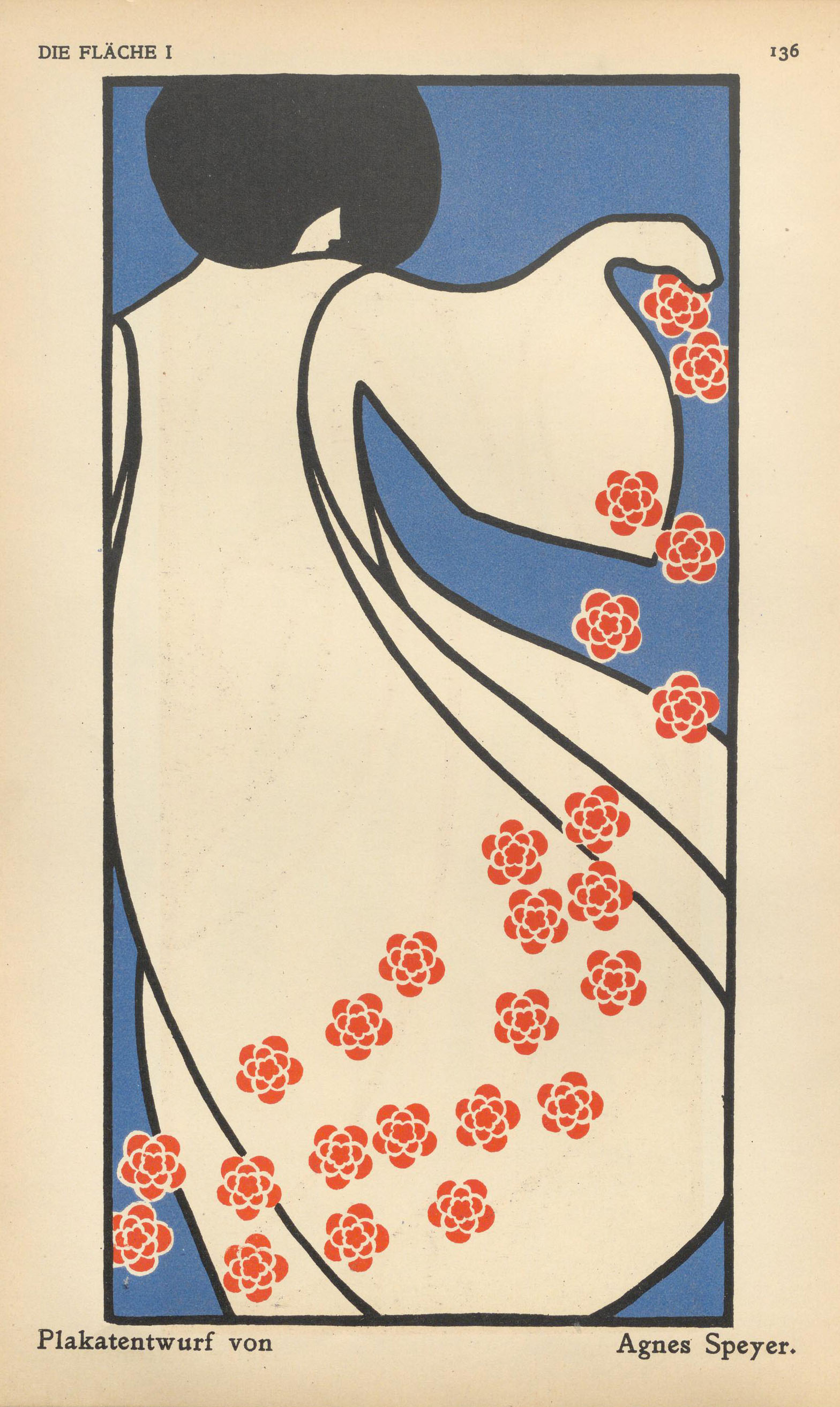


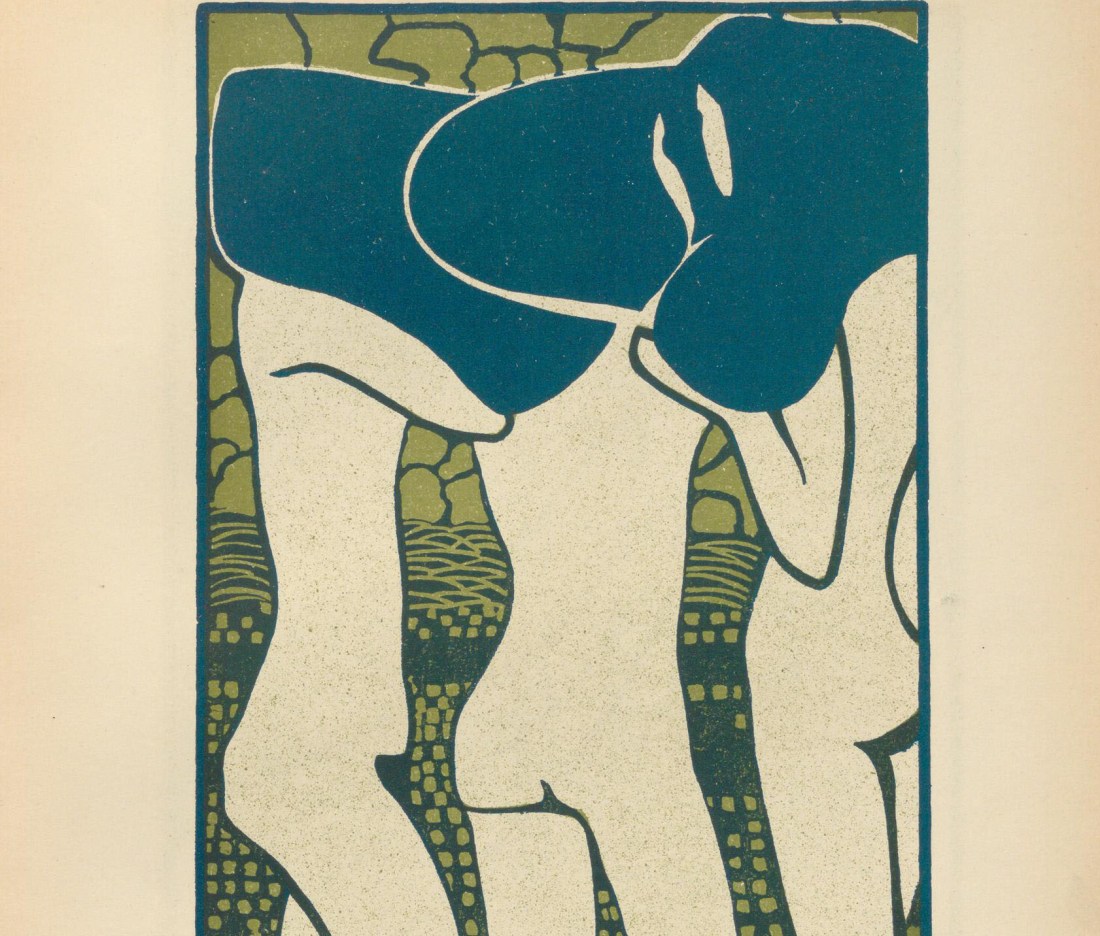


For a long time it was Nelly Marmorek’s fate that she was only known as the wife of the successful architect and committed Zionist Oskar Marmorek and as the daughter of the well-known banker Julius Schwarz. But even the few works of her that have survived show that she should be honored as an independent creative personality.
Nelly Marmorek was born Cornelia Schwarz on May 13, 1877 in Vienna and came from a very wealthy family of bankers on her father’s side. Apparently her mother, who was a sister of the well-known and successful composer Ignaz Brüll, brought in her musical talent. Nelly, as she was called, soon showed a talent for drawing and – supported by her art-loving family home, in which composers such as Gustav Mahler and Johannes Brahms and writers such as Arthur Schnitzler and Hugo von Hofmannsthal frequented – sought an artistic education.
In 1901 she began studying at the Vienna School of Applied Arts, where she was a student of Alfred Roller and Carl Otto Czeschka, among others. Her fellow students included Hilde Exner, Emma Schlangenhausen, Moriz Jung and Rudolf Kalvach. The fact that there is an original woodcut of hers in “Ver sacrum” and that she was able to publish four works in the portfolio “Die Fläche” shows that Marmorek was counted among the best of her year by her teachers.
A photograph from the Roller class has been preserved in the archive of the University of Applied Arts in Vienna, in which both of the poster designs by Nelly Marmorek depicted in “Die Fläche” can be seen. The picture, which most likely shows the artist herself at work, also documents that the poster designs were not just small sketches, but were worked out in the original size.
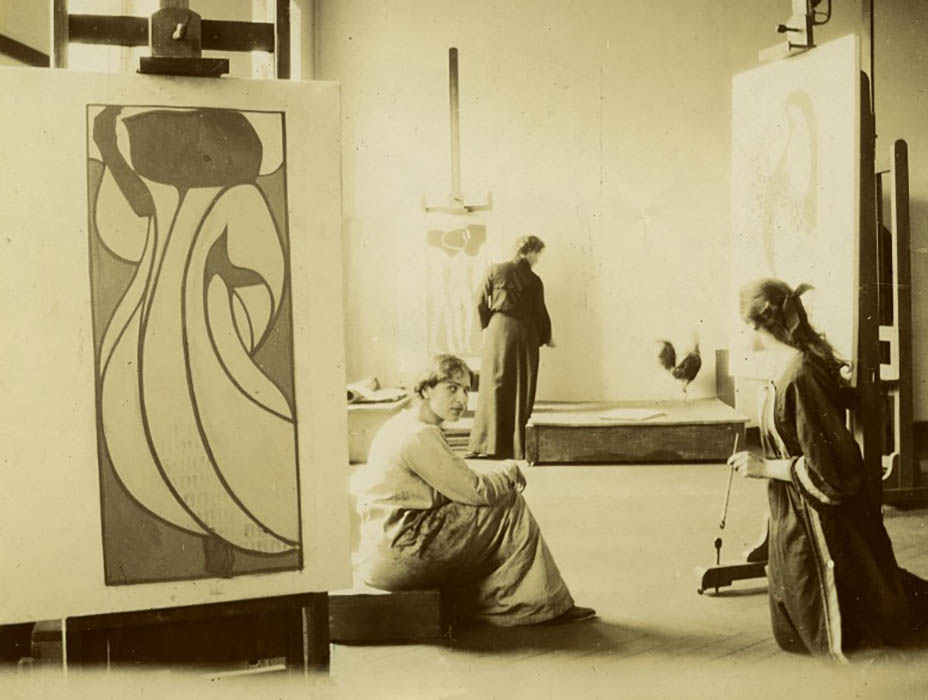
After Oskar Marmorek, to whom she had been married since 1897, committed suicide in 1909, Nelly Marmorek moved back to her parents’ apartment at Berggasse 13, where she was officially registered until 1928. However, she spent most of her time in France, where she studied painting with Henri Matisse and also took part in exhibitions.
Nelly Marmorek lived in Cannes during World War II. In 1942, southern France was occupied by German troops and now the Jews living here or who had fled here, like Nelly Marmorek, were exposed to the terror of the National Socialist rulers. Marmorek was no longer able to travel to the USA, and she died in Cannes on March 11, 1944.
After basic research, Ingrid Erb wrote in her study of Nelly Marmorek: “Nelly’s death certificate states the address Villa Baron, Avenue Isola Bella, Cannes. A cause of death is not noted. The Villa Baron was confiscated by the German troops during World War II and used by the Nazi occupying power as a headquarters. On March 14, 1944, Nelly Marmorek was buried in the Cimetière Le Grand Jas as a native on common ground with a five-year concession.”
quoted from: Austrian Posters / Nelly Marmorek
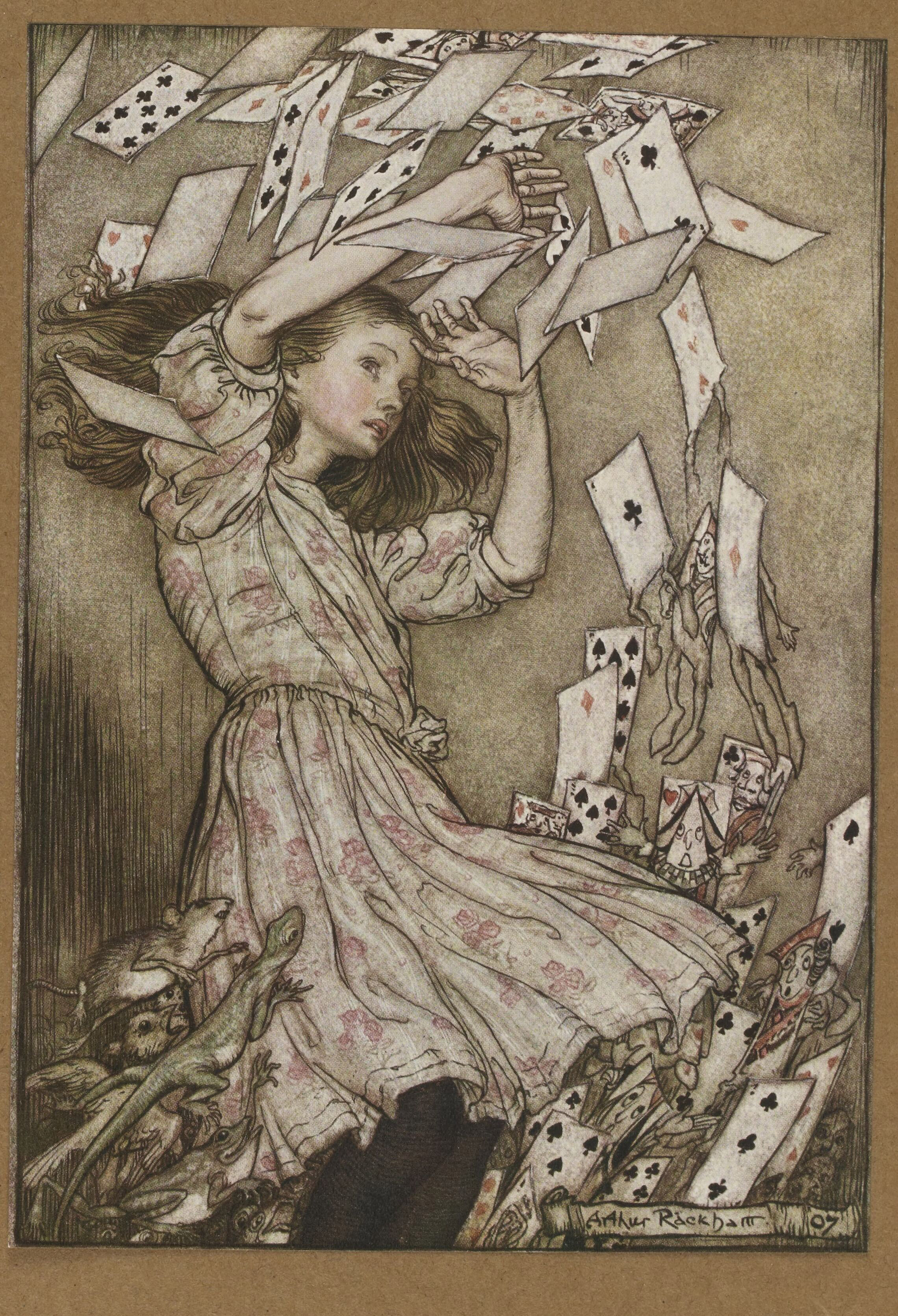
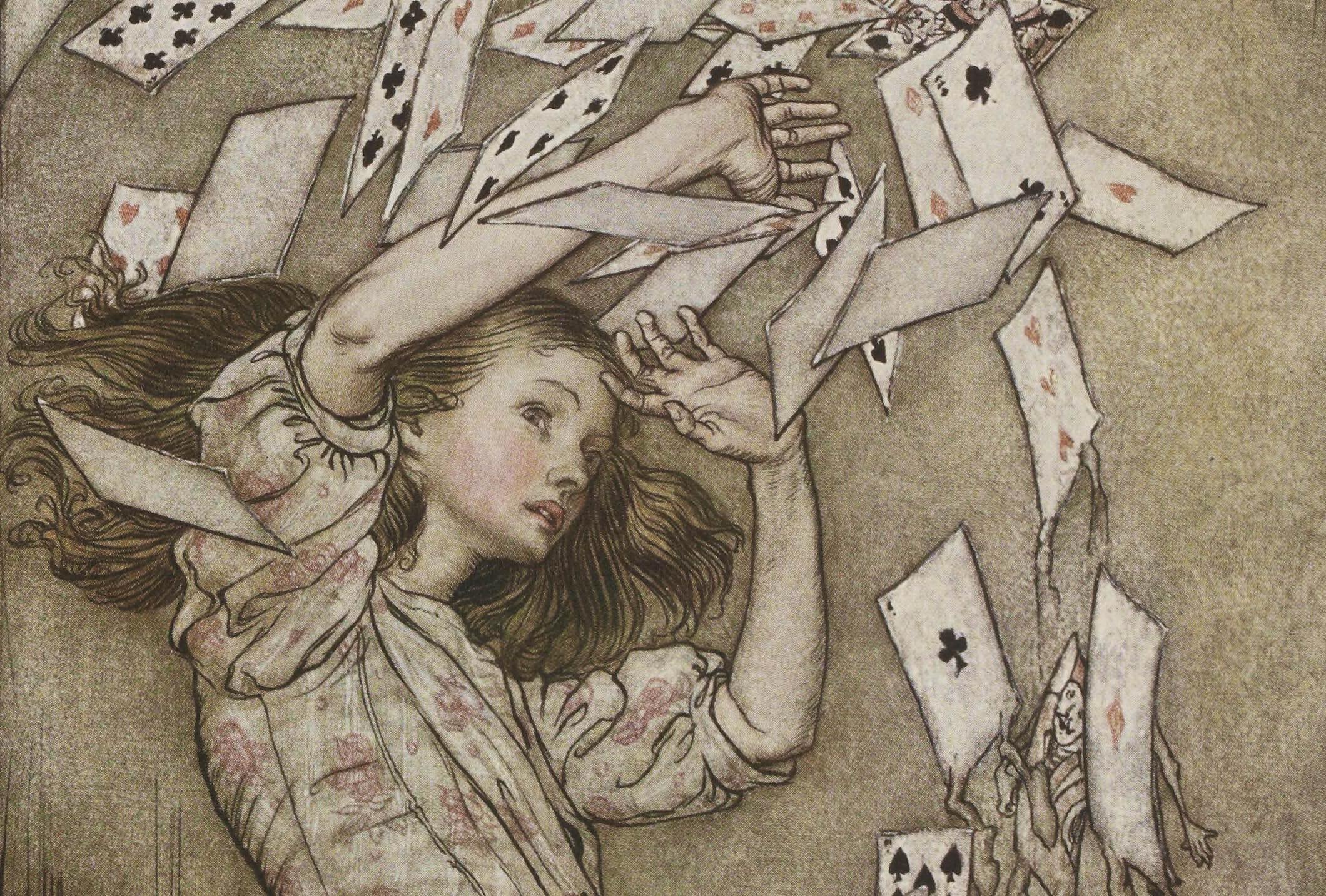
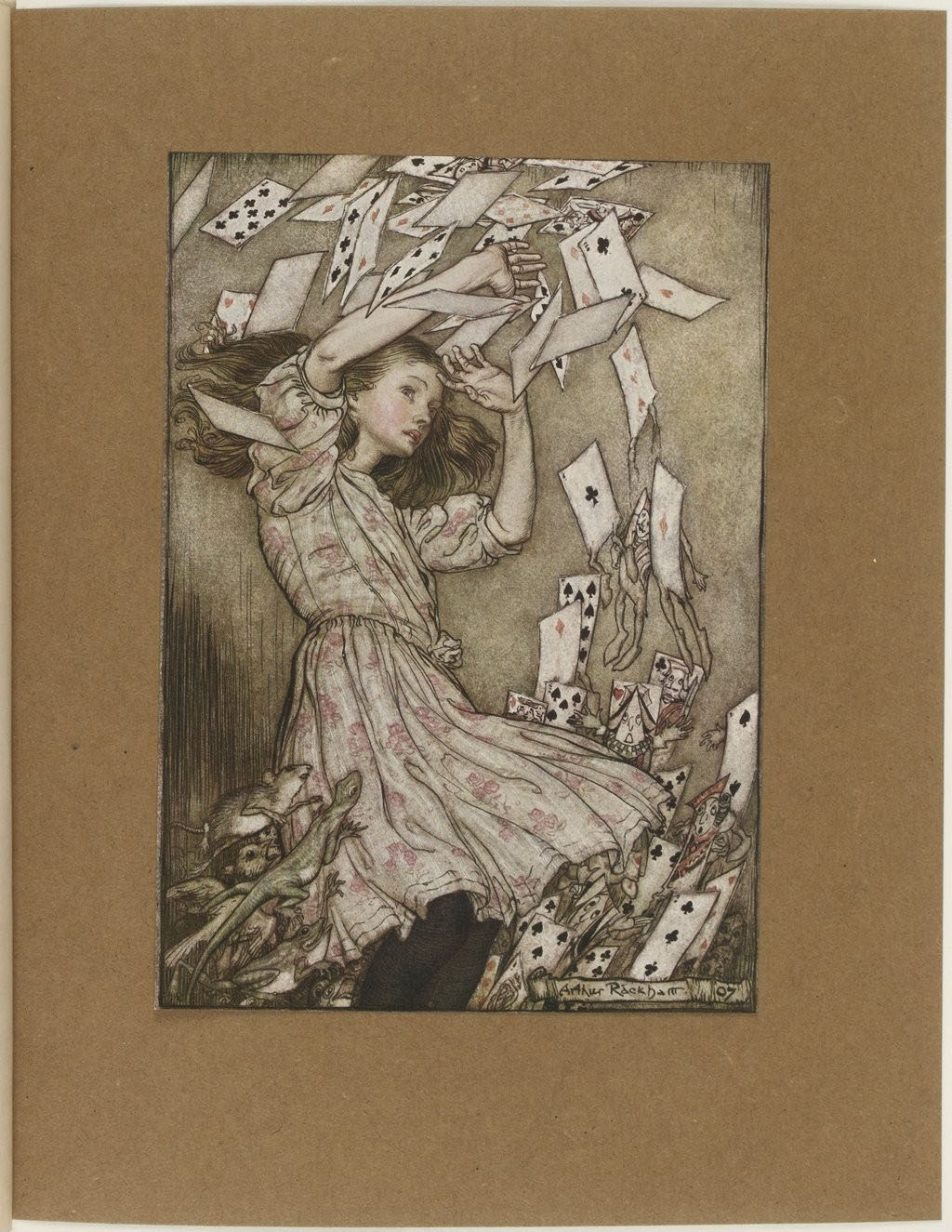
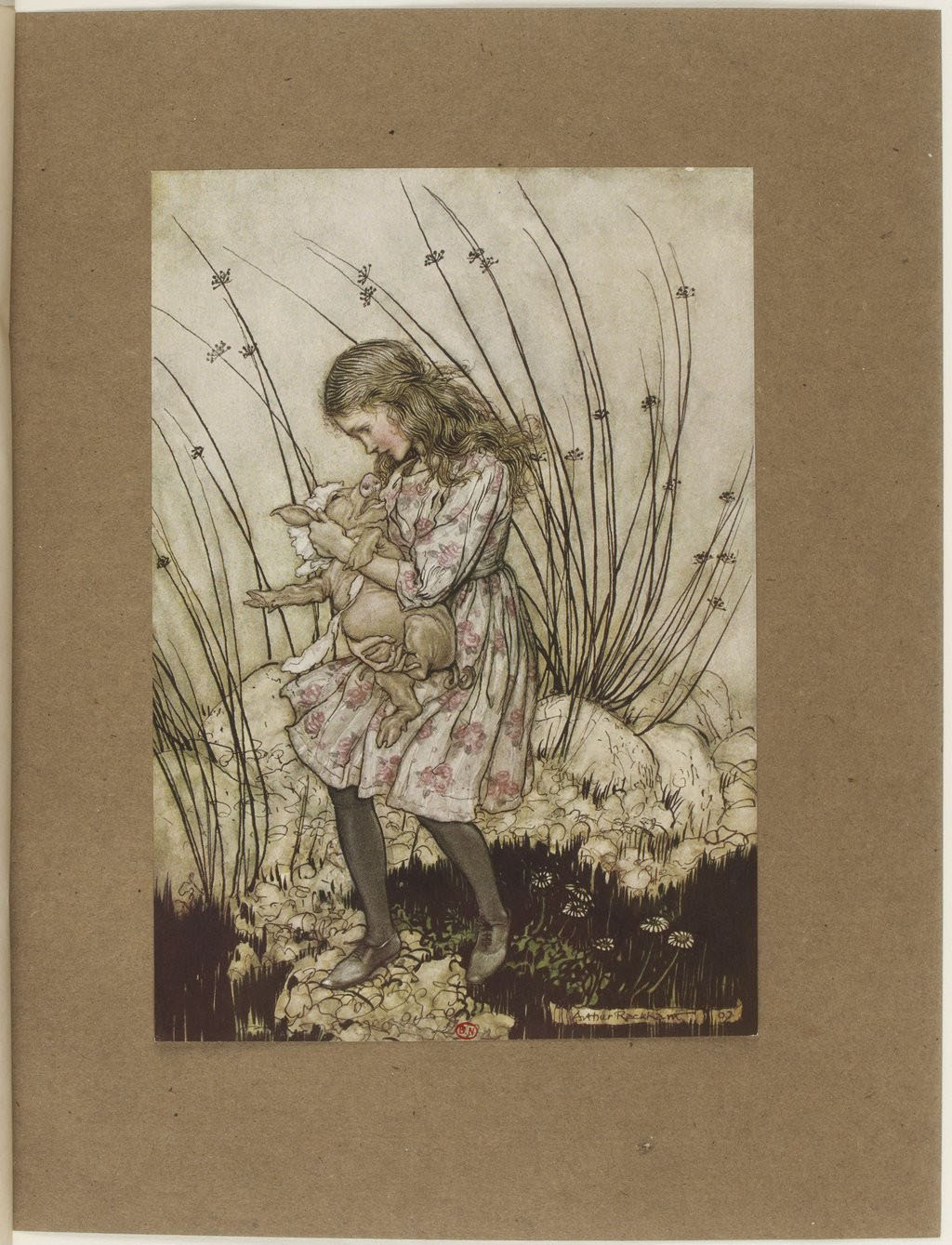


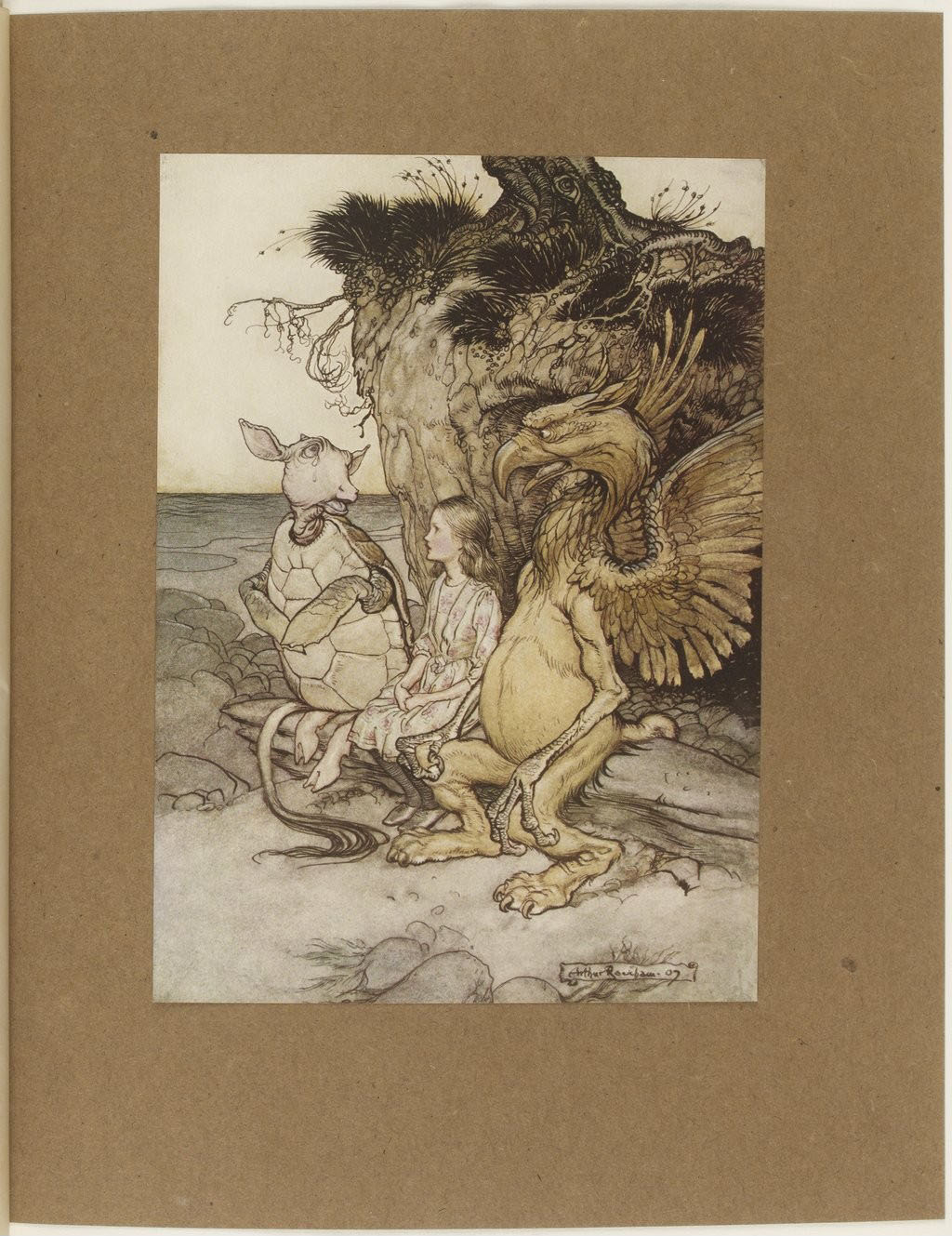


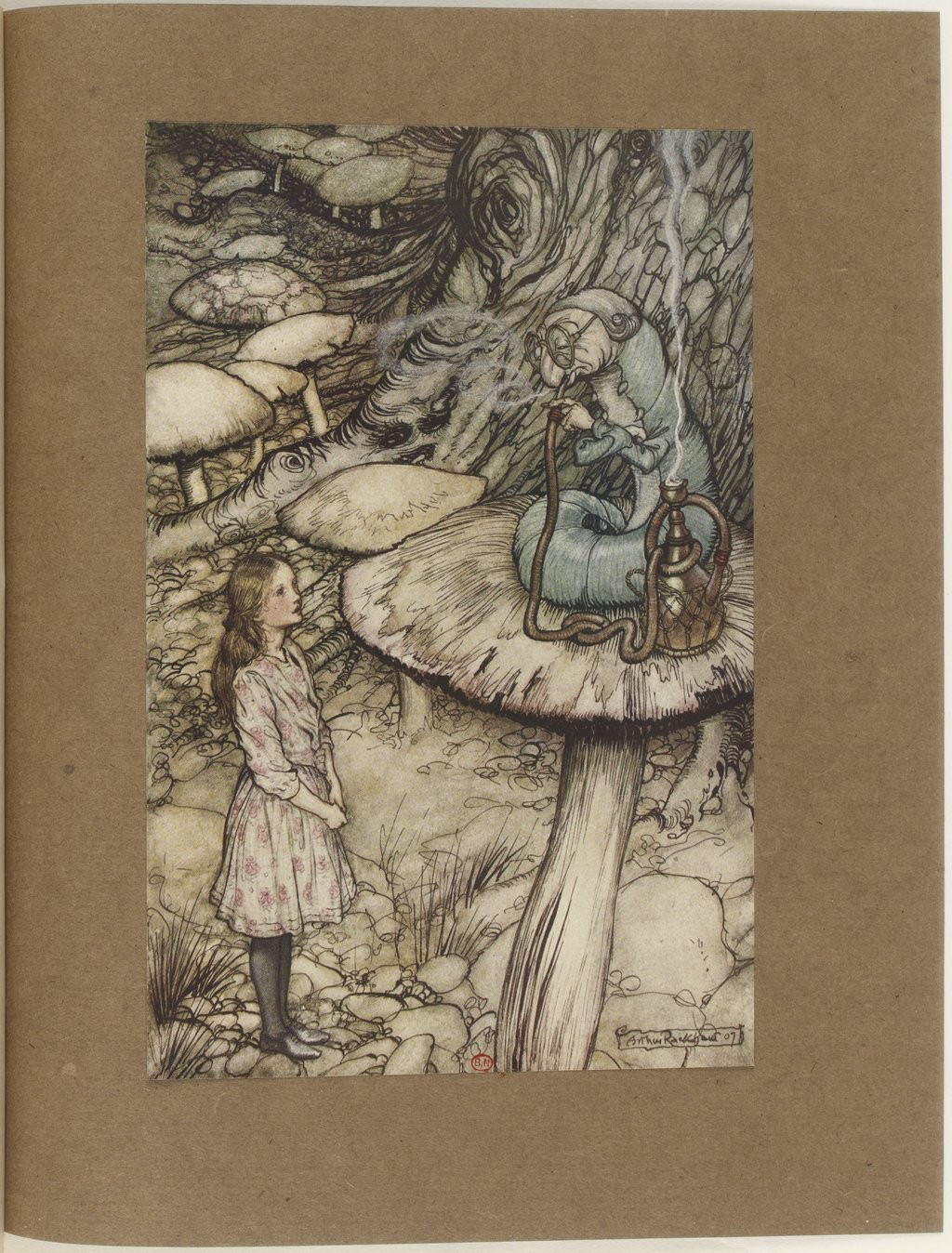
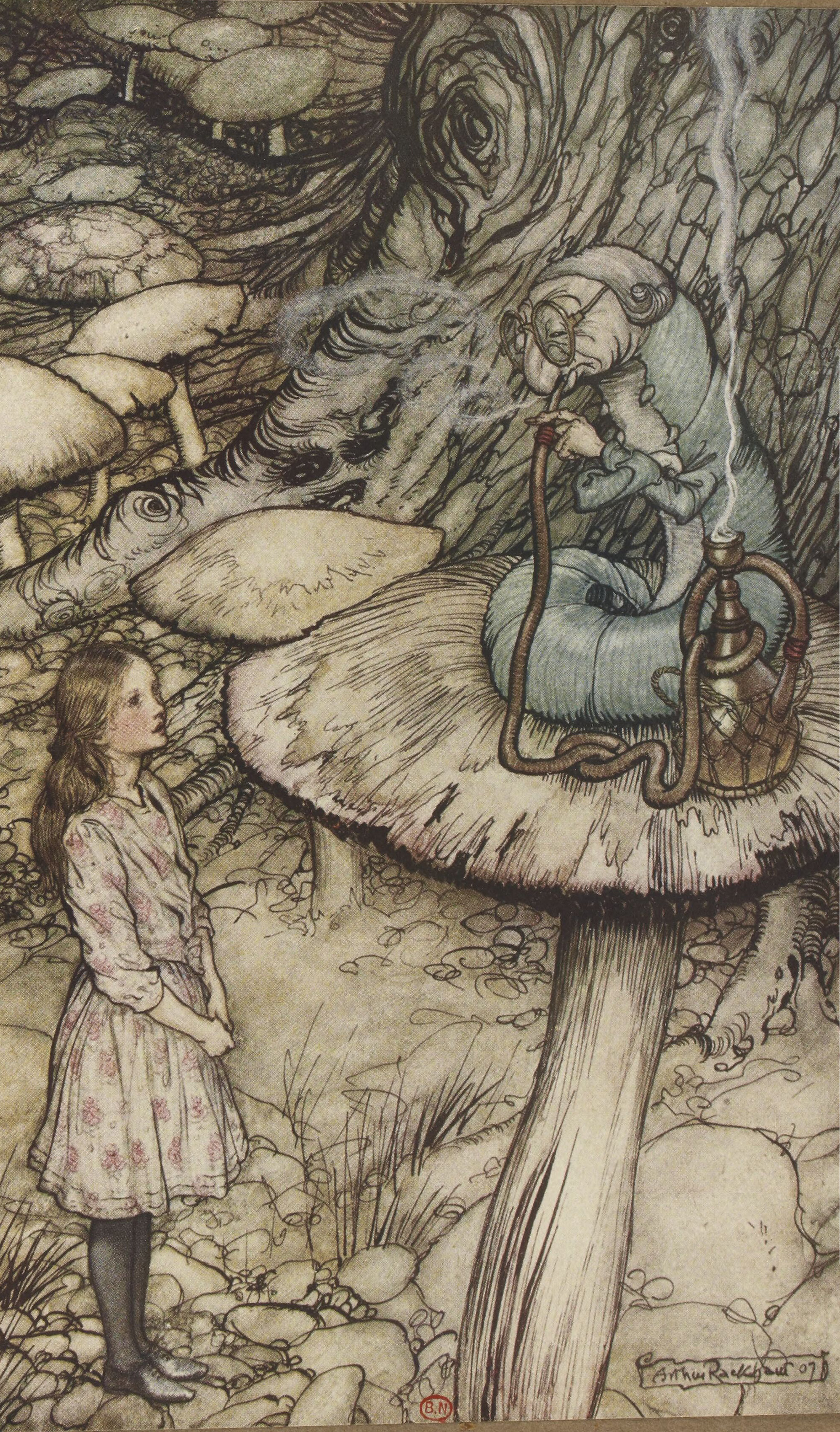


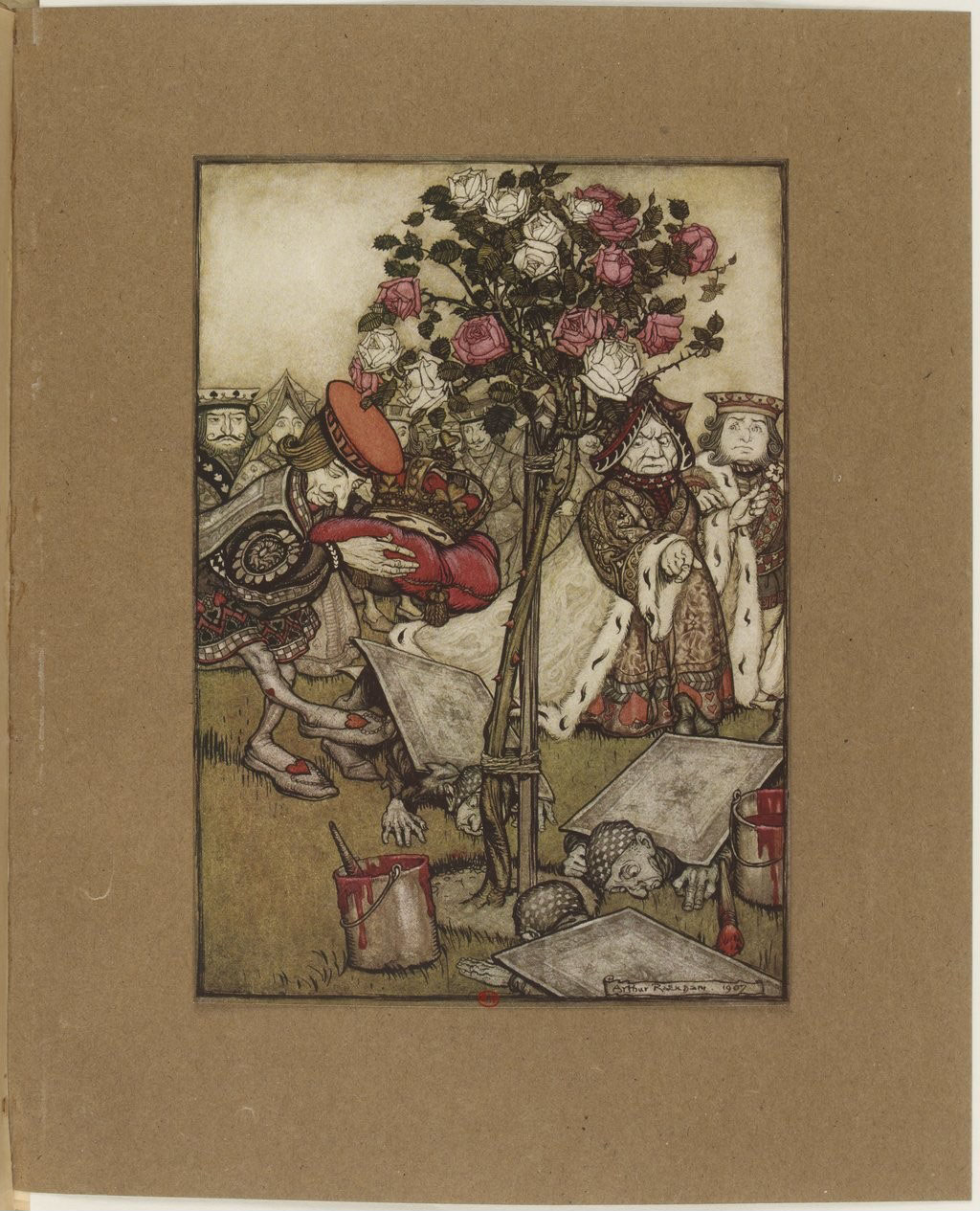
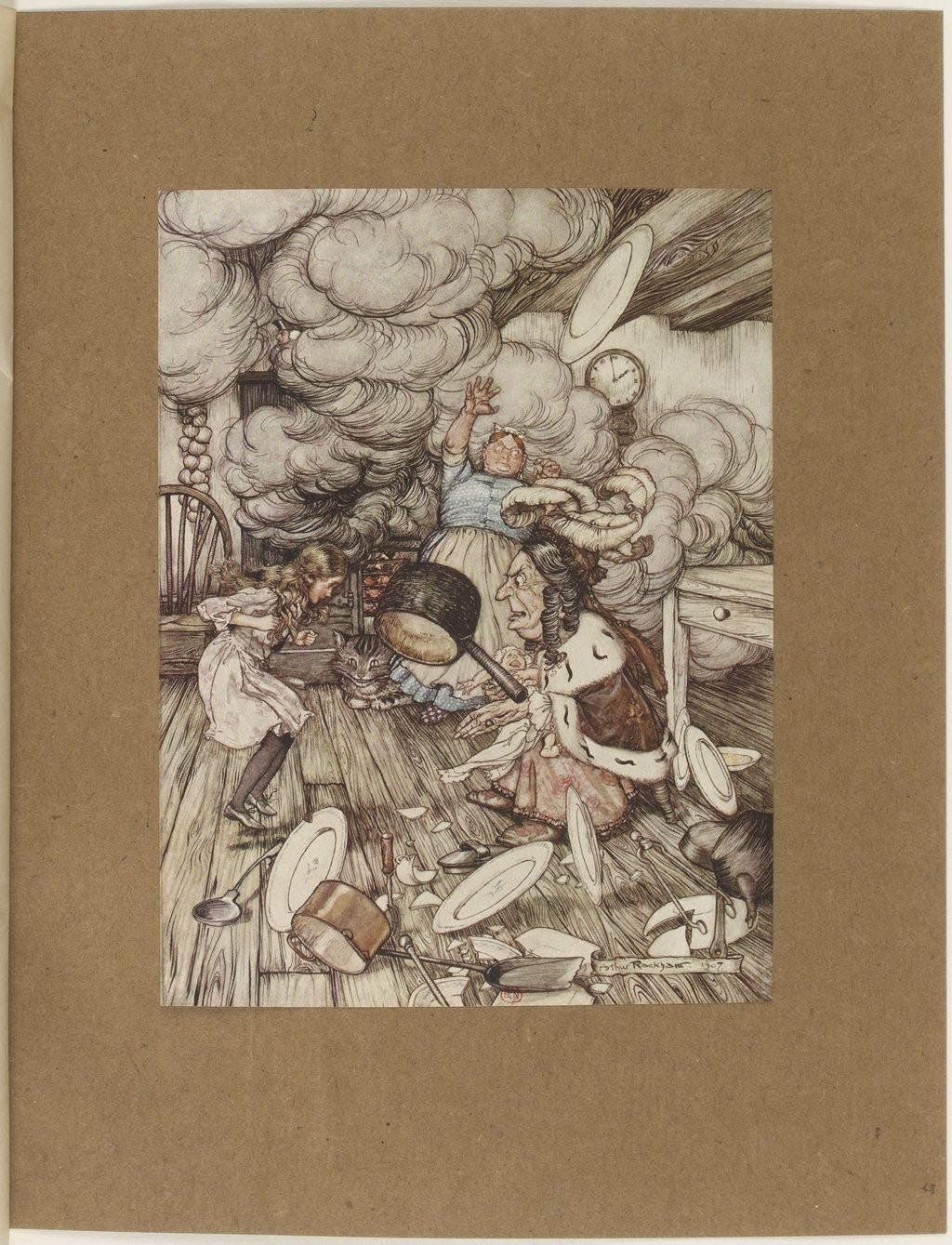
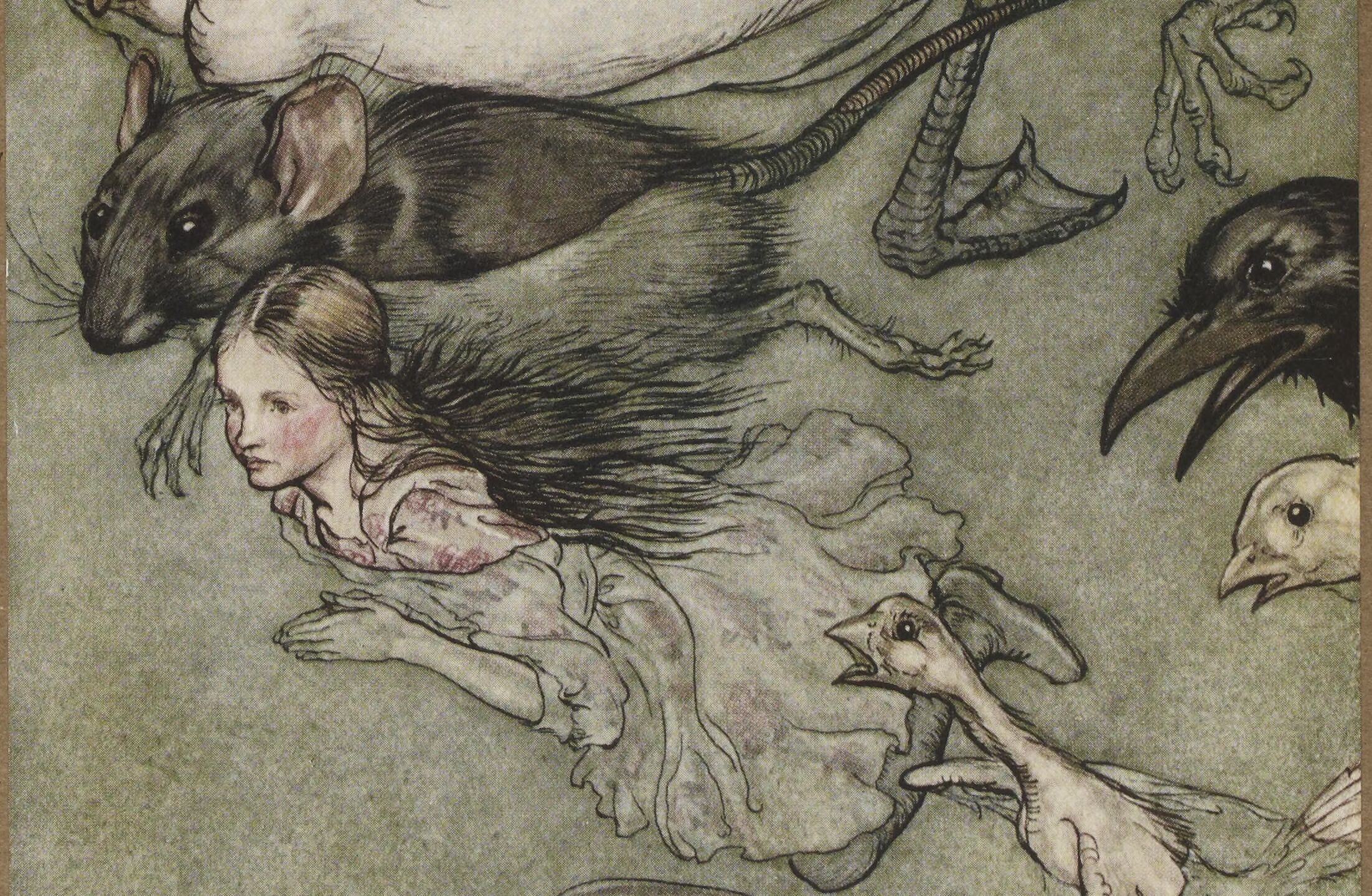

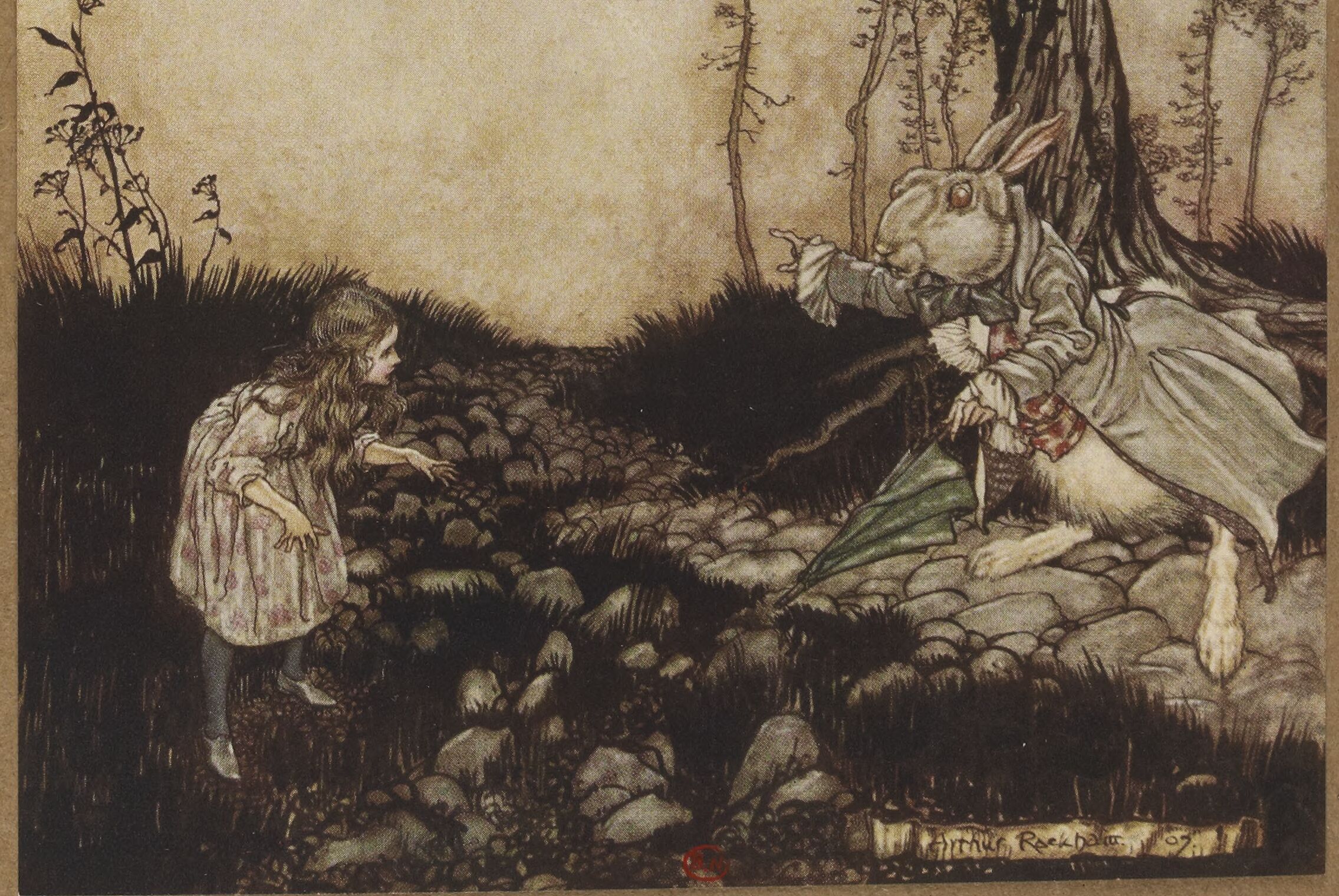
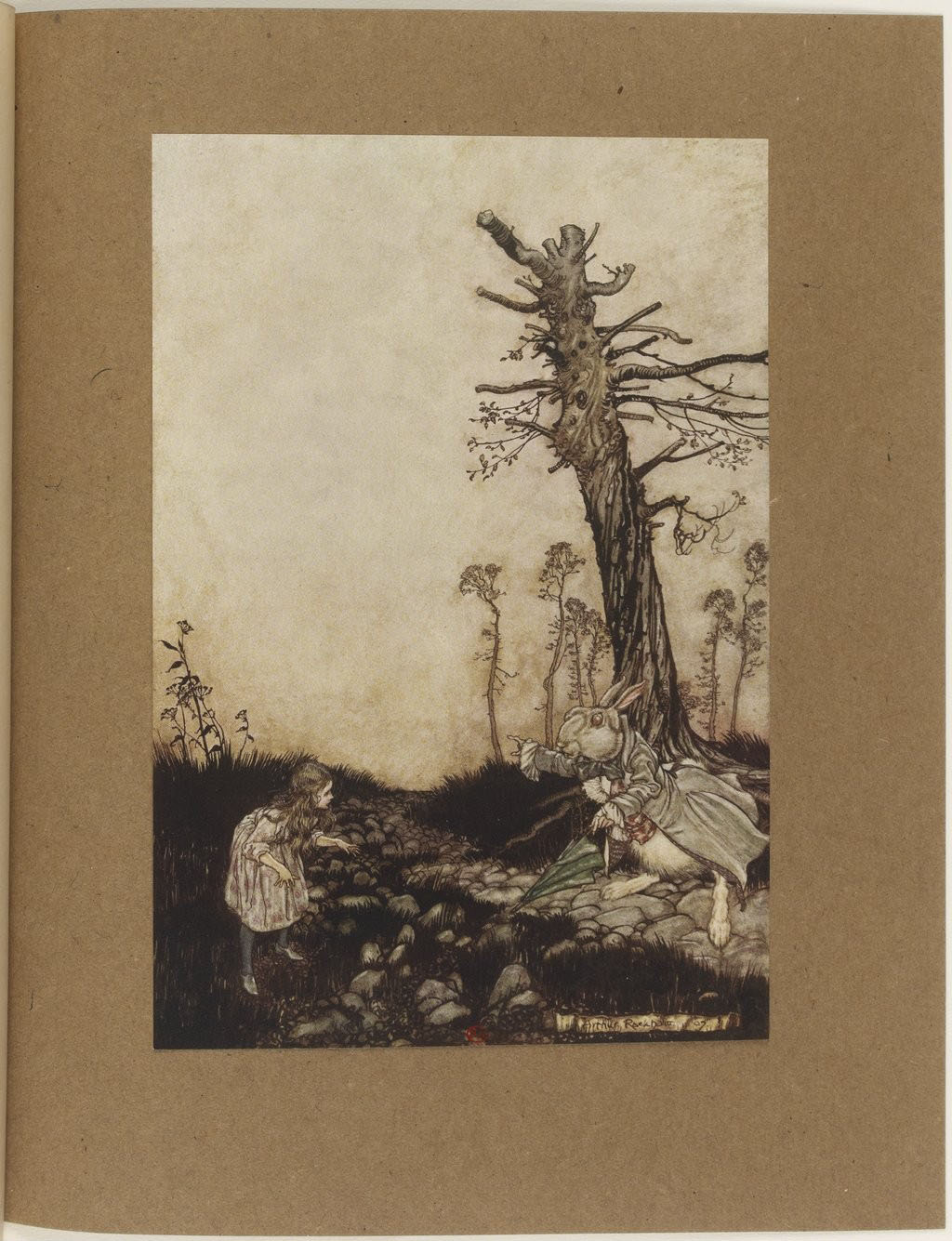

Aventures d’Alice au pays des merveilles par Lewis Carroll ; illustrées par Arthur Rackham
[Alice’s adventures in Wonderland (français)] ; Librairie Hachette et Cie. ; Paris ; publié en 1908
1 vol. (167 p.-[12] f. de pl. en coul.) : ill. en coul., couv. ill.
From : Bibliothèque nationale de France, département des livres rares

About Arthur Rackam
Arthur Rackham is widely regarded as one of the leading illustrators from the ‘Golden Age’ of British book illustration which roughly encompassed the years from 1890 until the end of the First World War. During that period, there was a strong market for high quality illustrated books which typically were given as Christmas gifts. Many of Rackham’s books were produced in a de luxe limited edition, often vellum bound and usually signed, as well as a smaller, less ornately bound quarto ‘trade’ edition. This was sometimes followed by a more modestly presented octavo edition in subsequent years for particularly popular books. The onset of the war in 1914 curtailed the market for such quality books, and the public’s taste for fantasy and fairies also declined in the 1920s.
Rackham’s illustrations were chiefly based on robust pen and India ink drawings. Rackham gradually perfected his own uniquely expressive line from his background in journalistic illustration, paired with subtle use of watercolour, a technique which he was able to exploit due to technological developments in photographic reproduction. With this development, Rackham’s illustrations no longer needed an engraver (lacking Rackham’s talent) to cut clean lines on a wood or metal plate for printing because the artist merely had his works photographed and mechanically reproduced
Rackham would first lightly block in shapes and details of the drawing with a soft pencil, for the more elaborate colour plates often utilising one of a small selection of compositional devices.Over this, he would then carefully work in lines of pen and India ink, removing the pencil traces after the drawing had begun to take form. For colour pictures, Rackham preferred the 3-colour process or trichromatic printing, which reproduced the delicate half-tones of photography through letterpress printing. He would begin painting by building up multiple thin washes of watercolour creating translucent tints. One of the disadvantages of the 3-colour (later 4-colour) printing process in the early years was that definition could be lost in the final print. Rackham would sometimes compensate for this by over-inking his drawings once more after painting. He would also go on to expand the use of silhouette cuts in illustration work, particularly in the period after the First World War, as exemplified by his Sleeping Beauty and Cinderella.
Typically, Rackham contributed both colour and monotone illustrations towards the works incorporating his images – and in the case of Hawthorne’s Wonder Book, he also provided a number of part-coloured block images similar in style to Meiji era Japanese woodblocks.
Rackham’s work is often described as a fusion of a northern European ‘Nordic’ style strongly influenced by the Japanese woodblock tradition of the early 19th century. (quoted from wikipedia)
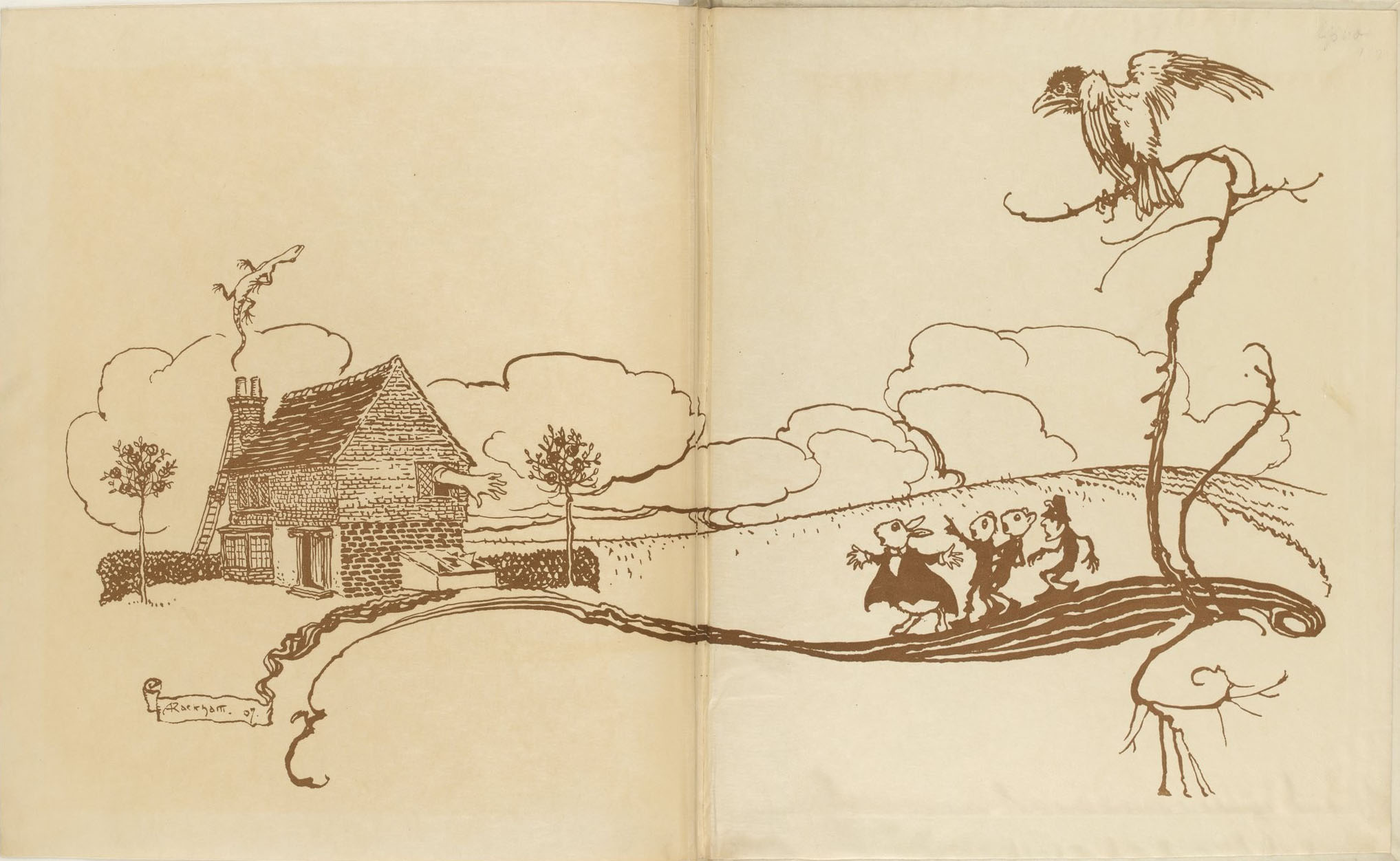
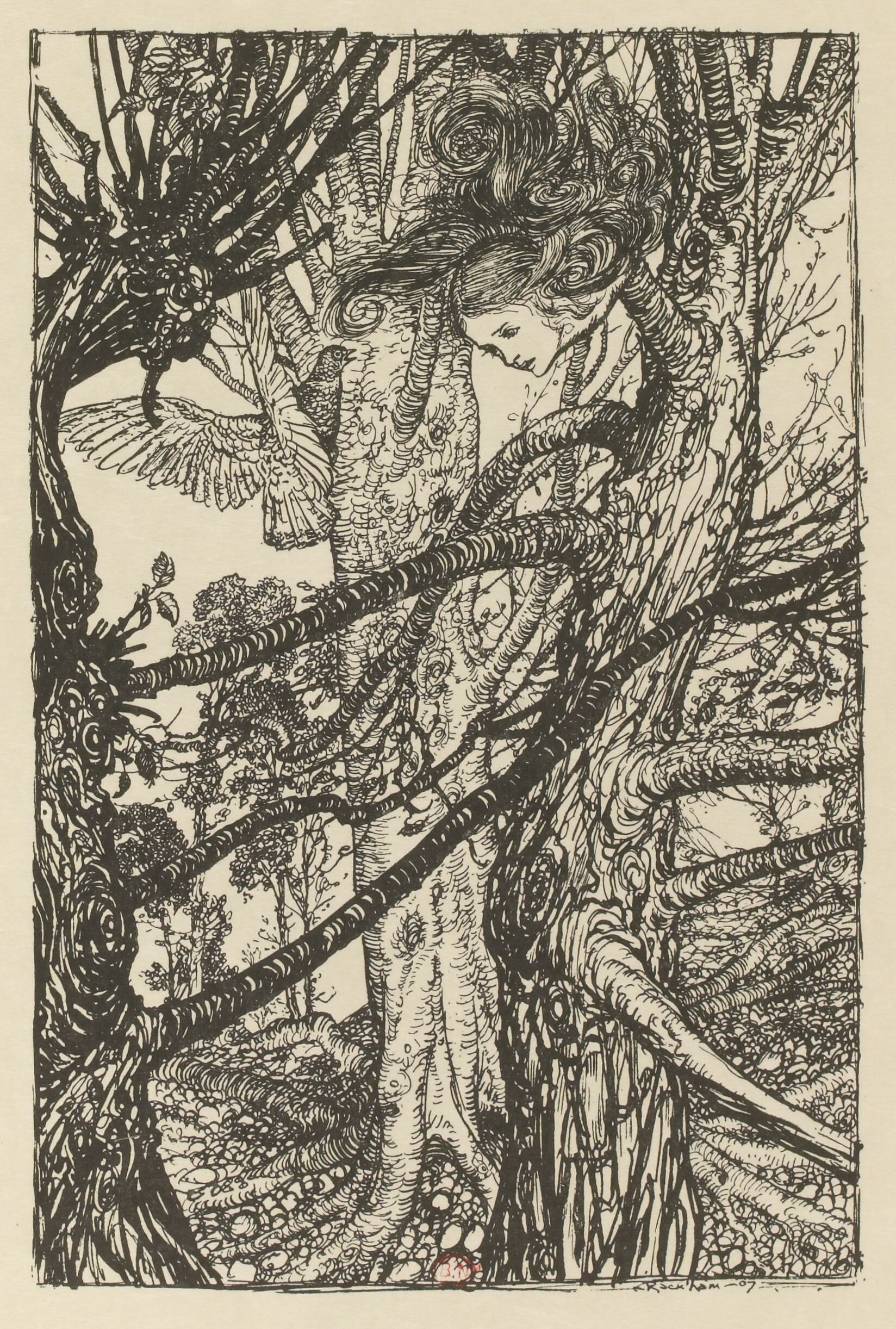
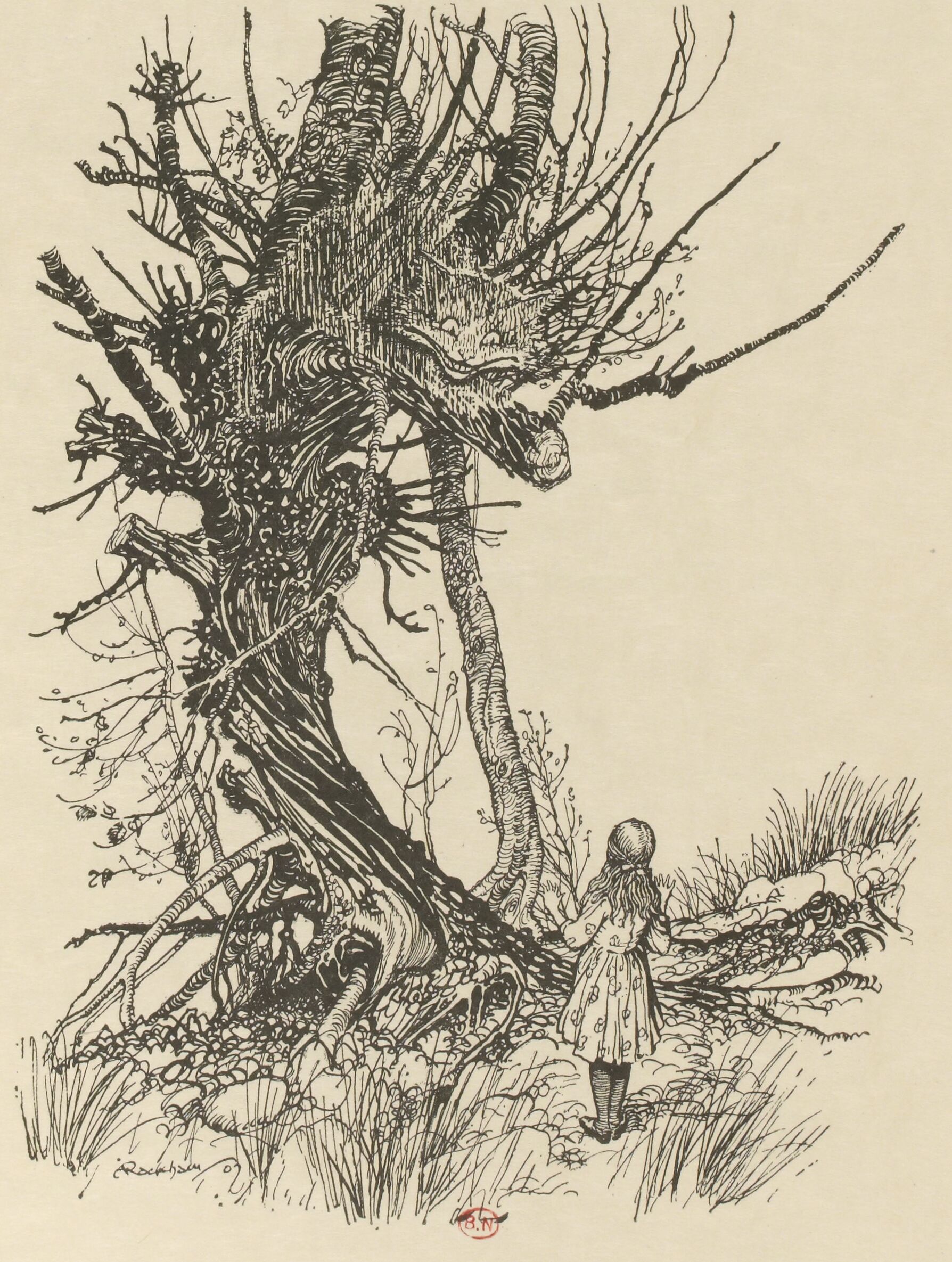

You could spend hours marveling at Arthur Rackham’s work. The legendary illustrator, born on September 19, 1867, was incredibly prolific, and his interpretations of Peter Pan, The Wind in the Willows, Grimm’s Fairy Tales, A Midsummer Night’s Dream, and Rip Van Winkle (to name but a few) have helped create our collective idea of those stories.
Rackham is perhaps the most famous of the group of artists who defined the Golden Age of Illustration, the early twentieth-century period in which technical innovations allowed for better printing and people still had the money to spend on fancy editions. Although Rackham had to spend the early years of his career doing what he called “much distasteful hack work,” he was famous—and even collected—in his own time. He married the artist Edith Starkie in 1900, and she apparently helped him develop his signature watercolor technique. From the publication of his Rip Van Winkle in 1905, his talents were always in high demand.
He had the advantage of a canny publisher, too, in William Heinemann. Before the release of each book, Rackham would exhibit the original illustrations at London’s Leicester Galleries, and sell many of the paintings. Meanwhile, Heinnemann had the notion to corner multiple markets by releasing both clothbound trade books and small numbers of signed, expensively bound, gilt-edged collectors’ editions. When the British economy flagged, Rackham turned his attention to Americans, producing illustrations for Washington Irving’s The Legend of Sleepy Hollow and later Poe’s Tales of Mystery and Imagination.
Pragmatic he may have been, but Rackham’s detailed work is pure fantasy, alternately beautiful, romantic, haunting, and sinister. Nothing he did was ever truly ugly, although he could certainly communicate the grotesque. And his illustrations are never cute, although his animals—as in The Wind in the Willows—have a naturalist’s vividness, and he could do whimsy (think Alice in Wonderland, or his many goblins) with the best of them. Several generations of children grew up with this nuanced beauty; it’s probably wielded even more of an aesthetic influence than we attribute to it.
Rackham once said, “Like the sundial, my paint box counts no hours but sunny ones.” This is peculiar when one considers the moodiness of much of his palate, and the unflinching darkness of many of his illustrations. I think, rather, of a quote from his edition of Brothers Grimm: “Evil is also not anything small or close to home, and not the worst; otherwise one could grow accustomed to it.” He made that evil beautiful, too, and it was this as much as anything that enchanted. By Sadie Stein for The Paris Review Blog
![Aventures d'Alice au pays des merveilles par Lewis Carroll ; illustrées par Arthur Rackham
[Alice's adventures in Wonderland (français)]
1908
1 vol. (167 p.-[12] f. de pl. en coul.) : ill. en coul., couv. ill.
Bibliothèque nationale de France, département des livres rares](https://live.staticflickr.com/65535/52700725575_03c5f51109_o.jpg)
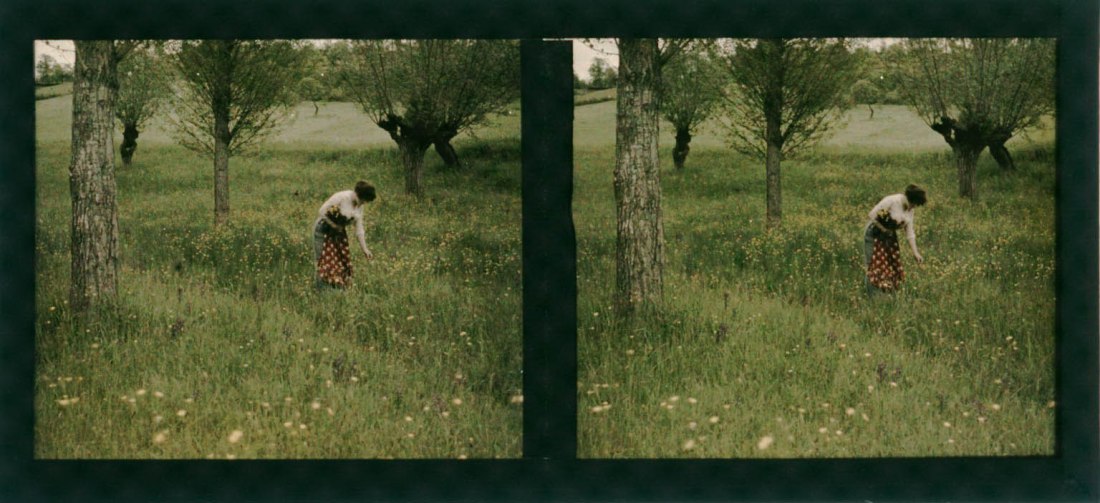
![Etienne Descargues :: [Femme cueillant des fleurs dans une prairie], 1892-1914. Vue stéréoscopique. | BnF ~ Gallica](https://unregardoblique.com/wp-content/uploads/2023/02/femme_cueillant_des_fleurs_dans_.descargues_etienne-descargues_1.jpg)
![Etienne Descargues :: [Femme cueillant des fleurs dans une prairie], 1892-1914. Vue stéréoscopique. (half view) | BnF ~ Gallica](https://live.staticflickr.com/65535/52696965523_a9ef9e112e_o.jpg)
![Etienne Descargues :: [Femme cueillant des fleurs dans une prairie], 1892-1914. Vue stéréoscopique. | BnF ~ Gallica](https://live.staticflickr.com/65535/52696895115_6c9dcbc007_o.jpg)

![Etienne Descargues :: [Arbres au printemps, prairie, maisons rurales], 1890-1914. Vue stéréoscopique. | BnF ~ Gallica](https://live.staticflickr.com/65535/52696965488_792105ef1a_o.jpg)
![Etienne Descargues :: [Arbres au printemps, prairie, maisons rurales], 1890-1914. Vue stéréoscopique. | BnF ~ Gallica](https://live.staticflickr.com/65535/52696965568_53cb11a39d_o.jpg)
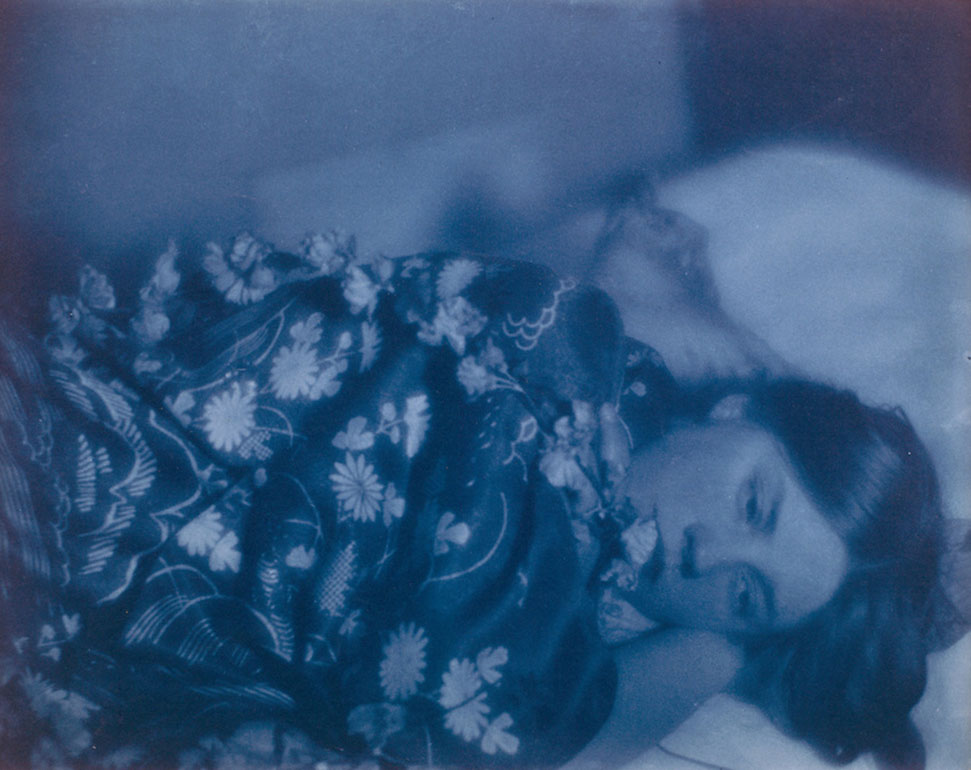
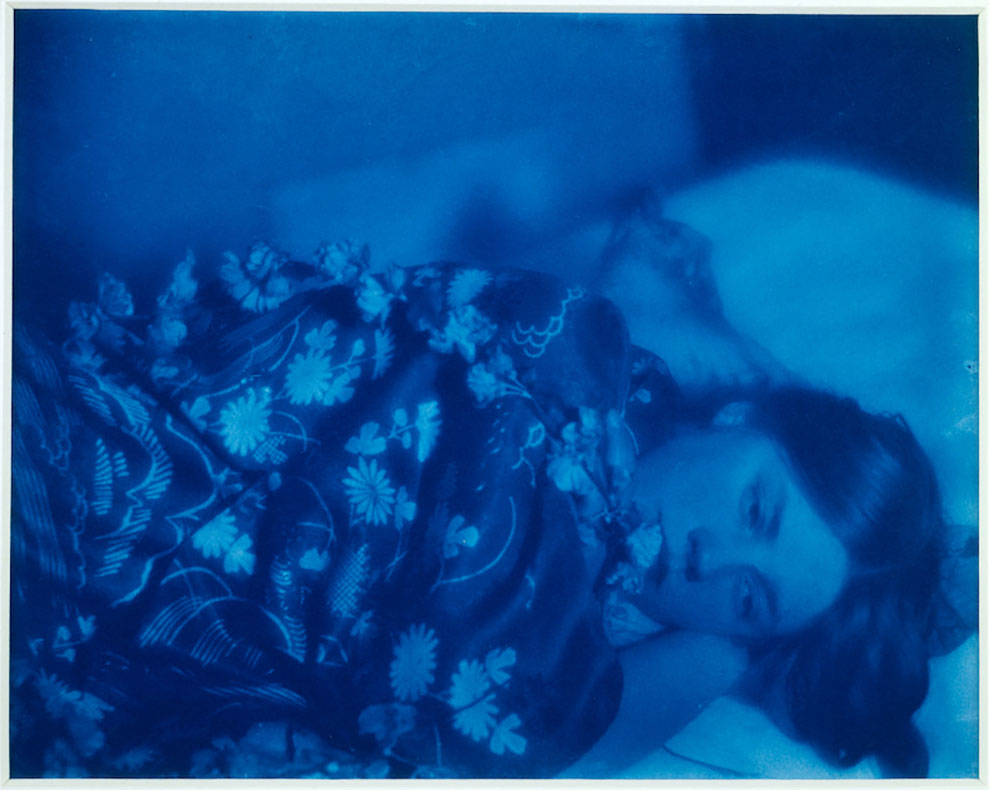
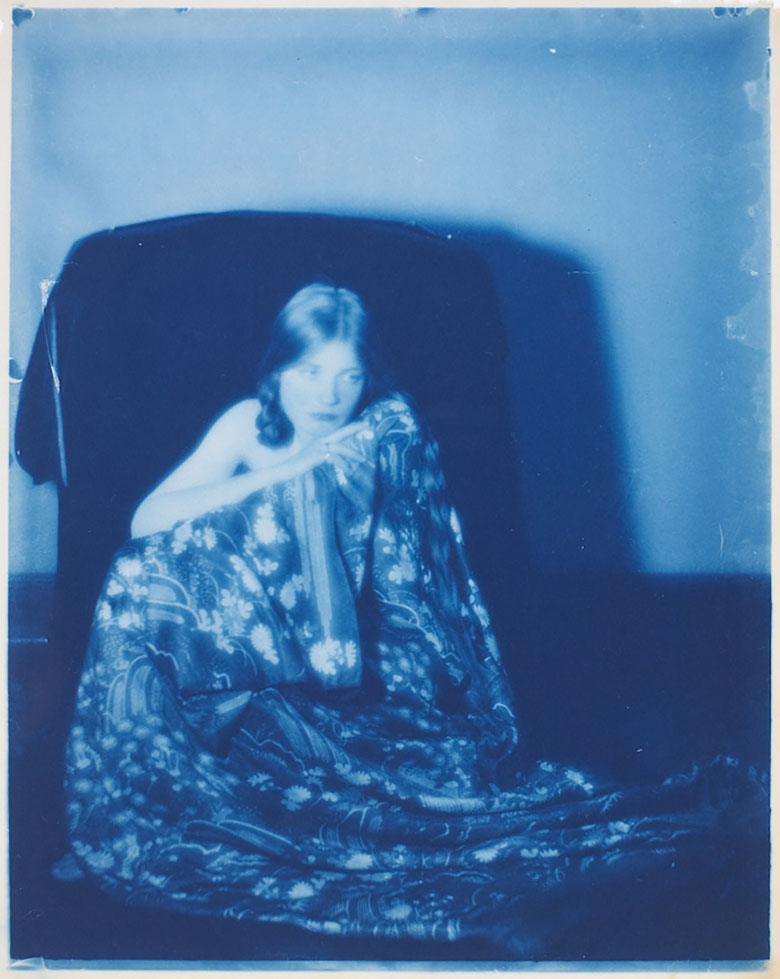
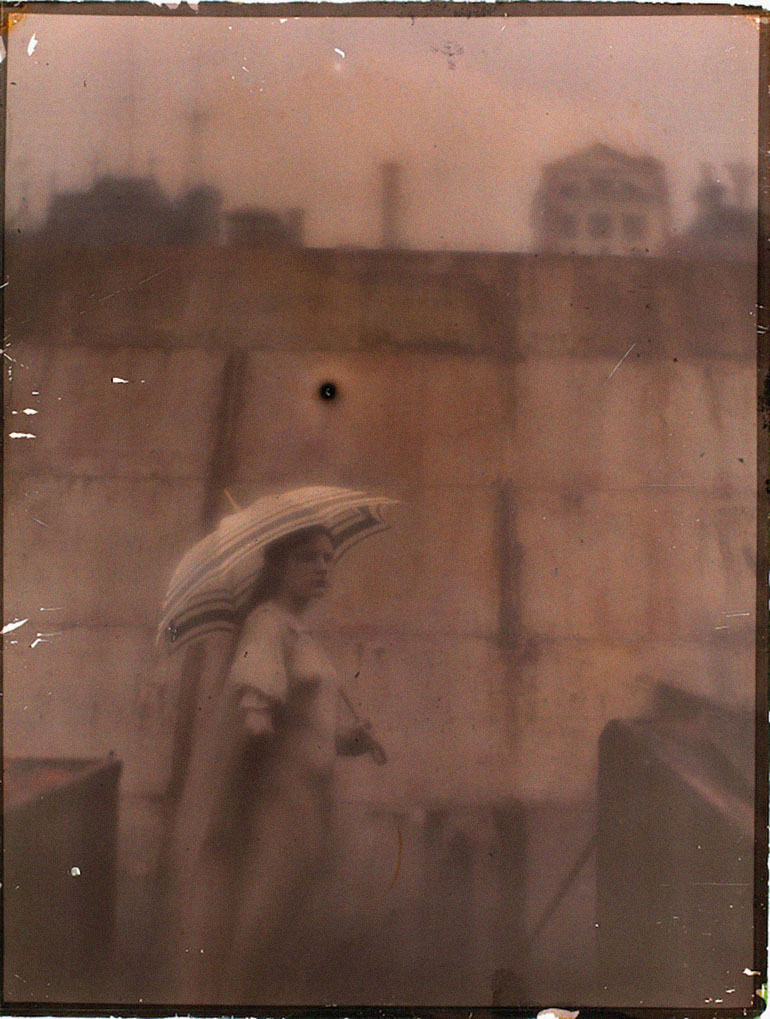

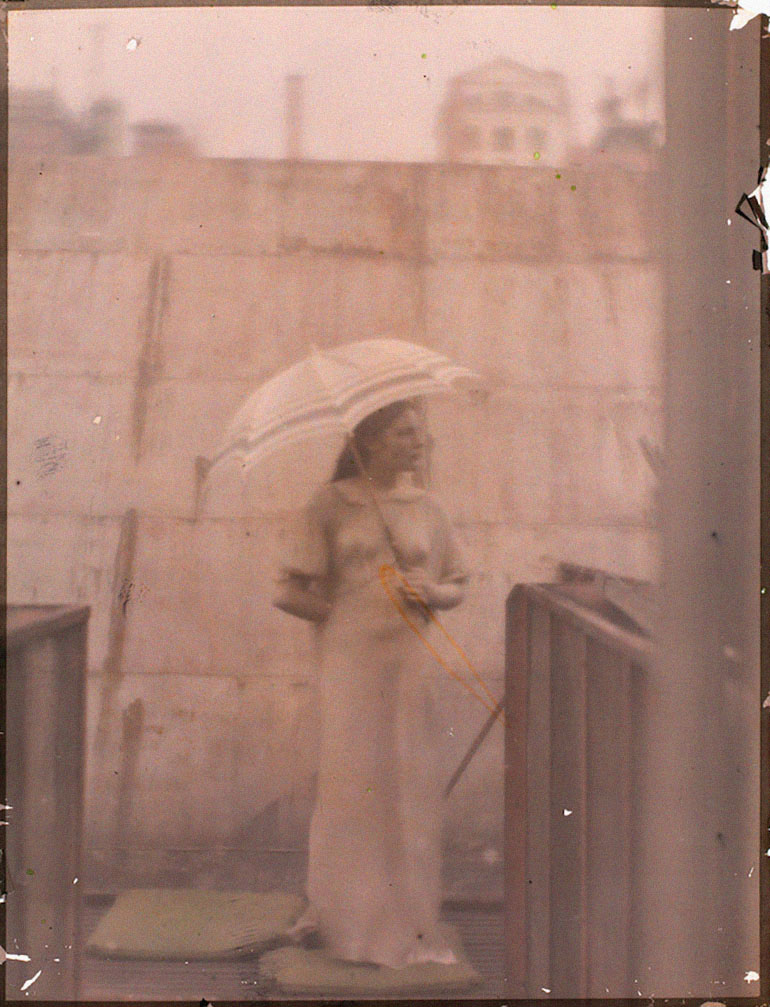

Paul Haviland, while working in New York as a representative for his father’s porcelain factory, explored the arts. His interest in writing and photography eventually led him to the Little Galleries of the Photo-Secession, where Alfred Stieglitz and his circle of photographers strove to have the medium recognized as a fine art. In 1910 Haviland was made associate editor of Stieglitz’s publication Camera Work.
Haviland’s Portrait of a Man [SAAM, 1994.91.65], made about the same time he met Stieglitz (ca. 1908), is an impressionistic study rather than a conventional likeness. Although Haviland continued making portraits upon returning to France after World war I, they lacked the engaging inventiveness of his work in New York. [quoted from Smithsonian American Art Museum : SAAM]
 un regard oblique