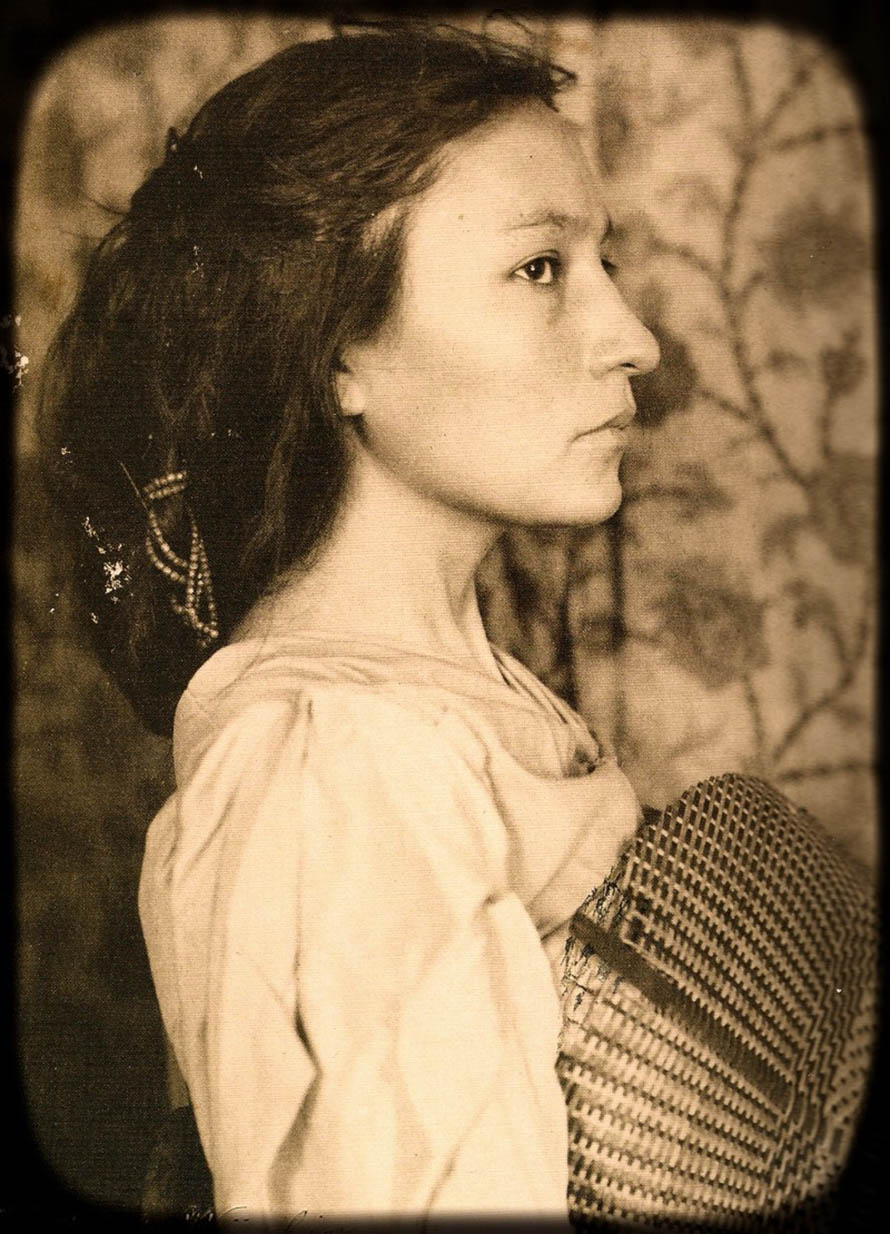
Zitkala-Sa, ca. 1898

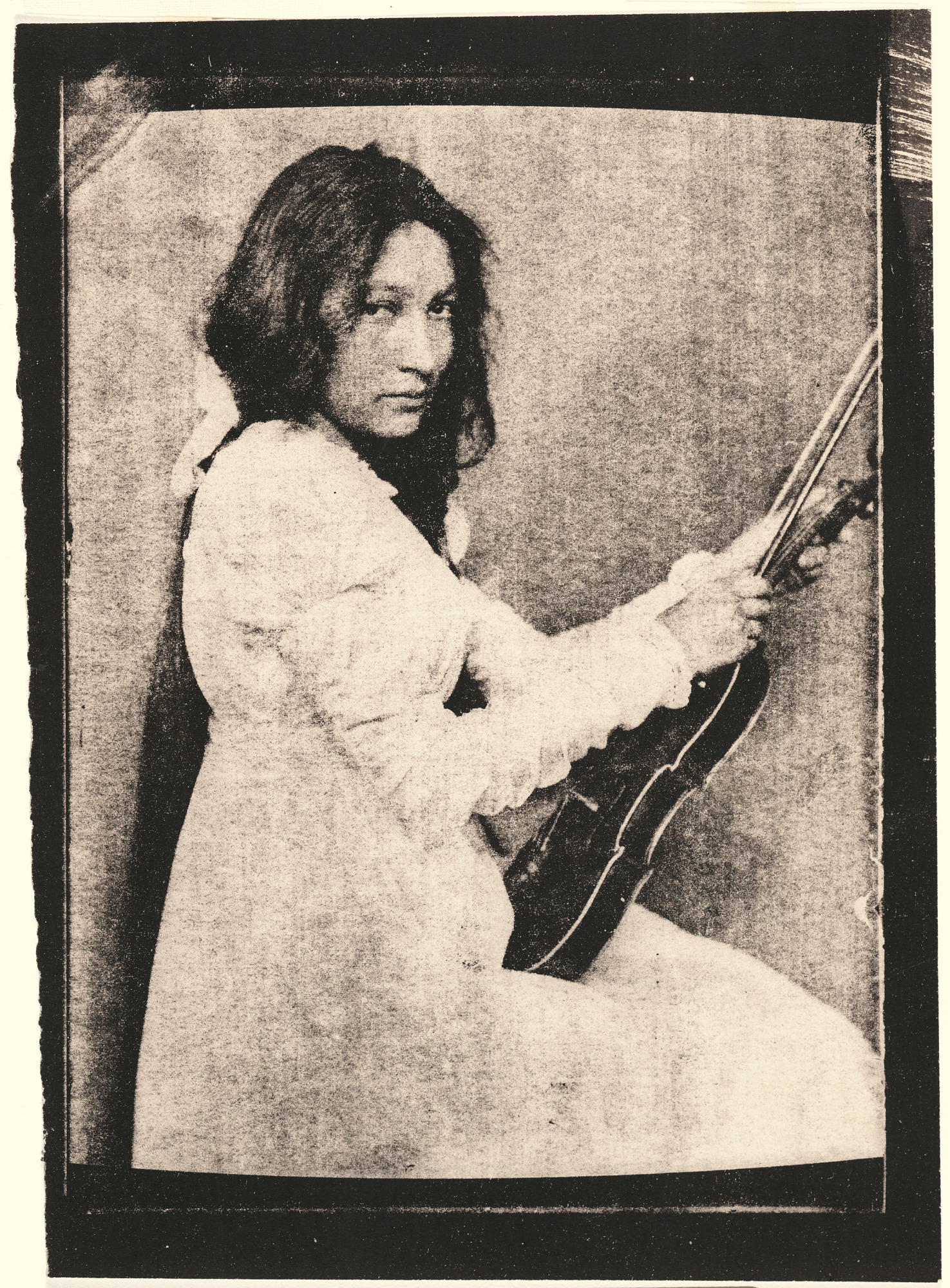
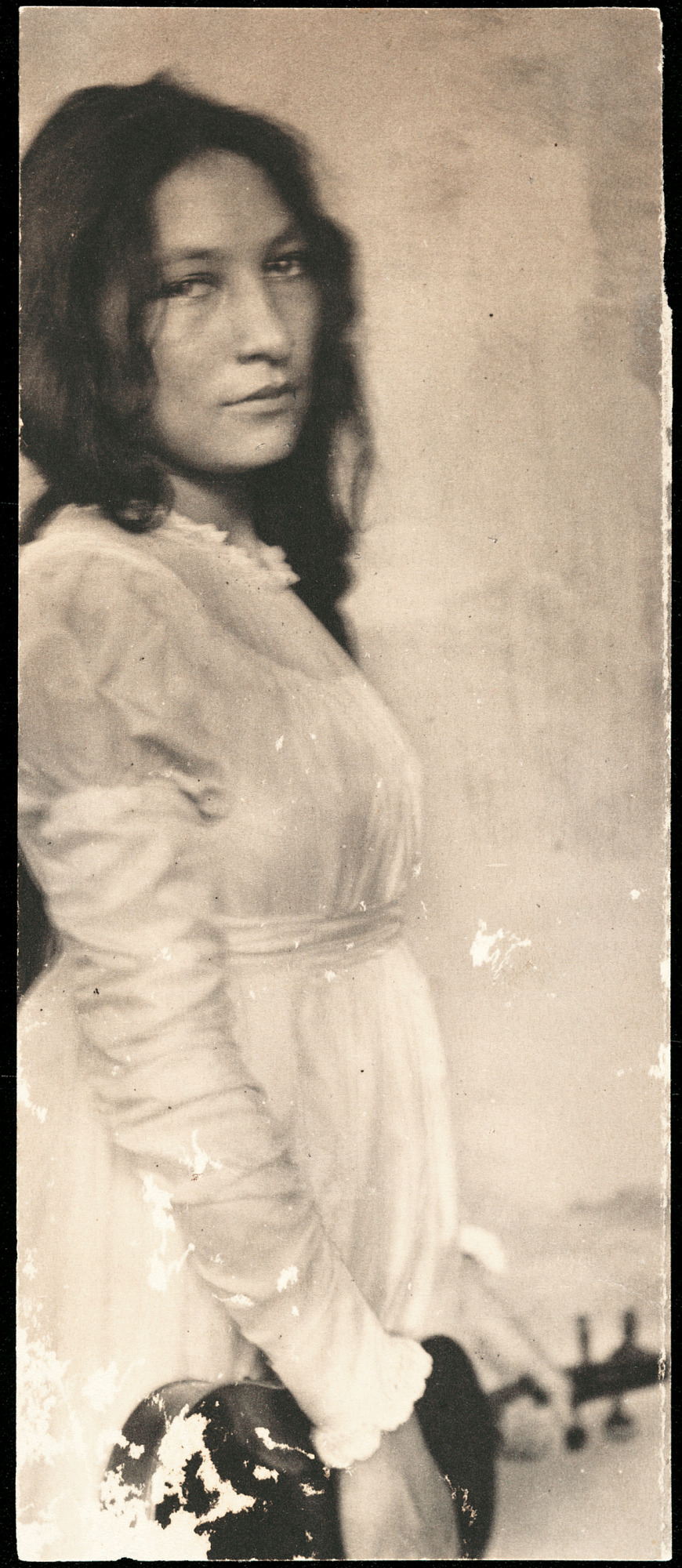
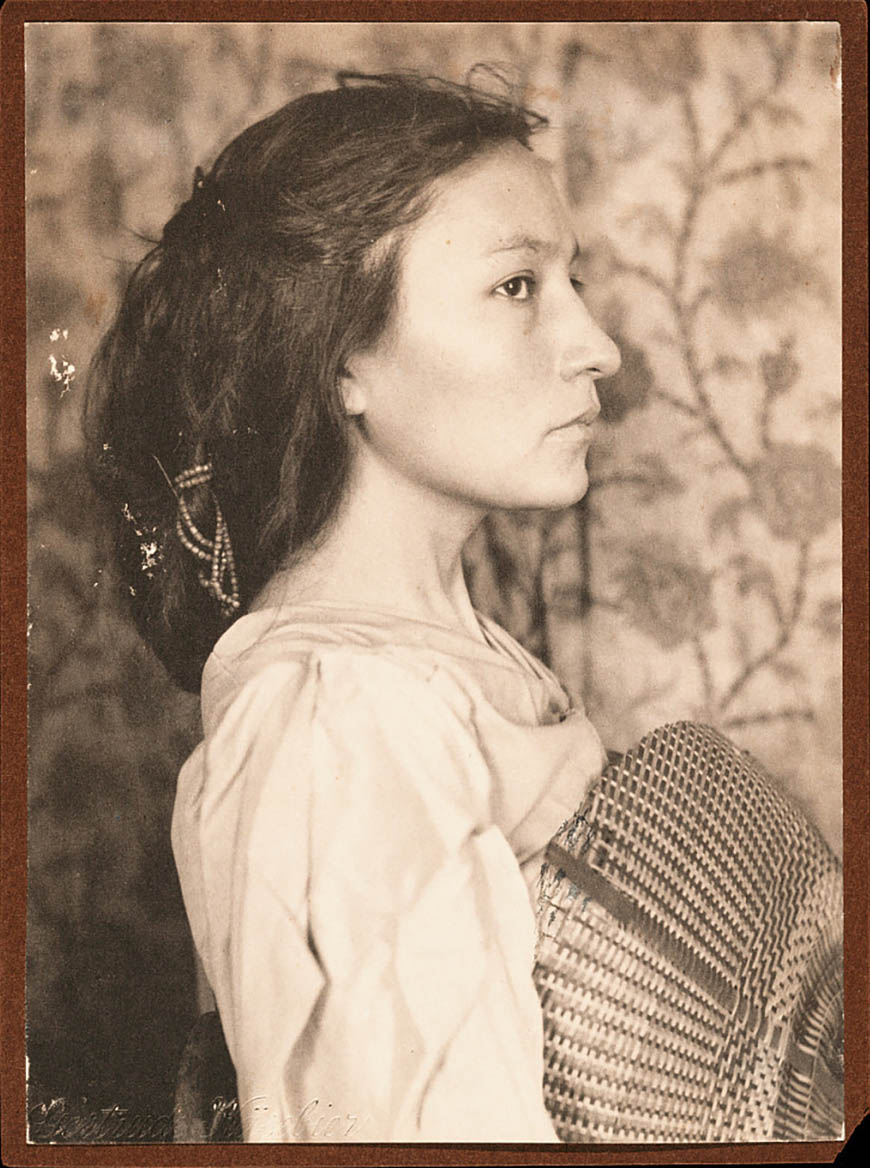
Gertrude Käsebier :: Zitkala-Sa, Sioux Indian and activist, ca. 1898. Platinum print. | src National Museum of American History
Gertrude Stanton Käsebier :: Zitkala Sa, Sioux Indian and activist, 1898, platinum print

In addition to photographing the Sioux performers sent by Buffalo Bill Cody to her studio, Käsebier was able to arrange a portrait session with Zitkala Sa, “Red Bird,” also known as Gertrude Simmons (1876-1938), a Yankton Sioux woman of Native American and white ancestry. She was born on the Pine Ridge Reservation in South Dakota, like many of the Sioux traveling with the Wild West show. She was well educated at reservation schools, the Carlisle Indian School, Earlham College in Indiana, and the Boston Conservatory of Music. Zitkala Sa became an accomplished author, musician, composer, and dedicated worker for the reform of United States Indian policies.

Käsebier photographed Zitkala Sa in tribal dress and western clothing, clearly identifying the two worlds in which this woman lived and worked. In many of the images, Zitkala Sa holds her violin or a book, further indicating her interests. Käsebier experimented with backdrops, including a Victorian floral print, and photographic printing. She used the painterly gum-bichromate process for several of these images, adding increased texture and softer tones to the photographs. (quoted from NMAH)

Gertrude Käsebier :: Zitkala-Sa, Sioux Indian and activist, ca. 1898. Platinum print.
Gertrude Käsebier :: Zitkala-Sa, Sioux Indian and activist, ca. 1898. Platinum print. | src National Museum of American History
Gertrude Käsebier :: Zitkala-Sa, Sioux Indian and activist, ca. 1898. Platinum print. | src NMAH
Gertrude Käsebier :: Zitkala Sa, Sioux Indian and activist, ca. 1898 | src NMAH
Gertrude Käsebier :: Zitkala-Sa (with violin), Sioux Indian and activist, ca. 1898. Platinum print.
Gertrude Käsebier :: Zitkala-Sa (with violin), Sioux Indian and activist, ca. 1898. Platinum print. | src NMAH
Gertrude Käsebier :: Zitkala-Sa, Sioux Indian and activist, ca. 1898. Gum bichromate print. | src NMAH
Gertrude Käsebier :: Zitkala-Sa, Sioux Indian and activist, ca. 1898. Platinum print. | src NMAH

Tandil moving rock

THE WORLDS LARGEST ROCKING STONE, TANDIL, ARGENTINA

This immense stone is so evenly poised that the wind or the slightest touch of the hand set it in motion, but the storms of the centuries have failed to dislodge it.

CHAPTER IV. THE PRAIRIE AND ITS INHABITANTS

The Pampas, or prairie lauds of the Argentine, stretch to the south and west of Buenos Ayres,and cover some 800,000 square miles. On this vast level plain, watered by sluggish streams or shallow lakes, boundless as the ocean, seemingly limitless in extent, there is an exhilarating air and a rich herbage on which browse countless herds of cattle, horses, and flocks of sheep. The grass grows tall, and miles upon miles of rich scarlet, white, or yellow flowers mingle with or overtop it. Beds of thistles, in which the cattle completely hide themselves, stretch away for leagues and leagues, and present an almost unbroken sheet of purple flowers. So vast are these thistle-beds that a days ride through them only leaves the traveller with the same purple forest stretching away to the horizon. (…)

Published in:

George Whitfield Ray : Through five republics on horseback; being an account of many wanderings in South America. Sixteenth edition, 1920. Hosted at internet archive

George Whitfield Ray : Through five republics on horseback; being an account of many wanderings in South America. Thirteenth edition, 1915. Hosted at internet archive

The immense boulder was near the city of Tandil. The city’s name “Tan / dil” comes from the Mapuche words tan (“falling”), and lil (“rock”). It is probably a reference to the Piedra Movediza (“Moving Stone”), a large boulder which stood seemingly miraculously balanced on the edge of a rocky foothill. The Moving Stone toppled on February 29th, 1912, and split into two main pieces at the bottom of the hill.

more [+] posts about Tandil’s moving rock

Angie Means stands on lilypad

woman standing on giant lilypad, 1895
Angie Means, stands on a giant Amazonian water lily pad, Victoria regia, in the Victoria Room at Phipps Conservatory, 1895
Triennial Conclave of the Knights Templar, 1895 | src USC

Phipps Conservatory was presented as a gift to the City of Pittsburgh from philanthropist Henry W. Phipps, who wished to “erect something that [would] prove a source of instruction as well as pleasure to the people.” In a letter to City of Pittsburgh Mayor H.I. Gourley in November 1891, Phipps expressed his intentions to add this new conservatory as a complement to an already existing “Phipps Conservatory” built in 1887 in Allegheny, now known as the North Side. Henry Phipps stipulated that both conservatories operate on Sundays in order to allow the working people to visit on their day of rest.

On Dec. 7, 1893, Phipps Conservatory opened to the public. It showcased over 6,000 exotic plants originating from the World’s Columbian Exposition in Chicago — cacti, trees, ferns and more made the journey by train and horse-drawn cart to Pittsburgh and the nation’s newest and largest conservatory.

In 1895 Phipps Conservatory hosted the 26th Triennial Conclave of the Knights Templar, during which this iconic image was captured. In the photo, a woman, Angie Means, stands on a giant Amazonian water lily pad, or Victoria regia, in the Victoria Room.

In October 1898, the 27th Triennial Conclave of the Knights Templar was held in Pittsburgh. Horticulture staff decorated the Conservatory with flowerbeds designed as Masonic emblems for the Conclave’s visit on Oct. 13th.

src Phipps Conservatory and Botanical Gardens and USC

A young woman, stands on a giant Amazonian water lily pad, Victoria regia, in the Victoria Room at Phipps Conservatory, 1895
Angie Means, stands on a giant Amazonian water lily pad, or Victoria regia, in the Victoria Room at Phipps Conservatory in 1895

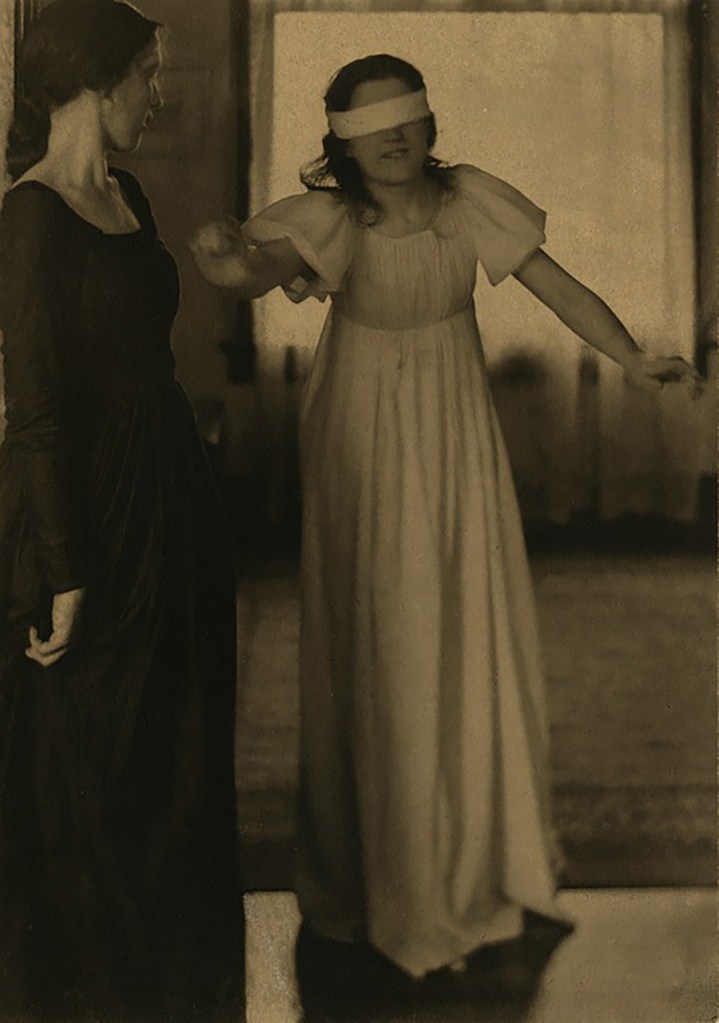
Blind Man’s Bluff, 1898

Clarence H. White :: Blind Man’s Bluff, 1898. Vintage platinum print. | src gitterman gallery
Clarence H. White :: Blind man’s bluff, Newark, Ohio, 1898. Platinum print. Signed in pencil on mount: Clarence H. White.
Photograph shows a blindfolded woman and another woman playing a game of blind man’s bluff. | src Library of Congress
Clarence H. White :: Blind man’s bluff, Newark, Ohio, 1898. [Original scan]. Signed in pencil on mount: Clarence H. White.
Photograph shows a blindfolded woman and another woman playing a game of blind man’s bluff. | src Library of Congress