Eugène Cuvelier ~ Près de la Caverne, Terrain Brûlé, early 1860s. Salted paper print from paper negative. | The Metropolitan Museum
“An atypical work for the naturalistically inclined Cuvelier, this highly Romantic image of two people sitting below the skeletons of burned pine trees and looking into the featureless distance like the contemplative figures in the paintings of Caspar David Friedrich, was no doubt a response to the startling sight of the charred landscape.” [quoted from The Met]
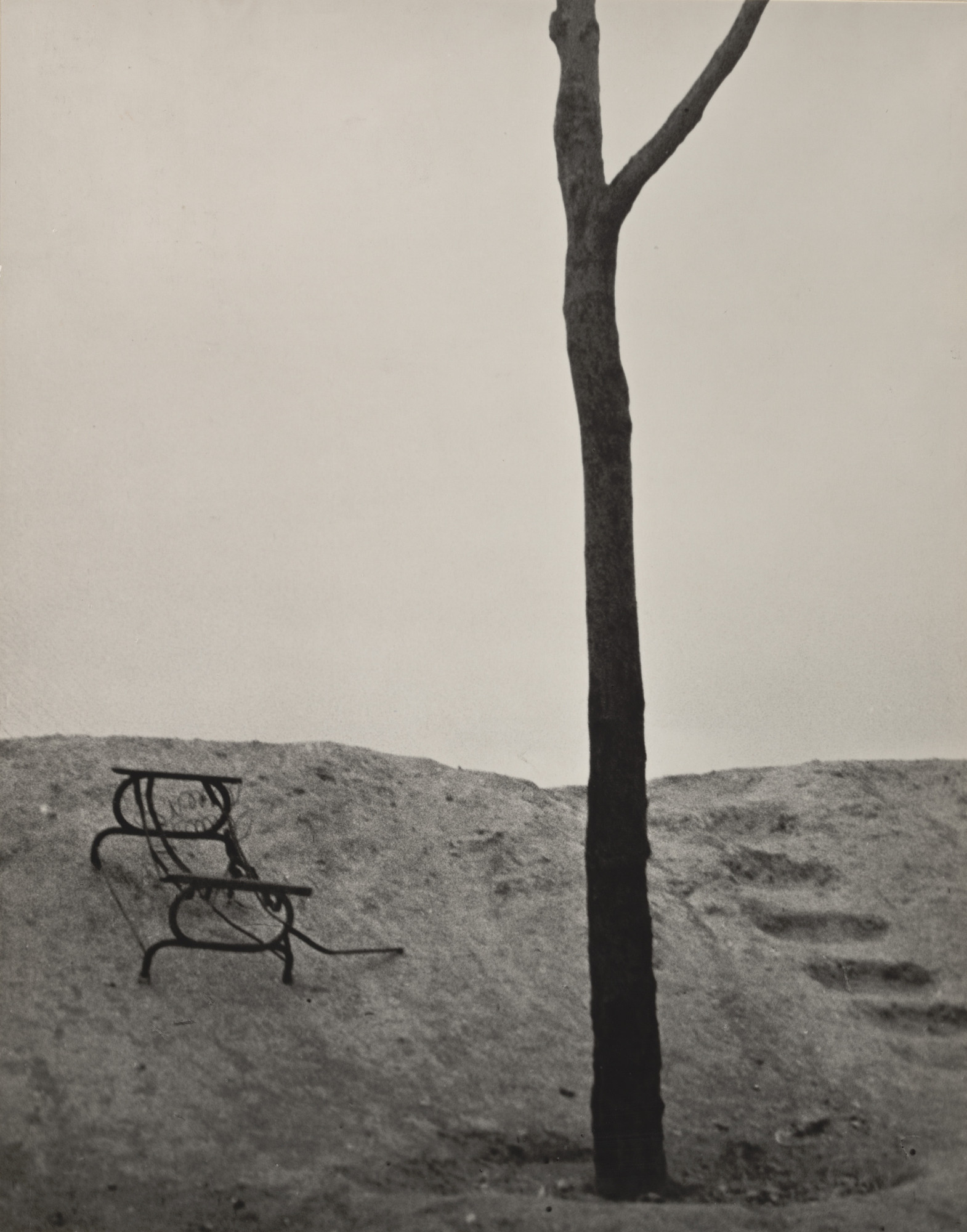
Man Ray (Emmanuel Radnitzky) ~ Le Terrain Vague, 1932. Gelatin silver print | src MoMA
“Life is merely a fracas on an unmapped terrain, and the universe a geometry stricken with epilepsy”
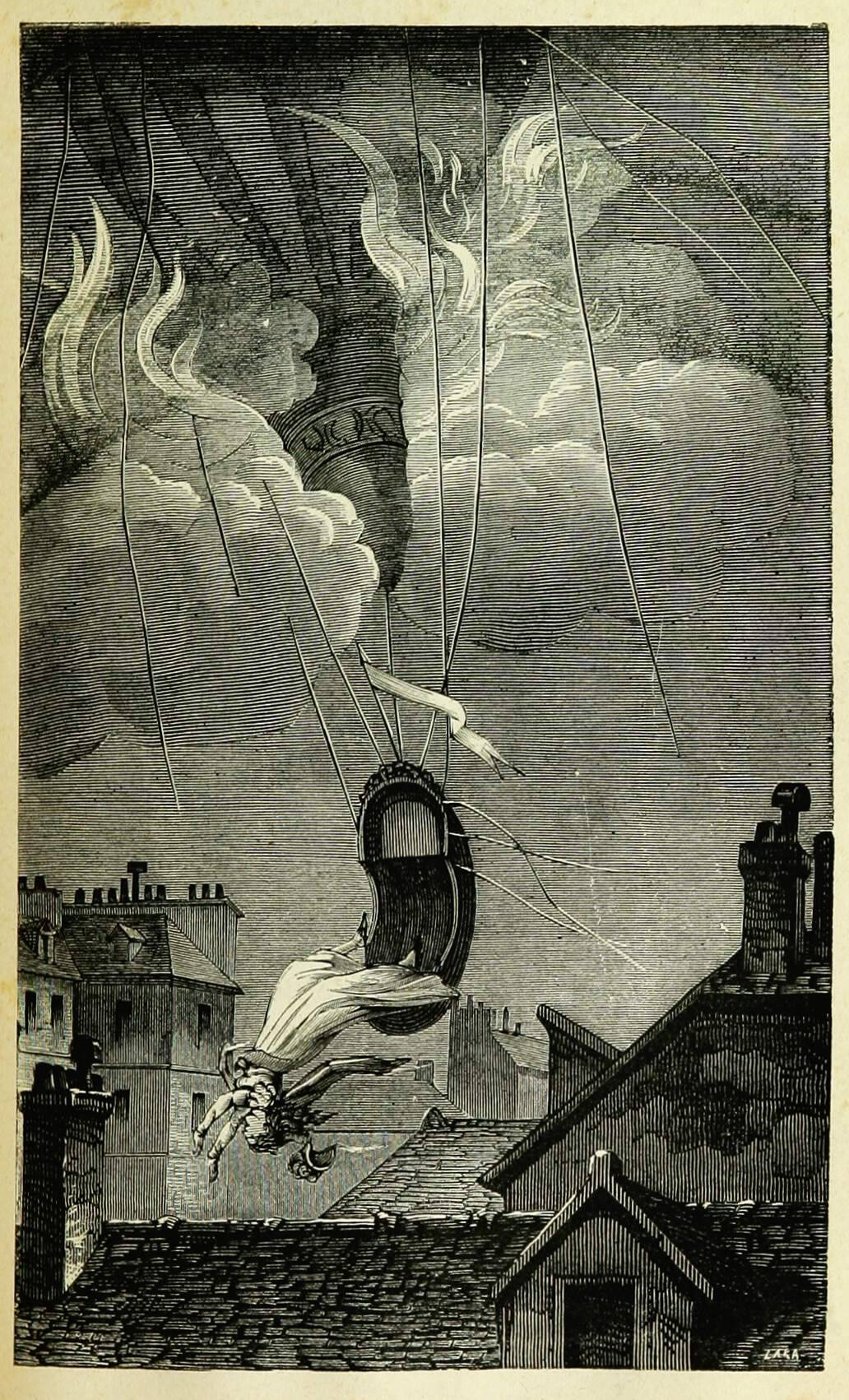
Death of French aeronaut Madame Sophie Blanchard after fireworks ignited her balloon, Paris, 1819. Woodblock engraving. From Louis Figuier’s “Les Merveilles de la Science: Aerostats” (Marvels of Science: Air Balloons), Paris : Librairie Furne, Jouvet et Cie., 1867. | src old book illustrations and internet archive
A woman is falling from the gondola of a hot-hair balloon flying over the roofs. She is Sophie Blanchard was the widow of aeronaut Pierre Blanchard, and an aeronaut herself.
On July 6, 1819, Madame Blanchard was taking part in an exhibition in the Tivoli garden in the rue Saint-Lazare. She carried with her a parachute full of fireworks in order to give the public the spectacle of fireworks descending from the middle of the air. She held a fire lance in her hand to light the fireworks she was supposed to launch from the balloon gondola. A false movement brought the orifice of the balloon into contact with the fire lance: the hydrogen gas ignited. Immediately an immense pillar of fire rose above the machine. Madame Blanchard was then distinctly seen trying to extinguish the fire by compressing the lower orifice of the balloon: then, recognizing the uselessness of her efforts, she sat down in the basket and waited. The gas burned for several minutes, without communicating with the balloon gondola. The rapidity of the descent was very moderate, and there is no doubt that, had she been directed towards the country, Madame Blanchard would have reached land without accident. Unfortunately it was not so: the balloon fell on Paris; it fell on the roof of a house in the rue de Provence. The gondola slid down the slope of the roof, on the side of the street. “A moi!” cried Madame Blanchard. These were her last words. As it slid down the roof, the gondola encountered an iron spike; it stopped abruptly, and, as a result of this shock, the unfortunate aeronaut was thrown out, and fell, head first, on the pavement. (quoted from scanned book at internet archive)
The caption reads in the original French: “Mort de madame Blanchard”.IA
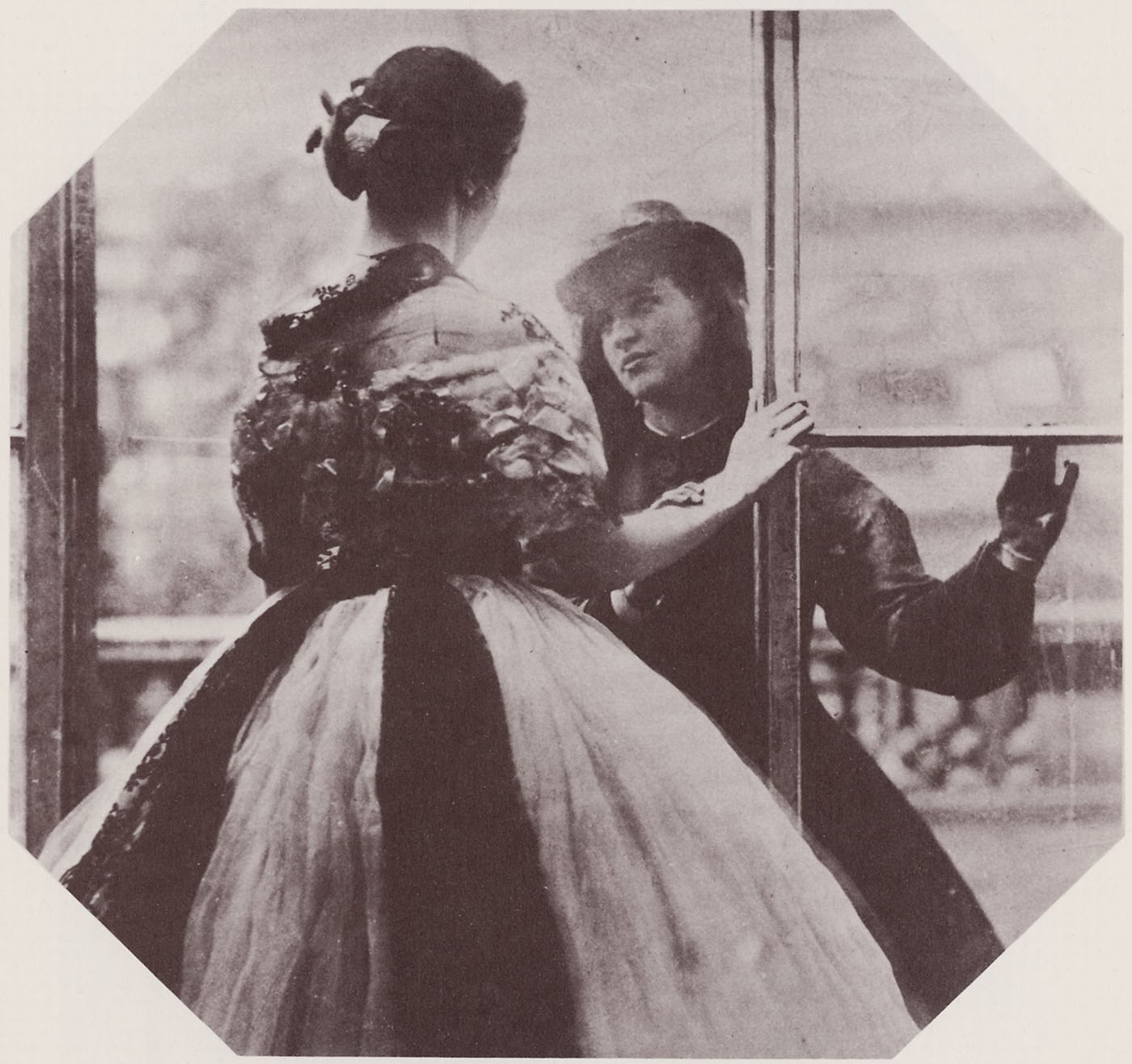
Lady Hawarden (1822-1865) ~ Study from Life / Photographic Study ca. 1864. Albumen print from glass negative (detail)Lady Clementina Hawarden (1822-1865) ~ Study from Life or Photographic Study ca. 1864. Albumen print from glass negative | src V&A MuseumLady Clementina Hawarden (1822-1865) ~ Study from Life or Photographic Study ca. 1864. Albumen print from wet collodion on glass negative | src V&A Museum
‘In this photograph as in Ph 380-1947 (image below) her two eldest daughters of Lady Hawarden reaffirm their bond with each other and with their mother. Isabella Grace, in an evening dress, her hair elaborately arranged, with her back to the camera perhaps in order to show the intricacies of her dress and hair to full advantage, stands at the French window to the terrace. Clementina, poised like a mirror before her sister, her expression perhaps reflecting that on Isabella Grace’s face, incongruously wears a riding habit and appears dishevelled. Their rapport is visually strengthened by the lines of the window, which direct our eyes to their arms, gracefully linked.’
Clementina Hawarden (1822-1865) :: Untitled (Isabella Grace and Clementina), 1864. Albumen print. | src V&A MuseumClementina Hawarden ~ Der Besuch (The visit) | src Zeno.org



 un regard oblique