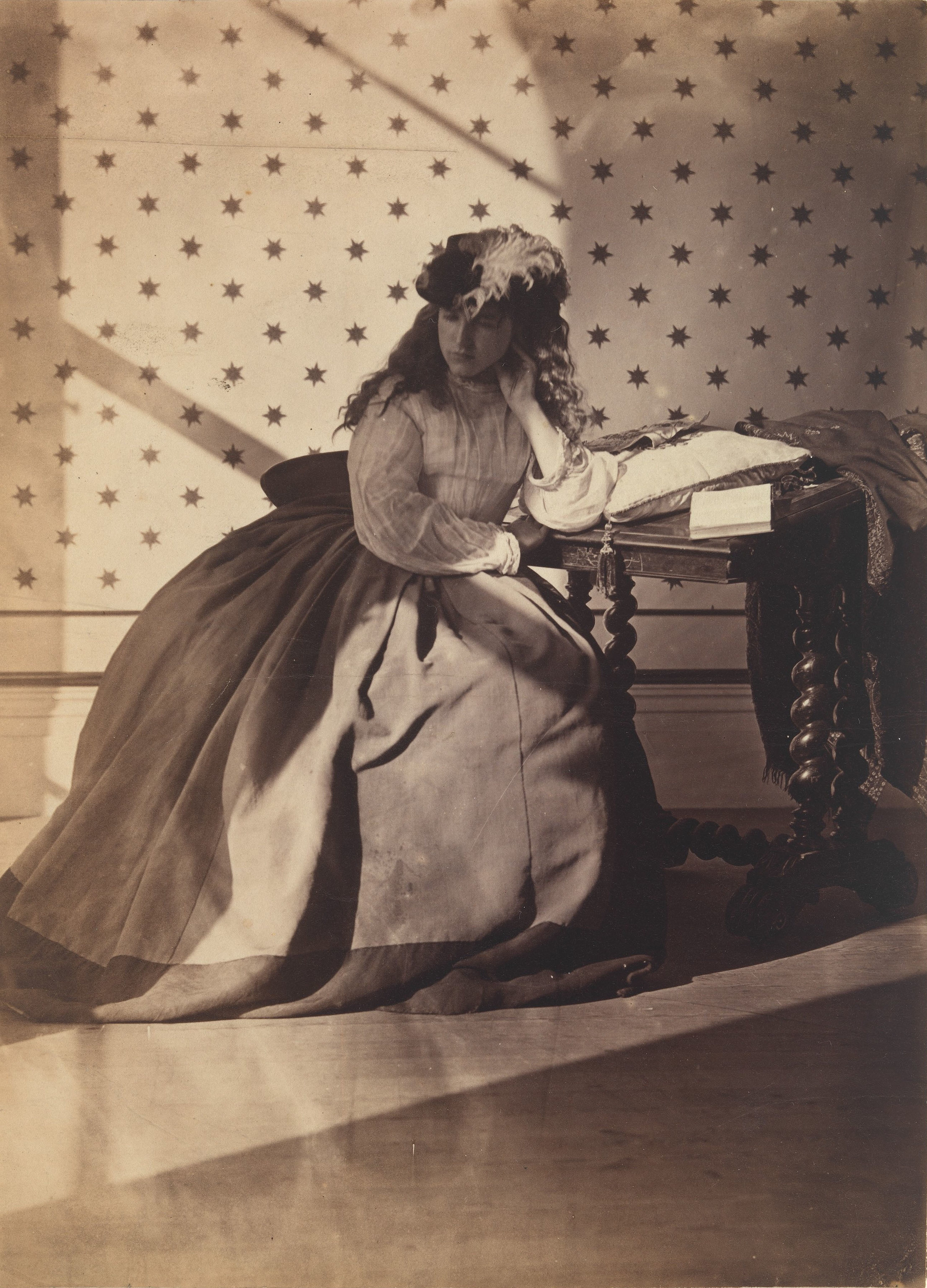
Clementina Maude, Viscountess Hawarden, aka Lady Clementina Hawarden ~ Photographic Study, early 1860s. Albumen silver print from glass negative | src MetMuseum
Clementina Maude, her mother’s preferred model, is seen here in a reflective pose against a star-studded wall. The casual placement of the shawl on the table and the girl’s loose hair contribute to the feeling of intimacy. In the airy room time seems to be suspended. The sensuous curves of the table legs, the soft weight of the crushed velvet, and the crispness of the starry wallpaper are enhanced by the skillful handling of the collodion technique. The composition, devoid of Victorian clutter, brings together light, shadow, and compositional elements in a spare and appealing interplay. In contrast to the prevailing fashion of giving literary or sentimental titles to portraits of young women, Lady Hawarden titled her works simply “Photographic Study”.
Lady Clementina Hawarden aka Viscountess Hawarden ~ Photographic Study, early 1860s (detail) | src MetMuseum
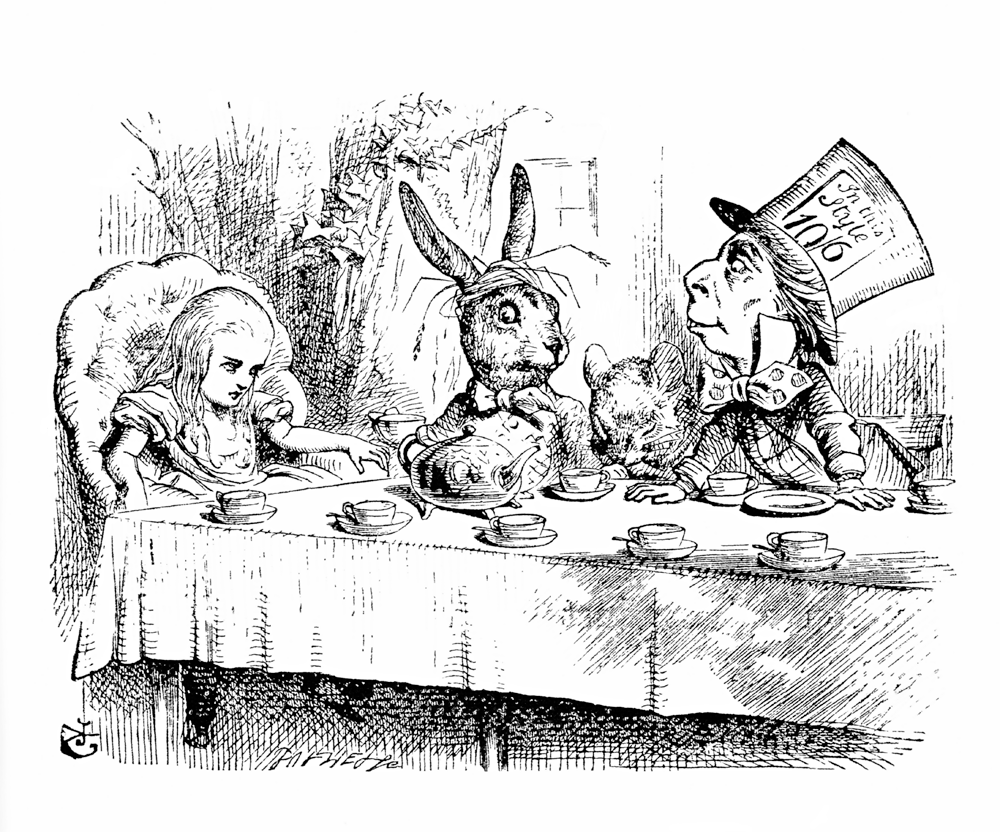
John Tenniel :: “A Mad Tea-Party”. Original illustration (1865) by John Tenniel (28 February 1820 – 25 February 1914), of the novel by Lewis Carroll, Alice’s Adventures in Wonderland (London: Macmillan & Co., 1865).
James F. Ryder :: “Atlantic & Great Western Railway” (1862), albumen print, 7 3/8 x 9 5/16 inches (courtesy Collection of William L. Schaeffer) | src 19th century landscape photography
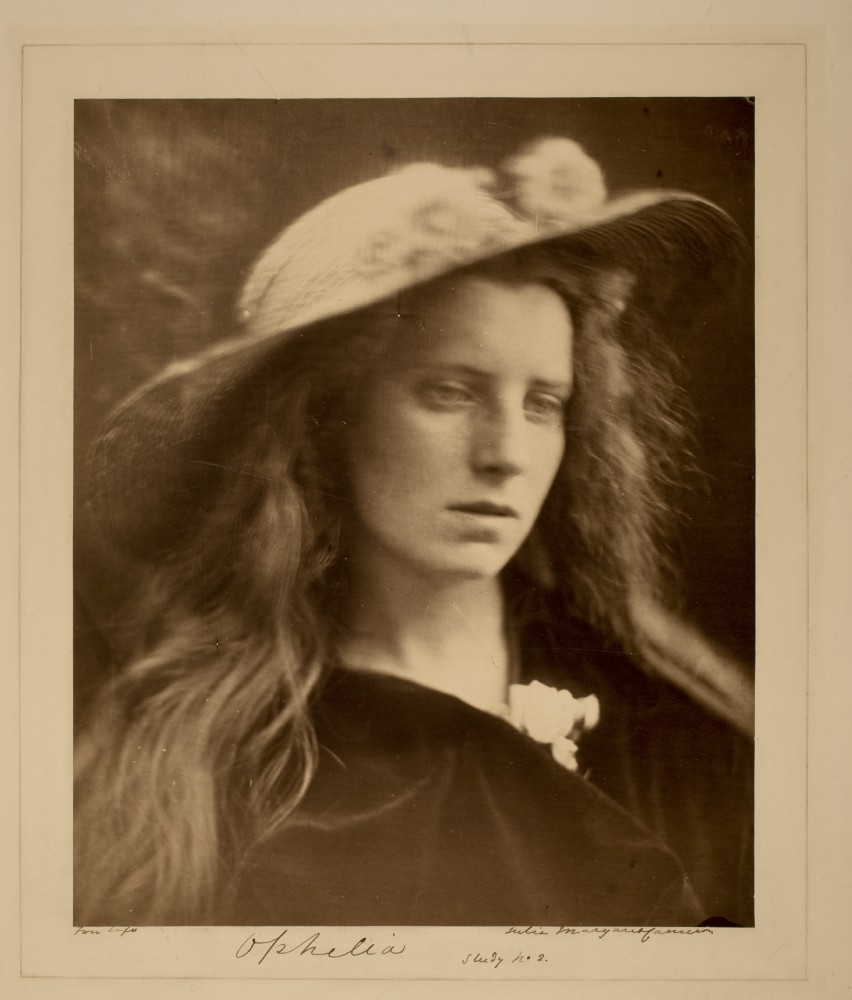
Julia Margaret Cameron :: Devotion (sleeping child) , 1865. Albumen print, printed ca. 1865. Signed and titled “From Life- My Grandchild Archie, Aged Two Years and Three Months” in ink with Colnaghi blindstamp on print recto. Published in Howard Greenberg Gallery in 25 pictures, 2007. | source l’œil de la photographie more [+] by Julia Margaret Cameron
Eugène Cuvelier :: [Fontainebleau Forest], early 1860s. Salted paper print from paper negative. | src The Metropolitan Museum
In September 1856, at the age of nineteen, Eugène Cuvelier visited Barbizon. This small town on the edge of the ancient Forest of Fontainebleau served as home base for the pre-Impressionists who popularized the practice of plein-air painting. Three years later, he married Louise Ganne, daughter of the Barbizon innkeeper in whose auberge the painters gathered to eat, drink, and talk about art. Although the young couple settled in Arras, they returned often to Barbizon, where Cuvelier explored the village streets and nearby forest with his tripod and camera, just as his painter friends did with their easels and paintboxes.
Blessed with talent, early technical training, and the friendly mentoring of the naturalist painters, Cuvelier created some of the most lyrical and sensitive of all nineteenth-century landscape photographs. Wide-ranging in expression and subject, his sylvan views masterfully render the dappled light of the forest interior, the palpable atmosphere of a misty clearing in the wood, the muscular power of leafless oaks rising against a wintry sky, or the delicacy of a sapling in spring. Like the forest itself, Cuvelier’s exquisite photographs invite us to escape momentarily from the modern urban world and to breathe the air of a place where nature impresses the senses and the soul. [quoted from source]
Eugène Cuvelier :: [Fontainebleau Forest], ca. 1860s. Salted paper print from paper negative. | src The Metropolitan Museum
The Forest of Fontainebleau-and, in particular, the small town of Barbizon within it-was a popular destination for artists seeking refuge from urban, industrial life in the mid-nineteenth century. With its forty thousand acres of dense woods intercut with rocky gorges and dotted with ancient oaks, Fontainebleau provided an idyllic natural setting for plein-air painters, such as Corot and Millet, as well as for photographers, including Gustave Le Gray and Eugène Cuvelier.
Although the process of making salted paper prints from paper negatives was already somewhat antiquated by the 1860s, Cuvelier chose the technique because of its aesthetic qualities-the soft fibrous effect of the paper negative and the velvety mat surface of the print. [quoted from source]





![Eugène Cuvelier :: [Fontainebleau Forest], early 1860s. Salted paper print from paper negative. | src The Metropolitan Museum](https://live.staticflickr.com/65535/52272053715_047e7dfd4d_o.jpg)
![Eugène Cuvelier :: [Fontainebleau Forest], ca. 1860s. Salted paper print from paper negative. | src The Metropolitan Museum](https://live.staticflickr.com/65535/52271560861_ef86956ea9_o.jpg)
 un regard oblique