
Author: un regard oblique
we do not own these photographs (unless indicated otherwise), we just share images that somehow haunt us.
Please, if you share them do not remove credits or/and sources.
Geese from Kawa=Flow series
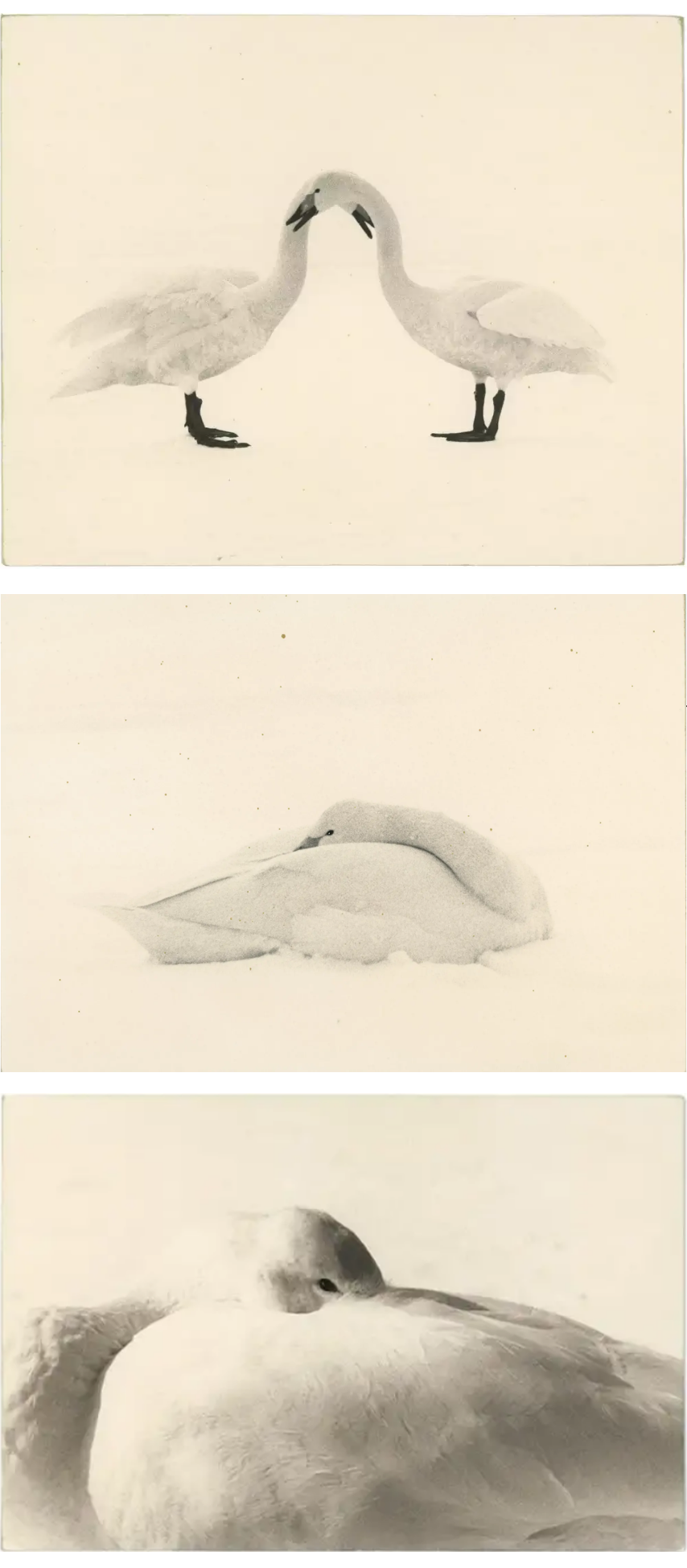
related post, here | more [+] by this photographer
Kawa-Flow 1654 +1648
more [+] by this photographer

Girl reading, sitting on wooden box in the yard. Unknown date or photographer. / source: lostfunzones.tumblr.com
Fontainebleau Forest by Cuvelier
![Eugène Cuvelier :: [Fontainebleau Forest], early 1860s. Salted paper print from paper negative. | src The Metropolitan Museum](https://live.staticflickr.com/65535/52272053715_047e7dfd4d_o.jpg)
In September 1856, at the age of nineteen, Eugène Cuvelier visited Barbizon. This small town on the edge of the ancient Forest of Fontainebleau served as home base for the pre-Impressionists who popularized the practice of plein-air painting. Three years later, he married Louise Ganne, daughter of the Barbizon innkeeper in whose auberge the painters gathered to eat, drink, and talk about art. Although the young couple settled in Arras, they returned often to Barbizon, where Cuvelier explored the village streets and nearby forest with his tripod and camera, just as his painter friends did with their easels and paintboxes.
Blessed with talent, early technical training, and the friendly mentoring of the naturalist painters, Cuvelier created some of the most lyrical and sensitive of all nineteenth-century landscape photographs. Wide-ranging in expression and subject, his sylvan views masterfully render the dappled light of the forest interior, the palpable atmosphere of a misty clearing in the wood, the muscular power of leafless oaks rising against a wintry sky, or the delicacy of a sapling in spring. Like the forest itself, Cuvelier’s exquisite photographs invite us to escape momentarily from the modern urban world and to breathe the air of a place where nature impresses the senses and the soul. [quoted from source]
![Eugène Cuvelier :: [Fontainebleau Forest], ca. 1860s. Salted paper print from paper negative. | src The Metropolitan Museum](https://live.staticflickr.com/65535/52271560861_ef86956ea9_o.jpg)
The Forest of Fontainebleau-and, in particular, the small town of Barbizon within it-was a popular destination for artists seeking refuge from urban, industrial life in the mid-nineteenth century. With its forty thousand acres of dense woods intercut with rocky gorges and dotted with ancient oaks, Fontainebleau provided an idyllic natural setting for plein-air painters, such as Corot and Millet, as well as for photographers, including Gustave Le Gray and Eugène Cuvelier.
Although the process of making salted paper prints from paper negatives was already somewhat antiquated by the 1860s, Cuvelier chose the technique because of its aesthetic qualities-the soft fibrous effect of the paper negative and the velvety mat surface of the print. [quoted from source]

Terrain Brûlé ~ Terrain Vague

“An atypical work for the naturalistically inclined Cuvelier, this highly Romantic image of two people sitting below the skeletons of burned pine trees and looking into the featureless distance like the contemplative figures in the paintings of Caspar David Friedrich, was no doubt a response to the startling sight of the charred landscape.” [quoted from The Met]
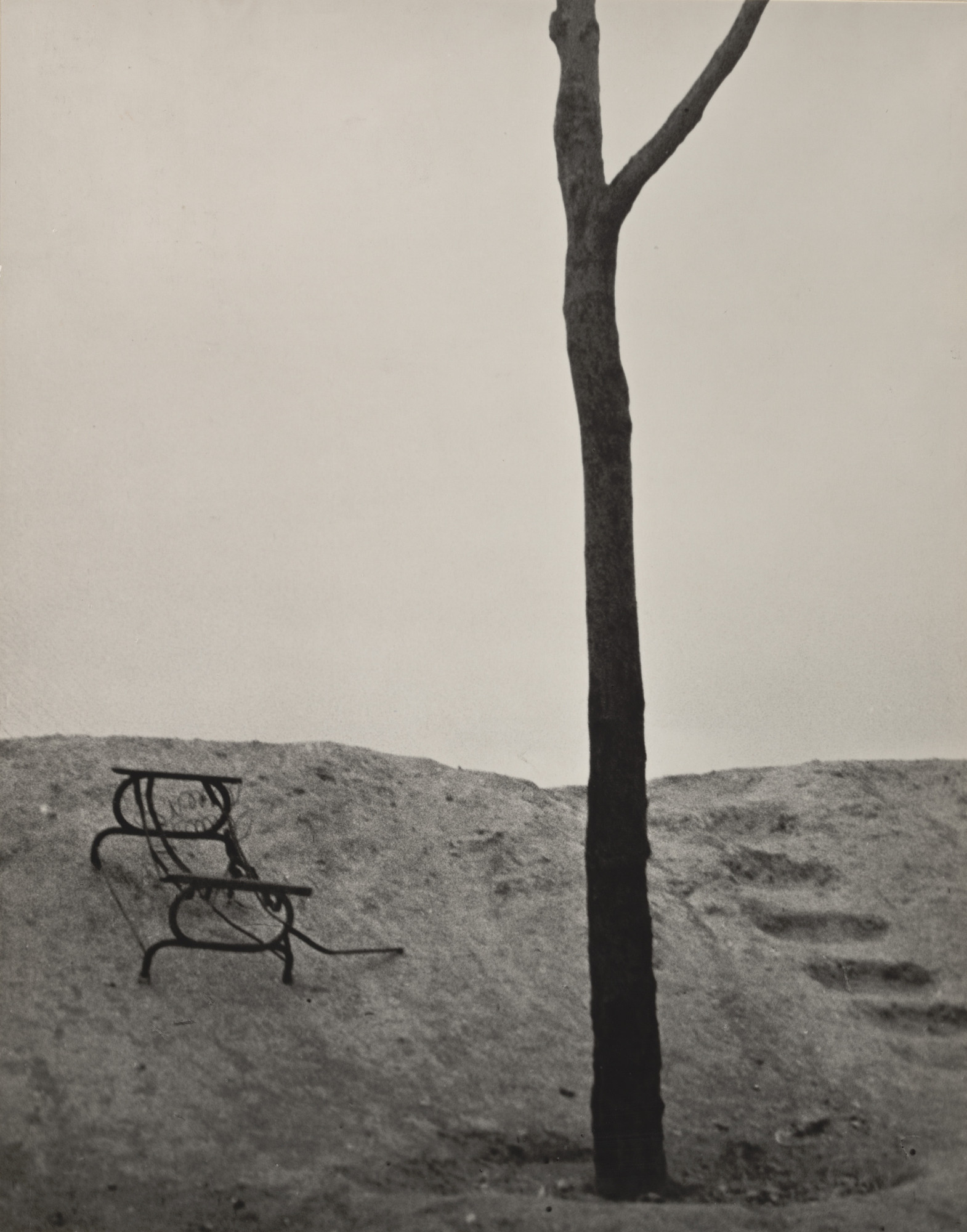
“Life is merely a fracas on an unmapped terrain, and the universe a geometry stricken with epilepsy”
― Emil Cioran; A Short History of Decay (1949)
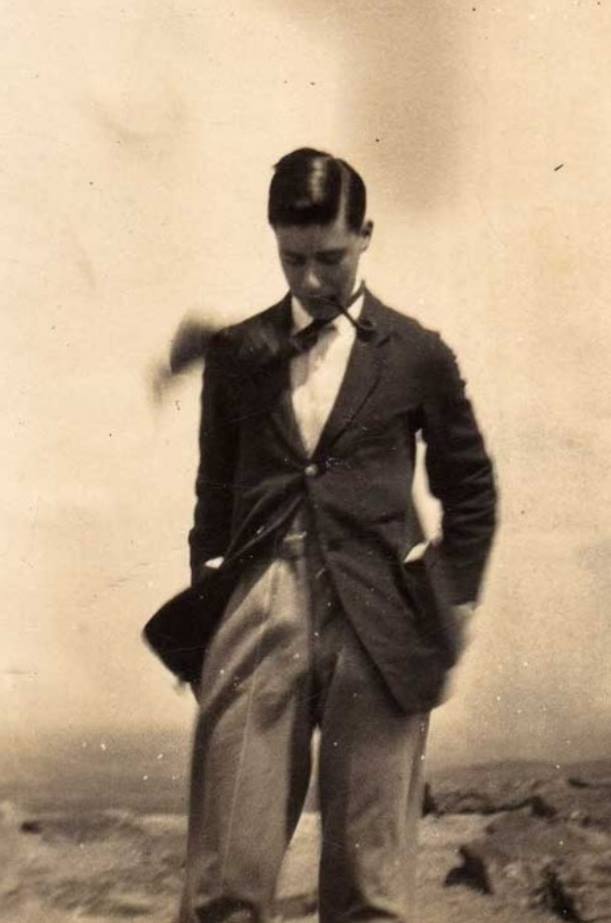
Unknown subject with flying tie, smoking pipe, unknown photographer or location, maybe Europe. / source: Hilde Everaert / If you are interested in some details about his/her identity take a look at Hilde’s posts. I found an alternative image here.
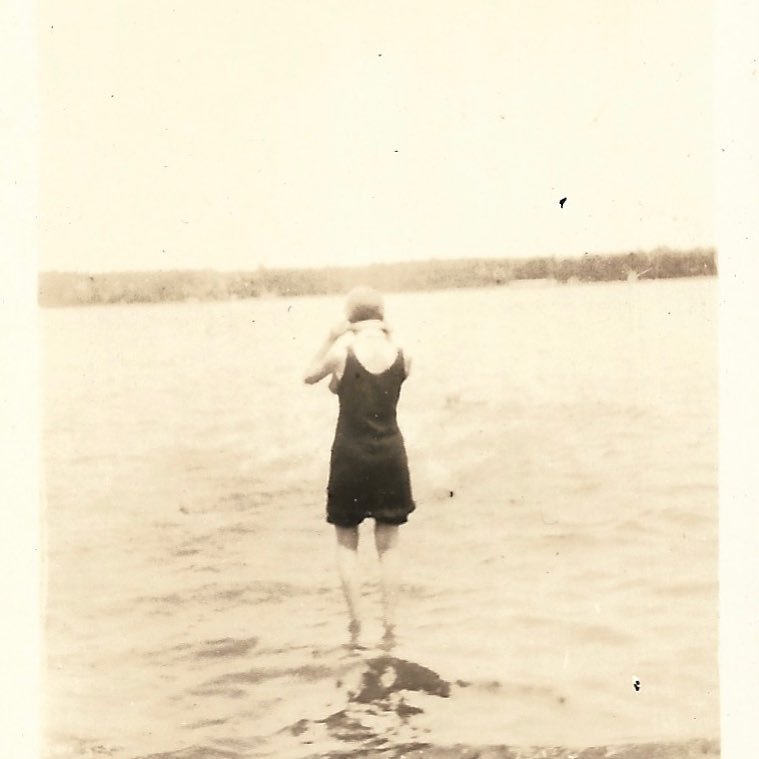
Unknown bather, back to camera, vintage snapshot, undated. / source: sunshinevintagephoto

