we do not own these photographs (unless indicated otherwise), we just share images that somehow haunt us.
Please, if you share them do not remove credits or/and sources.
David Moore ::
Orcades departure, Pyrmont, Sudney, ca. 1948 / source: State Library of New South Wales “The departure of overseas liners was a ceremony accompanied by the parting of
paper streamers held by the passengers and their relatives and friends on the wharf. The ship’s siren sounded three times as it moved astern, breaking the bonds in a tangible and symbolic farewell.” (quoted from source)
Triennial Conclave of the Knights Templar, 1895 | src USC
Phipps Conservatory was presented as a gift to the City of Pittsburgh from philanthropist Henry W. Phipps, who wished to “erect something that [would] prove a source of instruction as well as pleasure to the people.” In a letter to City of Pittsburgh Mayor H.I. Gourley in November 1891, Phipps expressed his intentions to add this new conservatory as a complement to an already existing “Phipps Conservatory” built in 1887 in Allegheny, now known as the North Side. Henry Phipps stipulated that both conservatories operate on Sundays in order to allow the working people to visit on their day of rest.
On Dec. 7, 1893, Phipps Conservatory opened to the public. It showcased over 6,000 exotic plants originating from the World’s Columbian Exposition in Chicago — cacti, trees, ferns and more made the journey by train and horse-drawn cart to Pittsburgh and the nation’s newest and largest conservatory.
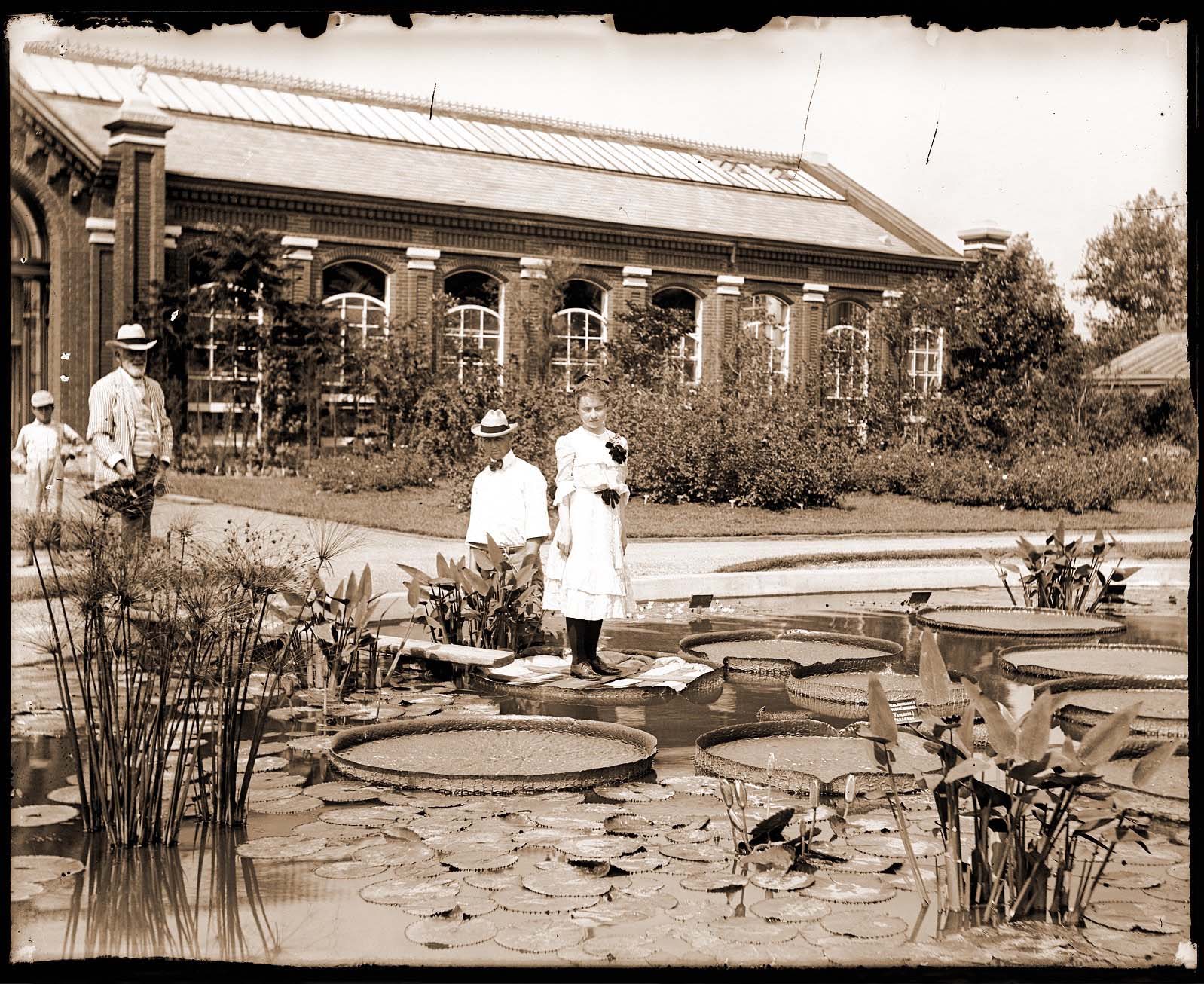
In 1895 Phipps Conservatory hosted the 26th Triennial Conclave of the Knights Templar, during which this iconic image was captured. In the photo, a woman, Angie Means, stands on a giant Amazonian water lily pad, or Victoria regia, in the Victoria Room.
In October 1898, the 27th Triennial Conclave of the Knights Templar was held in Pittsburgh. Horticulture staff decorated the Conservatory with flowerbeds designed as Masonic emblems for the Conclave’s visit on Oct. 13th.
Woman standing on a leaf of Victoria cruziana in the lily pond in front of the Linnean House of the Missouri Botanical Garden, 1902. Notice the wood sheet used to distribute her weight, so as to prevent the ripping of the delicate leaf, 1902 | Missouri Botanical Garden
‘[Moor]e was on assignment for the Royal Geographical Society’s Geographical Magazine to cover the life and landscape of this charming Mediterranean island. The diving suits were used by local fishermen working from boats that crowded the splendid deep-water harbour. Moore photographed the drying suits because they looked ridiculous, reminding him of two boys practising handstands or marine creatures.’ (quoted from source)
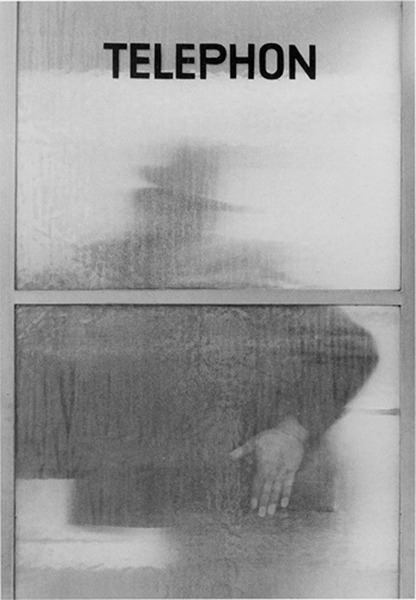
Man in telephone booth, Lucerne, Switzerland, 1952 / source: State Library of New South Wales
‘This austere high-key image, with its hint of humanity, reflects Moore’s preoccupation with design. He was always concerned that others should appreciate monochromatic images.’ (quoted from source).
‘This group of nuns wearing traditional wimples was photographed from the mezzanine level of Washington National Airport, as they farewelled one of their order leaving for South America. The image is a visual puzzle, reminiscent of flowers or origami – until the hands are seen towards the bottom of the photograph.’ (Quoted from source) /